Lightning is one of nature’s most powerful and unpredictable forces – and for those at sea, it can be a serious hazard. With around 44 lightning strikes occurring every second worldwide, the threat is far more common than many realise. But how likely is a lightning strike to affect your vessel? Are sailing yachts more vulnerable? And what protection systems are available to reduce the risk? In this article, we explore the real-world risks of lightning at sea and how vessel owners and crew can stay safe with lightning protection at sea.
How likely is a lightning strike?
Globally, there are an estimated 1.4 billion lightning flashes per year, and at any given time, around 2,000 thunderstorms are active on the planet. However, only around 25% of lightning events are cloud-to-ground strikes, which are the type most likely to affect vessels.
The likelihood of being struck depends heavily on location and weather patterns. Lightning is most common:
- Over land in tropical regions, where heat and humidity fuel frequent storms.
- In the summer months, particularly in the afternoon and early evening.
- In known hotspots such as the Catatumbo River in Venezuela, parts of Central Africa, Southeast Asia, and the Caribbean.
- In the United States, Florida consistently reports the highest density of lightning strikes
- For vessels in these regions especially during the warmer months – the risk of lightning is significantly heightened.
Are all boats vulnerable, or just sailing yachts?
It’s a common misconception that only sailing yachts are at risk. While it’s true that sailboats – with their tall masts – are more likely to attract lightning, all vessels are vulnerable.
At sea, a boat often becomes the tallest object in the area, making it a natural target for lightning seeking the shortest path to ground (or, in this case, water). Strike points could include:
- A sailboat mast.
- A radar arch or antenna on a powerboat.
- Even a person standing at the helm.
Once lightning strikes, the electrical current looks for the quickest exit path—typically through the boat and into the water. If the vessel lacks a proper protection system, this path may pass through structural components, electronics, or even people, leading to serious consequences.
What kind of damage can lightning cause?
A lightning strike can be catastrophic for any vessel, particularly those not properly protected. Common types of damage include:
- Hull damage: Lightning can blow holes in fibreglass hulls during exit.
- Electrical failure: Navigation systems, radios, engines, and even backup power can be destroyed by electrical surges.
- Fire: Sparks and extreme heat can ignite fuel vapours or flammable materials on board.
Even a nearby strike can be damaging. The electromagnetic field generated by a strike can disrupt electronics and cause equipment failure, even without a direct hit.
What protection systems are available?
The best way to mitigate lightning risk is to install a dedicated lightning protection system. These systems provide a controlled path for lightning to follow—from the highest point of the vessel down to the water—reducing the risk of structural damage, fires, and electrical failure.
A typical protection system includes:
- An air terminal or lightning rod at the mast or tallest structure
- A heavy-duty conductor to carry the current safely downwards
- A grounding plate mounted below the waterline to disperse the energy
- Equipotential bonding to connect major metal components and prevent side flashes (which occur when current jumps between unconnected conductive parts)
For metal-hulled boats, the hull itself can assist in grounding, but proper bonding is still essential.
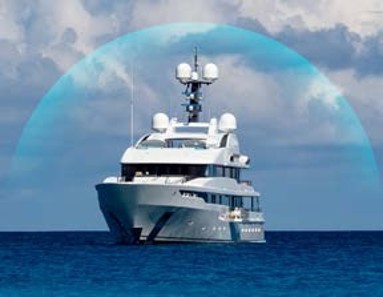
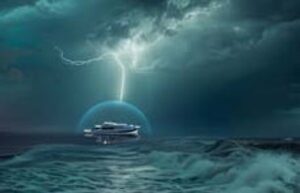
Among the newer technologies available, CMCE marine lightning protection offers a passive system designed to reduce the likelihood of a direct lightning strike by neutralising the electrical charge buildup around a vessel. This approach is increasingly being adopted by yachts and commercial craft looking to enhance their onboard lightning protection without relying solely on traditional grounding systems.
Regardless of the system used, correct installation and regular inspection are key to ensuring continued effectiveness.
Safety tips to reduce risk during storms
While having a lightning protection system is crucial, behaviour during a storm can also make a big difference. Some key precautions include:
- Check the forecast before leaving port. Marine-specific weather apps and radio alerts can warn of approaching storms.
- Head to shore if a storm is approaching. Don’t try to outrun it.
- Lower antennas and metal objects when offshore during a storm.
- Avoid touching metal or using hard-wired electronics during a thunderstorm.
- Stay below deck and keep low in the vessel if you’re caught at sea.
- Disconnect electronics where possible to avoid surge damage.
- Never swim or dangle limbs in the water during a storm.
- For critical backup electronics, some boaters store them in a microwave (which can act as a makeshift Faraday cage) to protect against electrical surges.
Minimising risk in an unpredictable environment
Lightning may be a natural phenomenon, but its impact at sea can be severe – especially for vessels without adequate protection. While sailboats are statistically more likely to be struck, no boat is immune. The combination of proper onboard systems, crew awareness, and safe practices can significantly reduce risk and protect both vessel and crew from harm.
By Héctor Ayala, Sertec Marine