EU Commission publishes guidance on recreational craft customs and VAT treatment

EU Commission publishes guidance on recreational craft customs and VAT treatment

European Boating Industry (EBI) and European Boating Association (EBA) welcome the publication of the European Commission’s Guidance Note for Pleasure Craft. The guidance provides much-needed clarification for recreational boat owners and business on the treatment of recreational craft under EU customs and VAT rules.

The publication follows continued engagement by EBA and EBI Continue reading “EU Commission publishes guidance on recreational craft customs and VAT treatment”
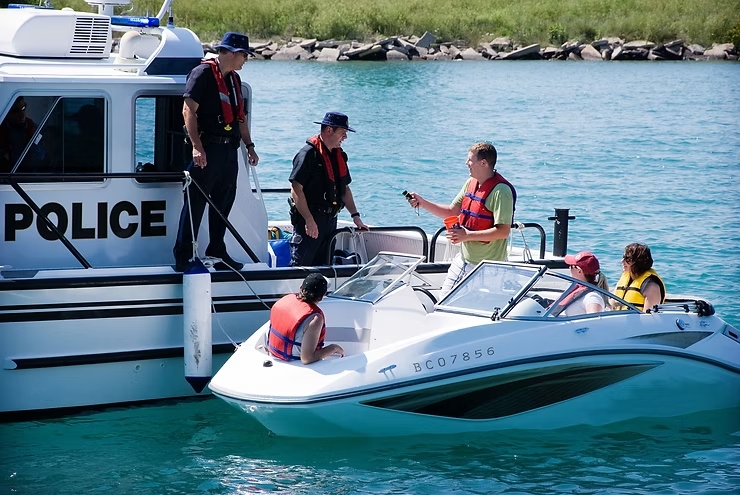

Minister of Transport calls for proposals to improve boating safety across Canada

Minister of Transport calls for proposals to improve boating safety across Canada

More than 12 million Canadian adults participate in recreational boating every year, but preventable accidents continue to result in injuries and fatalities on the water. To help improve safety, Transport Canada is supporting education and awareness initiatives that promote safe boating practices and behaviours on the water.

As part of the Safe Boating Awareness Week, the Honourable Steven MacKinnon, Minister of Transport and Leader of the Government in the House of Commons, announced a call for proposals under the Boating Safety Contribution Program. The application period is open until 21st September 2026. Continue reading “Minister of Transport calls for proposals to improve boating safety across Canada”

New Bill introduced to eliminate diesel-powered ferries across New York State

New Bill introduced to eliminate diesel-powered ferries across New York State

On 19 May, US lawmakers introduced the Clean Ferries Bill (A11303/S10381), a proposal aimed to eliminate diesel-powered ferries emissions across New York State. The bill requires publicly funded ferry operators to purchase only zero-emission vessels starting in 2028, with all public vessels in state waters required to be zero-emission by 2032. It also directs the New York State Energy Research and Development Authority to study charging infrastructure along major waterways, including the Hudson River.

Supporters say the measure targets a major source of pollution Continue reading “New Bill introduced to eliminate diesel-powered ferries across New York State”

UK Lords Committee criticises delay in implementing recommendations from marine accident reports

UK Lords Committee criticises delay in implement recommendations from marine accident reports
UK Lords Committee criticises delay in implementing recommendations from marine accident reports

In its 44th report of Session 24-26, the cross-party House of Lords Secondary Legislation Scrutiny Committee has criticised the length of time taken by the Marine and Coastguard Agency (MCA) to implement recommendations from marine accident reports, made by the Merchant Shipping (Vessels in Commercial Use for Sport or Pleasure) Regulations 2025 (the Regulations). The Regulations set out various requirements for small and large vessels and introduce additional requirements arising from recommendations made in two reports by the Marine Accident Investigation Branch. Continue reading “UK Lords Committee criticises delay in implementing recommendations from marine accident reports”

New regulations on load lines and tonnage started in Australia

New regulations on load lines and tonnage started on 1 September in Australia

The Australian Maritime Safety Authority (AMSA) has announced that the updated Marine Order 16 (Load Lines) 2025 (MO16) and Marine Order 19 (Tonnage Measurements) 2025 (MO19) have taken effect on 1 September 2025 as apart of its new regulations on load lines and tonnage. According to AMSA’s latest update, the revisions aim to align Australia’s maritime regulations with international standards, supporting safer and more effective operations in domestic and international waters. Continue reading “New regulations on load lines and tonnage started in Australia”

MCA releases MGN 591 Amendment 3 to remind about safe access

MCA releases MGN 591 Amendment 3 to remind about safe access

The Maritime and Coastguard Agency (MCA) has updated its guidance on safe access for small vessels and fishing boats with the release of MGN 591 (M+F) Amendment 3. While the amendment itself only updates references, the message is clear: unsafe boarding arrangements continue to cause serious – and sometimes fatal – accidents. Recent MAIB reports highlight falls from ladders, poorly lit pontoons, and gaps between vessels as recurring risks. Continue reading “MCA releases MGN 591 Amendment 3 to remind about safe access”

The Hague Rules: 100 years old and still standing

The Hague Rules: 100 years old and still standing

Is simplicity a reason for the success of the Hague Rules? In this opinion piece, Mark Russell, Head of Cargo Claims in Gard, outlines the history – and looks to the future – in a world of competing cargo carriage regimes.

The Hague Rules came into being 100 years ago this year, becoming the first international convention governing the rights and obligations under bills of lading for the carriage of goods by sea. As the volume of internationally traded goods grew, the Hague Rules were born out of a need for uniformity in the allocation of risk between shipowners and cargo interests. Continue reading “The Hague Rules: 100 years old and still standing”

Bringing expertise to the UK Maritime Industry

Bringing expertise to the UK Maritime Industry

The UK’s top maritime professional organisations are working together to make their voice heard on key issues and bringing expertise to the UK Maritime Industry.

While the size of the British merchant fleet may have declined significantly over the past several decades the UK continues to be well endowed with maritime expertise.

For generations, professional organisations have provided a key source of expertise helping to maintain the right standards across industrial sectors ashore. However just over three years ago a number of maritime-linked bodies came to the view that this has not been happening within the maritime sector and, often, regulators and employers had been missing out on the years of experience leading professionals can bring to the table. Continue reading “Bringing expertise to the UK Maritime Industry”

Valve failures is the lead cause of ammonia-related maritime accidents

EMSA has reviewed critical causes and patterns in ammonia-related maritime accidents

The European Maritime Safety Agency (EMSA) in its newest series of reports regarding the safety of ammonia use in ships has reviewed critical causes and patterns in ammonia-related maritime accidents. Among the alternative fuel options, anhydrous ammonia has drawn a lot of interest from the marine industry for its potential to become a long-term solution for decarbonisation. The comprehensive review of accidents however, highlighted on EMSA’s report “Safety of Ammonia for Use in Ships”, has underscored critical causes of these incidents that allow identifying recurring patterns and highlighting critical areas for preventive or corrective measures for application in the maritime sector. Continue reading “Valve failures is the lead cause of ammonia-related maritime accidents”

AMSA National Compliance Plan 2025-2026 published

The AMSA National Compliance Plan 2025-2026 is published and is available to read   
The AMSA National Compliance Plan 2025-2026 is published and is available to read

The AMSA National Compliance Plan 2025-2026 has been published by the Australian Maritime Safety Authority. It outlines a number of key compliance activities that support welfare, safety and pollution prevention across domestic and foreign-flagged vessels.

According to the AMSA National Compliance Plan 2025-2026, the authority outlines priority activities for the upcoming year, providing industry with a clear understanding of the regulatory focus and rationale. Continue reading “AMSA National Compliance Plan 2025-2026 published”

How to develop a safety culture

safety hazard pipes
safety hazard pipes

The UK Maritime and Coastguard Agency (MCA) has published a section in their Leading for Safety guidance, looking at why accidents happen, what really causes them and what can be done to develop a safety culture in an organisation.

Safety culture describes the way in which safety is managed within an organisation. It relates to the beliefs and attitudes, values, and perceptions that employees share regarding safety in the organisation. According to the MCA, to reduce the rate of incidents, we need a good understanding of: Continue reading “How to develop a safety culture”

USCG issues alert on fire detection systems on towing vessels

Fire detection systems on towing vessels alert issued

The U.S. Coast Guard (USCG) has issued a alert on fire detection systems on towing vessels that are not type-approved by the Coast Guard but are instead certified by a Nationally Recognized Testing Laboratory (NRTL).

According to the USCG, even though fire detection systems may be accompanied by Continue reading “USCG issues alert on fire detection systems on towing vessels”

Instagram Posts from the IIMS @iimsmarine