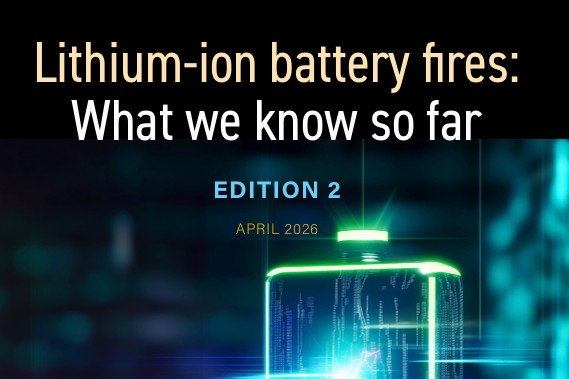
Lithium-ion Battery Fires: What We Know So Far – edition 2 published

Edition 2 of the lithium-ion battery fires: What we know so far guide has been published

In edition 2 of the “Lithium-ion Battery Fires: What We Know So Far”, the Maritime Professional Council of the UK (MPC) warns of the rising risks and dangers of lithium-ion battery fires to ships, boats and their crews.

The maritime industry faces increasing incidents and fires due to lithium-ion technology, particularly with the growing use of electric vehicles (EVs) and a myriad of devices powered by these batteries. Lithium-ion batteries have a high energy density, making them efficient but also prone to catastrophic failures if mishandled. Continue reading “Lithium-ion Battery Fires: What We Know So Far – edition 2 published”

CIMAC and MBF second joint whitepaper “Environment for the Use of Batteries in Deep-Sea Shipping”

CIMAC and the Maritime Battery Forum have published the second paper “Environment for the Use of Batteries in Deep-Sea Shipping”.

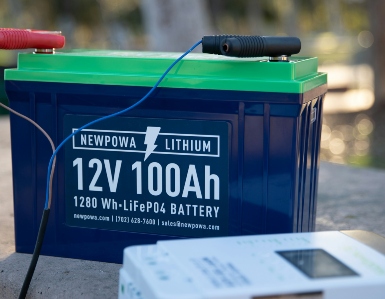
This paper examines the regulatory framework for battery use in deep-sea shipping, including requirements from flag states, classification societies, and industry standards. While the foundation is strong, gaps remain—especially around Continue reading “CIMAC and MBF second joint whitepaper “Environment for the Use of Batteries in Deep-Sea Shipping””

Hazards of small lithium-ion batteries on ships

Hazards of small lithium-ion batteries on ships

The hazards posed by small lithium-ion batteries can be devastating, says P&I club NorthStandard.

From handheld radios, cell phones, and power banks to vapes and flashlights, lithium-ion batteries are everywhere onboard vessels.

Compact and powerful, they’re essential, but when mishandled, they can turn into ticking time bombs. Continue reading “Hazards of small lithium-ion batteries on ships”

Performance of extinguishing agents against lithium-ion battery fire

Performance of extinguishing agents against lithium-ion battery fire

This study presents a systematic evaluation of extinguishing agents against lithium-ion Battery Energy Storage Systems (BESS), specifically examining thermal runaway propagation in small domestic system (8 kWh). Five distinct suppression methods were evaluated: water mist, encapsulator agent (water mist with proprietary encapsulator), carbonate agent (water mist with ammonium bicarbonate), mixed agent (containing boron compounds and surfactants), and liquid nitrogen.

Performed experiments revealed significant differences between suppression methods. Water mist and encapsulator agents demonstrated Continue reading “Performance of extinguishing agents against lithium-ion battery fire”

MCA lithium-ion battery update to fire safety MGN 681 (M)

MCA lithium-ion battery update to fire safety MGN 681 (M)

The UK Maritime and Coastguard Agency (MCA) has update to fire safety MGN 681 (M) and storage of small electric powered craft on yachts.

MGN 681 (M) Amendment 1 includes clarification for the functionality of storage and charging cabinets or boxes where these are used as part of the solution for the carriage of li-ion batteries used on personal vehicles. Continue reading “MCA lithium-ion battery update to fire safety MGN 681 (M)”

CINS issues guidance on shipping lithium-ion cells in containers

CINS issues guidance on shipping lithium-ion cells in containers

CINS – the Cargo Incident Network System – has published its CINS Lithium- ion Cells Guidelines. Published in conjunction with the International Group of P&I Clubs and the TT Club, the document has been produced by Members of the CINS Lithium-ion Cells Work Group and offers guidance on shipping lithium-ion cells.

Lithium-ion cells are primary elements of a battery and can exist in various forms. Commonly used in portable electronics and electric vehicles, their defining characteristic is the ability to accumulate, store and release electrical energy through the movement of lithium-ions between a positive and a negative electrode. Continue reading “CINS issues guidance on shipping lithium-ion cells in containers”

Navigating the Risks: Lithium-Ion Batteries, Electric Vehicles, and Fire Safety in the Maritime Industry

Navigating the Risks: Lithium-Ion Batteries, Electric Vehicles, and Fire Safety in the Maritime Industry

INTRODUCTION

Lithium-ion (Li-ion) batteries are an everyday essential item embedded in everyday life, found throughout the world and in almost every household or workplace in one form or another. We can find them in portable devices such as mobile phones, laptops, tablets, power banks and cordless vacuums, all the way through to electric vehicles (EVs) – scooters, buses, cars and bikes. However, their widespread use has led to a surge in fire incidents, particularly involving EVs. Recent media reports and insurance data highlight a 17% increase in Li-ion battery-related fires in New Zealand alone1. As the maritime industry embraces the global shift toward electrification, the integration of Li-ion batteries and EVs onboard vessels presents both opportunities and significant fire safety challenges. This article explores the science behind Li-ion batteries, the risks they pose, and the implications for maritime operations, drawing on recent incidents and emerging mitigation strategies. Continue reading “Navigating the Risks: Lithium-Ion Batteries, Electric Vehicles, and Fire Safety in the Maritime Industry”

IIMS launches brand new course for lithium batteries

IIMS has launched a brand new four-module course for lithium batteries

After some months of preparation and development, IIMS has launched a new four-module course dedicated to the subject of lithium batteries, one of the most talked about and misunderstood topics in the marine surveying profession right now.

The course has been authored by leading lithium-ion battery experts David and Magda O’Neill, who are based at akuPalma in Mallorca. The course digs deep into the chemistry, as well as assessing how to survey and inspect installations of lithium batteries. Continue reading “IIMS launches brand new course for lithium batteries”

Lithium-ion battery fires: What we know so far

Lithium-ion battery fires: What we know so far

Lithium-ion battery fires: What we know so far is a new publication published on behalf of the members of the Maritime Professional Council of the UK. That said, it is aimed at an international audience. The publication has been co-authored by Frances Birkett and Mike Schwarz of IIMS.

Deliberately designed not to be technically heavy, this 36-page overview aims to share some of the case studies and issues surrounding this emerging technology we Continue reading “Lithium-ion battery fires: What we know so far”

Preventing the next lithium fire at sea: A data-driven blueprint for safer transportation

Preventing the next lithium fire at sea: A data-driven blueprint for safer transportation

With new data and technological innovation, the maritime industry must re-evaluate cargo handling protocols and develop more resilient fire mitigation strategies to address growing risks at sea, argues Alicia Lee, Chief Operating Officer at GSBN. On a summer morning in June 2025, a carrier vessel called the Morning Midas caught fire in the middle of the Pacific Ocean. The entire crew on board had to abandon ship to escape flames. The Morning Midas, along with the electric vehicles it was carrying that started the blaze, now rests at the bottom of the ocean. Continue reading “Preventing the next lithium fire at sea: A data-driven blueprint for safer transportation”

Emerging battery technologies in the maritime industry volume 2

Top half of blue cover art of the ABS Emerging Battery Technologies in the Maritime Industry Volume 2
ABS has released a publication on the latest advancements in battery technology trends.

The American Bureau of Shipping (ABS) has published ‘Emerging battery technologies in the maritime industry Volume 2’.

Understanding the latest advancements in battery technology trends is essential as the industry works to meet regulatory requirements.

The publication addresses the limitations and advancements surrounding next-generation batteries, including: Continue reading “Emerging battery technologies in the maritime industry volume 2”

Managing the growing risk of Lithium-ion battery fires

Managing the growing risk of Lithium-ion battery fires

The global energy transition has led to an acceleration of new and innovative technologies designed to support decarbonization efforts across the global supply chain. The maritime industry  plays a fundamental part in this effort, not simply by addressing its own impact on global CO2 emissions, but also by facilitating the availability and transportation of new and innovative technologies that are designed to mitigate carbon emissions. But not all of this is safe as their is a growing risk of Lithium-ion battery fires.

For instance, the shipping industry is playing a critical role in accelerating the green automotive market, particularly the global transportation of electric vehicles (EVs) and large battery hybrids. According to Statista, the EV market is projected to grow by nearly 10% each year and account for over 17 million vehicles by 2028. However, this development also brings with it significant safety implications that don’t just impact the vessel, but also the health and wellbeing of crew members onboard – specifically in relation to the significant increase in fire risks presented by the lithium-ion (Li-ion) batteries used in EVs. Continue reading “Managing the growing risk of Lithium-ion battery fires”

Instagram Posts from the IIMS @iimsmarine

Privacy Overview

This website uses cookies so that we can provide you with the best user experience possible. Cookie information is stored in your browser and performs functions such as recognising you when you return to our website and helping our team to understand which sections of the website you find most interesting and useful.

Strictly Necessary Cookies

Strictly Necessary Cookie should be enabled at all times so that we can save your preferences for cookie settings.

Show details Hide details
Performance & Marketing Cookies

This website uses Google Analytics to collect anonymous information such as the number of visitors to the site, and the most popular pages. This also helps us optimise our marketing campaigns. User data sent to Google Analytics may be used for ad personalization and measurement of our ad campaigns. Keeping this cookie enabled helps us to improve our website.

Show details Hide details