Guidance published on installing lithium-ion batteries to assist boaters

New guidance for boaters about installing lithium-ion batteries

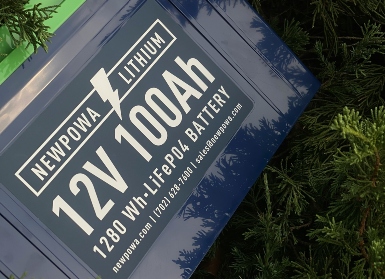
The Cruising Association (CA) and the Inland Waterways Association (IWA) have jointly released new guidance to assist boaters in evaluating lithium-ion phosphate (LiFePO4 or LFP) service batteries.

Drafted by the CA’s Regulatory & Technical Services Group (RATS) and the IWA’s Sustainable Boat Group, the advice addresses the shift from traditional lead-acid units to LiFePO4 chemistry. The guidance stresses that switching to LiFePO4 and safe integration requires precise system design, comprehensive planning, and potential upgrades to onboard electrical infrastructure as well as a detailed understanding of the technology. Continue reading “Guidance published on installing lithium-ion batteries to assist boaters”
Canal & River Trust boater consultation to launch in December 2026

Canal & River Trust boater consultation to launch in December 2026

The Canal & River Trust boater consultation, which will be co-created with boaters over the coming months, forms part of our response to the independent commission on boat licensing. Which reported at the end of 2025 and highlighted that the existing licensing system doesn’t work well for boaters or the Trust. It also raised concerns about communication and relations between the Trust and boaters.

About the consultation and why it is happening

The consultation will consider a wide range of topics, including boat safety, support for boaters, greater certainty around navigation requirements, fair sharing of the space, and managing the canal network responsibly. Continue reading “Canal & River Trust boater consultation to launch in December 2026”

Rescue and Restoration: A snapshot in the journey of Heritage Boat 43M

Rescue and Restoration: A snapshot in the journey of Heritage Boat 43M

Background & History

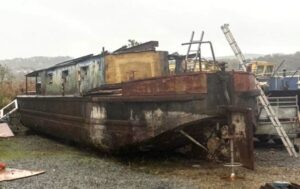
To introduce the vessel 43M. Heritage Boat 43M is from the Irish Grant canal system which was built in Ringsend boatyard by Vickers in 1927. The boat was built for the Grand Canal Company as a transport barge serving the Grand Canal, the River Shannon Navigation and the River Barrow Navigation.

The boat operated from the late 1920s until the late 1950s when the canal ceased trading. The boat had an unfortunate set of uses from 1959 onwards. The boat was cut down by 11” to open the hold up so it could be used as a small boat floating drydock. 43M was later converted to a pleasure boat but had many years neglect and dereliction in private ownership until it sank around 2009,

The boat was removed from the navigation by Waterways Ireland and sat until 2025 on the hard in a boatyard. Waterways Ireland offered the boat for tender, and Damien Buckley was the tender bid winner. And here this snapshot of our journey starts. Continue reading “Rescue and Restoration: A snapshot in the journey of Heritage Boat 43M”

Post Construction Assessment papers trigger official policy review

Paper 2 on Post Construction Assessment by Tom Keeling attracts encouraging response

Throughout 2025, work continued on Recreational Craft Directive (RCD), Recreational Craft Regulations (RCR) and Post Construction Assessment (PCA) research, with a newly drafted paper by Tom Keeling – known as PCA 2 – receiving an encouraging response from Graham Russell MBE, Chief Executive of OPSS (Office for Product Safety & Standards). The paper is due for wider release in early 2026.

Since the release of the PCA 1 paper in 2024, IIMS has remained engaged with Continue reading “Post Construction Assessment papers trigger official policy review”

Historic canals repurposed to address modern UK’s challenges

Historic canals repurposed to address modern UK’s challenges

A new report highlights how the UK’s historic canals have been repurposed, originally a product of the Industrial Revolution, they are being adapted to tackle key contemporary issues. These interconnected waterways, rich in biodiversity, are contributing to efforts addressing the biodiversity crisis, improving public health, and mitigating some effects of climate change.

The Canal & River Trust, a charity responsible for maintaining 2,000 miles of canals across England and Wales, has released an Impact Report demonstrating the ongoing relevance of these waterways. The report also details the challenges posed by the ageing infrastructure and the organisation’s efforts to preserve and enhance the UK canal network. Continue reading “Historic canals repurposed to address modern UK’s challenges”

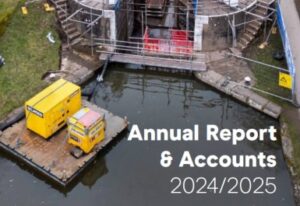
Canal & River Trust Annual Report 2024/25 published

Canal & River Trust Annual Report 2024/25 published

The UK Canal & River Trust has published its ‘Canal & River Trust Annual Report for 2024/25’ which sets out the scale of work undertaken to safeguard the nation’s historic canals and their modern-day contribution to society. The Canal & River trust is the charity that cares for 2,000 miles of waterways across England and Wales.

Over the year, and in the face of the rising cost of materials, additional environmental regulation and more extreme weather events, the Trust Continue reading “Canal & River Trust Annual Report 2024/25 published”

Inland Waterways Craft and the conflicting regulations

Inland Waterways Craft and the vagaries of the conflicting regulations

IIMS Past President, Geoff Waddington, is a successful yacht and small craft marine surveyor. Over the years he has written a number of articles, including some about the UK inland waterways sector. In this article, he sets out to explain and make sense of some of the confusion and inconsistencies that exist between the various current rules and regulations.

First of all, let’s consider the issue of conformity. Continue reading “Inland Waterways Craft and the conflicting regulations”

LPG safety on Inland Waterways boats

River canal boat
River canal boat

The aim, with LPG, was to improve boater safety by reviewing key elements of gas safety, while linking design, commissioning and maintenance together as crucial factors to gas system success. There is scant academic work existing that relates to the inland waterways, and virtually no academic research into gas safety on boats. It is hoped this project will open the debate and encourage other projects and ensure LPG safety on Inland Waterways boats. Continue reading “LPG safety on Inland Waterways boats”

Minimum Steel Thickness for Narrowboats: A discussion paper

By Tom Keeling MIMarEST and Peter Brookes CEng, MIET, affillIIMS. Tom Keeling and peter Brookes are inland waterways-based marine surveyors. Both have run independent consultancy businesses in this sector for many years, specialising in the survey of steel thickness of narrowboats and their hulls. 

Man on a bargeMarine surveyors and boat owners are regularly heard to say there is a minimum 4.0mm of hull thickness required at time of survey of a steel narrowboat. Some brokers even publish videos of such information, with some surveyors enforcing it (Whilton Marina, 2012 and 2016). Boaters are subject to it and repair often follows. In a recent article, Geoff Waddington (2021) explains there is confusion in the industry about wastage limits, and consequently acceptable residual hull plate thicknesses, and opinions among surveyors ‘vary wildly’, with some quoting 3mm acceptable minimum plate thickness, others using percentage loss. This short paper explores what a standardised acceptable limit for diminution, and therefore residual steel plate thickness for narrowboats, could be. It describes a variety of methods of calculating the design plate thicknesses (scantlings) and the minimum acceptable residual plate thickness. In doing so, this paper aims to serve as a guide for inland waterways marine surveyors, boat owners, repairers, and insurers alike. Continue reading “Minimum Steel Thickness for Narrowboats: A discussion paper”

Morco gas water heaters the subject of an urgent product recall

Morco gas water heaters have been recalled

A safety issue has been identified with Morco open-flued gas water heaters which may be installed in canal boats and houseboats as well as in domestic and commercial settings.

The product presents a risk of fire, explosion and injuries. There is a risk of gas leaking which, if ignited, may cause burns, explosions and injuries. The products are not in conformity with the requirements of Regulation 2016/426.

Morco has initiated an urgent recall for the affected appliances. Continue reading “Morco gas water heaters the subject of an urgent product recall”

CRT Impact Report says historic canals championed as solutions to UK’s modern challenges

CRT Impact Report names UK canals as the solution to modern challenges

A CRT Impact Report demonstrates how the UK’s unique network of historic canals, a legacy of the Industrial Revolution, are being repurposed to address some of the greatest challenges facing society. The interconnected and ecologically rich man-made waterways are today playing a key role in addressing the UK’s biodiversity crisis, improving public health and helping to mitigate the impacts of climate change.

The Canal & River Trust (CRT), the charity that cares for 2,000 miles of waterways across England and Wales, has published an Impact Report that shows the nation’s canal network is proving more relevant than ever. The Report also showcases the charity’s commitment to keeping canals open and alive in the face of some serious threats. Continue reading “CRT Impact Report says historic canals championed as solutions to UK’s modern challenges”

Canal & River Trust appoints independently led Commission to review future framework for boat licensing

Independently led Commission appointed to review future framework for boat licensing

Over the past 30 years there have been significant changes in the use of the 2,000-mile canal network in the UK managed by the Canal & River Trust. The Trust has announced it has established a new Commission to review the legal framework around boat licensing, to explore whether it is appropriate for the network’s future.

The Commission will start its review in January and is expected to run until September 2025. Continue reading “Canal & River Trust appoints independently led Commission to review future framework for boat licensing”

Instagram Posts from the IIMS @iimsmarine

Privacy Overview

This website uses cookies so that we can provide you with the best user experience possible. Cookie information is stored in your browser and performs functions such as recognising you when you return to our website and helping our team to understand which sections of the website you find most interesting and useful.

Strictly Necessary Cookies

Strictly Necessary Cookie should be enabled at all times so that we can save your preferences for cookie settings.

Show details Hide details
Performance & Marketing Cookies

This website uses Google Analytics to collect anonymous information such as the number of visitors to the site, and the most popular pages. This also helps us optimise our marketing campaigns. User data sent to Google Analytics may be used for ad personalization and measurement of our ad campaigns. Keeping this cookie enabled helps us to improve our website.

Show details Hide details