ABS delivers new ammonia safety report for EMSA

ABS delivers new ammonia safety report for EMSA

The European Maritime Safety Agency (EMSA) has published a new report focused on the safety of ammonia as a marine fuel.

The report was developed by an ABS-led consortium that included the National Technical University of Athens (NTUA) and the Fundación Valenciaport.

This final report consolidates the study’s findings and recommendations for future regulatory developments. It highlights the importance of using risk and reliability methods for the identification of top risk contributors and lists best practice recommendations in line with current industry standards. Continue reading “ABS delivers new ammonia safety report for EMSA”

Korean working group to develop safety management and marine discharge standards

Credit: Korean Register

The Korean Register is collaborating with the Korean government, five major Korean shipbuilders and the Korea Testing & Research Institute to launch a working group to develop safety management and marine discharge standards for ammonia effluent.

As the maritime industry accelerates its transition to zero-carbon fuels in line with the International Maritime Organization (IMO)’s 2050 net-zero target, ammonia-fueled ships are emerging as a promising next-generation solution. Continue reading “Korean working group to develop safety management and marine discharge standards”

New 2026 RSG guidelines published

New 2026 RSG guidelines published

These Recreational Craft Sectoral Group (RSG) Guidelines, otherwise known as 2026 RSG guidelines, are primarily intended for use by the Notified Bodies, manufacturers of boats and equipment and Market Surveillance authorities and provide critical support in terms of compliance to the EU’s Recreational Craft Directive and the UK’s Recreational Craft Regulations essential requirements.

Given the scope of the RCD and the variety of different types of watercraft, PWC, and components, the RSG Guidelines make an assessment of the relevant harmonised standards which can be applied, identify where there are potential ‘gaps’ and provides support where no standards are available to ensure that compliance with the RCD essential requirements (which are mandatory) are met. Continue reading “New 2026 RSG guidelines published”

Vehicle Carrier Safety Forum Response Guidelines

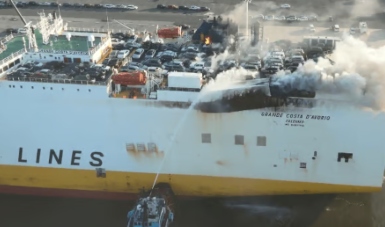
The Vehicle Carrier Safety Forum has published fire response guidelines

As the global shift toward electric mobility transforms our cargo into high-energy puzzles, the car carriers of the maritime world face a complex new chemistry of risk. The maritime industry has always been defined by its ability to adapt to the cargo it carries, but the rise of Electric Vehicles (EVs) presents a fire-safety challenge that doesn’t play by the old rules. Whether it’s the stubborn heat of an internal combustion engine fire or the violent “thermal runaway” of a lithium-ion battery, the margins for error on RoRo and PCTC vessels are slimming. These Vehicle Carrier Safety Forum guidelines provide the essential scaffolding for vessel Continue reading “Vehicle Carrier Safety Forum Response Guidelines”

Japan emerges as an early adopter of advanced fire detection on RoRo vessels

Japan emerges as an early adopter of advanced fire detection on RoRo vessels

Japan is emerging as an early adopter of advanced fire detection systems on RoRo vessels, according to inspection data from Idwal, the global vessel condition specialist.

While fire safety on RoRo vessels has come under increasing scrutiny, particularly as electric vehicles enter the cargo mix in greater numbers, Idwal’s inspections show that adoption of advanced fire detection technology across the global fleet remains uneven. Japanese owned and operated tonnage is increasingly standing out as an early mover, often installing more advanced detection systems ahead of regulatory requirements. Continue reading “Japan emerges as an early adopter of advanced fire detection on RoRo vessels”

IACS publishes new Unified Requirement on ammonia release mitigation systems

IACS publishes new Unified Requirement on ammonia release mitigation systems

IACS, the International Association of Classification Societies, has released a new Unified Requirement (UR H2) establishing a comprehensive safety framework for ammonia release mitigation systems (ARMS) on ammonia-fuelled ships.

The UR provides harmonised requirements for the design, testing and certification of ARMS intended to manage ammonia releases during normal operations and foreseeable abnormal scenarios. Continue reading “IACS publishes new Unified Requirement on ammonia release mitigation systems”

Britannia P&I updates guidance notes for condition surveys

Britannia P&I has released updated guidance notes for condition surveys Forms on IG Ships.

Now available for both surveyors and masters, the revised documents have been developed to provide clearer direction on completing the International Group’s ship condition survey report forms, supporting more consistent reporting standards across the fleet. Continue reading “Britannia P&I updates guidance notes for condition surveys”

The Swedish Club shares case study on leaking cargo hold hatch

The Swedish Club has shared a case study in which grain beneath a leaking cargo hold hatch was damaged after a vessel encountered severe weather conditions.

In late November, a geared bulk carrier was loading grain at a U.S. West Coast port, with Asia as the discharge destination. Prior to commencement of loading, the cargo holds were inspected and passed by a surveyor in accordance with current USDA/FDA standards. The vessel’s crew had also prepared the cargo holds and hatch covers in line with ISM requirements and industry guidelines, which included cleaning the hatch coaming channels and hose testing of the hatch covers. No signs of water ingress were detected during the pre-loading inspection. Continue reading “The Swedish Club shares case study on leaking cargo hold hatch”

Biofuel reduces black carbon emissions by 81% says Cleanship experts

Biofuel reduces black carbon emissions by 81% says Cleanship experts. Credit: Danish Technological Institute

New Danish data, collected during real-world sailing, documents significant climate benefits from biofuel for the shipping industry as biofuel reduces black carbon emissions.

Soot particles – also known as black carbon – are among the most harmful emissions from shipping, both for the climate, where they contribute to global warming and melting of Arctic ice, and for public health through poor air quality.

Now, experts from the CLEANSHIP project document that using biodiesel, specifically B100 FAME, during normal operation can reduce black carbon emissions by up to 81 percent compared to traditional marine gas oil (MGO). Continue reading “Biofuel reduces black carbon emissions by 81% says Cleanship experts”

IACS updates safety requirements for ammonia-fuelled engines

IACS updates safety requirements for ammonia-fuelled engines

The International Association of Classification Societies (IACS) has announced a landmark revision to its Unified Requirement UR M78, introducing comprehensive safety requirements for marine engines fuelled by ammonia.

The newly published Rev.4 of UR M78 expands its scope to include ammonia as an approved fuel for reciprocating internal combustion engines. This development reflects IACS’s commitment to enabling innovative propulsion technologies while maintaining the highest safety standards.

It will be uniformly applied by IACS Member Societies for engines with type approval applications dated on or after 1 July 2027. Continue reading “IACS updates safety requirements for ammonia-fuelled engines”

Rise in STF incidents prompts risk inspection

Rise in STF incidents prompts risk inspection

The Bureau of Safety and Environmental Enforcement (BSEE) has identified a potential risk associated with slips, trips and falls (STF incidents) across the Outer Continental Shelf (OCS) between May 2024 and April 2025. During this period, 22% of all injuries reported to BSEE were attributed to STFs, surpassing lifting-related injuries for the first time in recent years. These STF injuries were often severe, resulting in major injuries defined as three or more days away from work, restricted work, or job transfer.

In response to the rise in operator and contractor injuries BSEE initiated a Performance-Based Risk Inspection (PBRI). The inspection covered 19 assets, including production platforms and well operations, across the Gulf. These assets were operated by 17 unique operators. Continue reading “Rise in STF incidents prompts risk inspection”

Guidelines for the safe inspection of methanol dual-fuel ships

Guidelines for the safe inspection of methanol dual-fuel ships

The Maritime Technologies Forum (MTF) has issued new guidelines for the safe inspection of methanol dual-fuel ships. As the maritime industry accelerates its transition to alternative fuels under increasingly stringent IMO emission regulations, methanol as fuel has emerged as a particularly attractive option, as documented by the increasing number of orders.

However, according to the Maritime Technologies Forum, methanol’s unique properties, including its flammability, toxicity, and corrosivity, present distinct challenges for ship inspectors and surveyors.

A total of 41 safety recommendations have been identified across the inspection process, representing an important effort to provide practical guidance and direction to support the industry’s safe adoption of methanol. The project was led by the Maritime and Port Authority of Singapore (MPA) with the participation of various MTF members. Continue reading “Guidelines for the safe inspection of methanol dual-fuel ships”

Instagram Posts from the IIMS @iimsmarine

Privacy Overview

This website uses cookies so that we can provide you with the best user experience possible. Cookie information is stored in your browser and performs functions such as recognising you when you return to our website and helping our team to understand which sections of the website you find most interesting and useful.

Strictly Necessary Cookies

Strictly Necessary Cookie should be enabled at all times so that we can save your preferences for cookie settings.

Show details Hide details
Performance & Marketing Cookies

This website uses Google Analytics to collect anonymous information such as the number of visitors to the site, and the most popular pages. This also helps us optimise our marketing campaigns. User data sent to Google Analytics may be used for ad personalization and measurement of our ad campaigns. Keeping this cookie enabled helps us to improve our website.

Show details Hide details