The new Axopar Digital Product Passport

The new Axopar Digital Product Passport

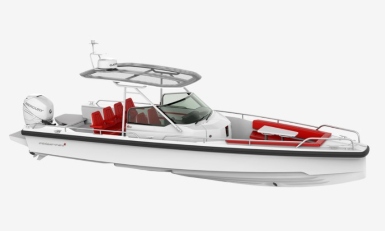
Axopar has announced its entry into the Aura Blockchain consortium with its new product – the Axopar Digital product Passport. This collaboration marks the arrival of the nautical sector in an ecosystem already active in luxury goods and watchmaking. The aim is to create a digital passport for each boat, designed to structure data over the entire lifespan of the craft.

The issue of traceability and reliability of information is becoming central to pleasure boating. Axopar is taking a step forward by joining the Aura Blockchain consortium, with the announced launch of a digital passport for its boats from spring 2026. An initiative that goes beyond customer relations to touch on broader industrial issues. Continue reading “The new Axopar Digital Product Passport”

Consortium advances design of new medium-sized uncrewed support vessels

Consortium advances design of new medium-sized uncrewed support vessels

A UK-led consortium has secured government backing to develop a new class of medium-sized uncrewed support vessels (USVs), marking a significant step forward in maritime innovation.

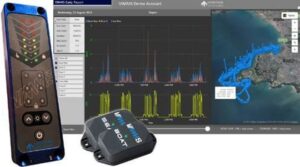
As Brookes Bell explained, the project MROS consortium, headed by unmanned systems specialist Acua Ocean, was awarded funding in May 2025 under the Department for Transport’s Clean Maritime Demonstration Competition (CMDC) programme. Continue reading “Consortium advances design of new medium-sized uncrewed support vessels”

Legacy and Innovation

Legacy and Innovation

Industry leaders are merging old school tradition and principles with modern innovation, developing designs that meet sometimes diverging industry demands – a clash between legacy and innovation.

The roots of naval architecture are steeped in tradition with knowledge passed down through generations. Scientific ship design in the 18th century introduced mathematical models used to inform hull design while the Industrial Revolution brought iron and steam, revolutionizing design, materials science and propulsion.

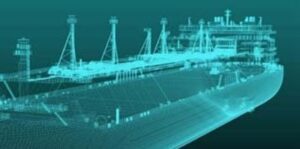
The 21st century ushered in the digital transformation alongside essential new tools in the naval architect’s arsenal. Advanced CAD technology, Artificial Intelligence (AI) and data-driven modelling are now used to optimize designs. From concept through a ship’s lifecycle, digital twins enable predictive maintenance and monitoring to model fuel consumption across voyage profiles. Continue reading “Legacy and Innovation”

Surge in EV transportation exposes gaps in maritime safety rules procurement

Surge in EV transportation exposes gaps in maritime safety rules procurement

Industry experts have said the rapid rise in EV (electric Vehicle) transportation exposes gaps in maritime safety rules, says Steam Marine Technical.

High-profile shipboard fires involving EVs, such as those on the Felicity Ace, Morning Midas and the Freemantle Highway, have highlighted the dangers and significant risks. While lithium-ion battery fires and thermal runaway events aren’t always the initial cause, they significantly escalate onboard fires when EVs are involved, yet current International Maritime Organization (IMO) regulations don’t adequately address this risk. Whilst the IMO develops updated guidelines, comprehensive regulations specific to EV transport aren’t expected until at least 2028. Continue reading “Surge in EV transportation exposes gaps in maritime safety rules procurement”

ABS and Persona AI partnership to bring humanoid robotics to shipyards

ABS and Persona AI partnership to bring humanoid robotics to shipyards. Conceptual image courtesy of Persona AI

A collaboration to develop inspection technologies for Persona AI’s humanoid robot platform was formalized with the signing of an MOU between ABS and Persona AI and bring humanoid robotics to shipyards.

The initiative will focus on adapting Persona AI’s humanoid robots, based in part on NASA’s robotic hand technology, for a range of shipyard tasks. Unlike traditional industrial robots, humanoid robots are uniquely suited to operate in shipyards designed for human workers, offering flexibility and mobility in complex, confined, or ergonomically challenging spaces. Continue reading “ABS and Persona AI partnership to bring humanoid robotics to shipyards”

Industry-first AI Cargo Safety Program launched

The World Shipping Council (WSC) has launched its new Cargo Safety Program

The World Shipping Council (WSC) has launched its new Cargo Safety Program – an industry-led initiative to detect misdeclared and undeclared dangerous goods.

It aims to prevent ship fires, protect crews, vessels, customers’ cargo, and the marine environment. Continue reading “Industry-first AI Cargo Safety Program launched”

Emerging battery technologies in the maritime industry volume 2

Top half of blue cover art of the ABS Emerging Battery Technologies in the Maritime Industry Volume 2
ABS has released a publication on the latest advancements in battery technology trends.

The American Bureau of Shipping (ABS) has published ‘Emerging battery technologies in the maritime industry Volume 2’.

Understanding the latest advancements in battery technology trends is essential as the industry works to meet regulatory requirements.

The publication addresses the limitations and advancements surrounding next-generation batteries, including: Continue reading “Emerging battery technologies in the maritime industry volume 2”

Partnership to develop world’s longest-range hybrid electric ship

Partnership to develop world’s longest-range hybrid electric ship Source: Glosten

Fleetzero and Glosten have teamed up to develop world’s longest-range hybrid electric ship.

Glosten has been working with Fleetzero on the retrofit of a Lightering Support Vessel owned and operated by AET. The partnership said this collaboration marks a major step forward in the effort to offer zero-emission global shipping and expand the reach of electric propulsion in commercial maritime applications. Continue reading “Partnership to develop world’s longest-range hybrid electric ship”

EV harbor tugboat development project launched in Japan

EV harbor tugboat development project launched in Japan
EV harbor tugboat development project launched in Japan. Source: Marindows Inc.

Tokyo Kisen Co., Ltd. and Marindows Inc. have officially launched Japan’s first pure battery-powered EV harbor tugboat development project.

The EV harbor tugboat will operate in the ports of Yokohama and Kawasaki and aims to contribute to “zero GHG emissions from the ports” in accordance with the Carbon Neutral Port (CNP) policy.

In January 2023, Tokyo Kisen put into service TAIGA — Japan’s first series-hybrid electric-powered tugboat equipped with a large-capacity Continue reading “EV harbor tugboat development project launched in Japan”

Carrying electric vehicles and lithium-ion batteries at sea and the fire risks

Carrying electric vehicles and lithium-ion batteries at sea and the fire risks

In its Shipping and Safety Review 2023, Allianz Global Corporate & Specialty reported that the second top cause of loss of vessels in 2022 was fire or explosion. There were 209 ship fires reported during 2022, the highest in a decade and 17% more than in 2021. Of those fires, 13 occurred on car carriers. Fire was also reportedly the most expensive cause of marine insurance claims furthering the point that electric vehicles and lithium-ion batteries at sea at potent fire risks. Continue reading “Carrying electric vehicles and lithium-ion batteries at sea and the fire risks”

The risks and benefits of AI translations in safety critical industries

The risks and benefits of AI translations in safety critical industries

In safety-critical industries, clear communication is essential. At Mintra, client interest for multilingual training has increased significantly, reflecting the need for accessible training in workers’ native languages, says Moana Ewald, Quality Assurance & Impact Analysis Coordinator at Mintra as she analyses the risks and benefits of AI translations.

Several factors are at play, primarily fuelled by the availability of AI translation engines to make multilingual training more accessible and affordable. The emerging conversation acknowledges that training undertaken in the mother tongue is not just about convenience, it helps learners ‘feel safer’. There is an increased confidence, a sense of value and a positive learning outcome that directly impacts safety. However, it’s not all plain sailing, relying on AI- powered translation engines without adequate quality review processes can lead to critical errors. There are lessons to be learnt. Continue reading “The risks and benefits of AI translations in safety critical industries”

UK’s First ROUV certified ahead of trials

 ACUA Ocean. Pioneer becomes the first certified ROUV in the UK
ACUA Ocean. Pioneer becomes the first certified ROUV in the UK

The hydrogen-powered Pioneer, a remotely operated and unmanned vessel (ROUV), has received the UK’s first certification under Workboat Code 3 ahead of its upcoming trials. Lloyd’s Register (LR), which issued the certification under authorisation from the Maritime and Coastguard Agency, reports it represents a significant development in the evolution of regulatory pathways for uncrewed and autonomous vessels operating in UK waters.

“This certification represents a major step forward – not just for ACUA Ocean or LR, Continue reading “UK’s First ROUV certified ahead of trials”

Instagram Posts from the IIMS @iimsmarine

Privacy Overview

This website uses cookies so that we can provide you with the best user experience possible. Cookie information is stored in your browser and performs functions such as recognising you when you return to our website and helping our team to understand which sections of the website you find most interesting and useful.

Strictly Necessary Cookies

Strictly Necessary Cookie should be enabled at all times so that we can save your preferences for cookie settings.

Show details Hide details
Performance & Marketing Cookies

This website uses Google Analytics to collect anonymous information such as the number of visitors to the site, and the most popular pages. This also helps us optimise our marketing campaigns. User data sent to Google Analytics may be used for ad personalization and measurement of our ad campaigns. Keeping this cookie enabled helps us to improve our website.

Show details Hide details