1 Introduction
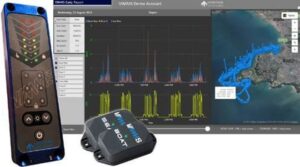
The Vessel Impact and Motion Monitoring System (VIMMS) was used to assess potential for acute and chronic injuries during maritime operations on small vessels (under 24 metres), and demonstrate the capability for data to assist in injury risk management and operational decision-making. The system combines real-time acceleration monitoring with whole- body vibration (WBV) exposure tracking, enabling operators and management to identify and mitigate both acute and chronic injury risks.
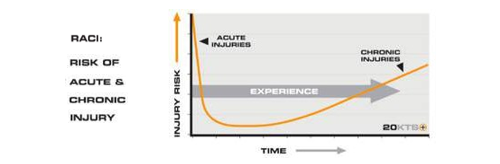
2. Understanding Injury Types
1.Acute Injuries
- Occur from sudden, high-G impacts such as slamming or wave strikes.
- Lead to instant pain and short-term recovery needs.
- Typically result in low financial cost but immediate operational disruption.
- These injuries are effectively managed through real- time monitoring, as operators can respond to live impact warnings and adjust vessel speed or course to prevent further harm.
- 2.2 Chronic Injuries
- Develop gradually from repeated low-level exposure to vibration and shock.
- Characterised by long-term recovery, debilitating symptoms, and high financial impact due to compensation or long-term absence.
- Unlike acute injuries, chronic issues cannot be detected in the moment—they require long term WBV data and analysis of exposure patterns to identify risk trends.
3. Benefits of VMMS Technology
1.Real-Time Accelerations
The VIMMS onboard display provides a traffic-light warning system for vessel operators.
- Alerts indicate when impact thresholds are being approached or exceeded.
- Enables immediate corrective action to reduce acute injury risk.
- Provides evidence for training and operational procedures, reinforcing safe driving behaviours.
- Each impact event is recorded and timestamped, allowing post-trial review.
3.2 Whole-Body Vibration (WBV) Monitoring
In addition to acute impact logging, VIMMS continuously captures 3-axis acceleration data from the crew seats during the voyage, filtered to the requirements of the WBV regulations.
- Individual WBV monitoring of all personnel
- The WBV dashboard summarises individual exposure levels over time to assess compliance with ISO 2631-5 and HSE guidelines.
- Enables identification of vessels, routes, and operators associated with elevated long-term risk.
- Supports data-driven maintenance and vessel design improvements by highlighting vibration sources
4. Regulatory Context
1.Merchant Shipping and Fishing Vessels (Control of Vibration at Work) Regulations 2007
The Merchant Shipping and Fishing Vessels (Control of Vibration at Work) Regulations 2007 set the legal framework for managing vibration exposure on marine vessels.
These regulations set the legal framework for managing vibration exposure on marine vessels, establishing mandatory limits designed to protect crew from health risks caused by whole-body vibration and repeated shocks.
Key thresholds are defined as:
- Exposure Action Value (EAV): 0.5 m/s² A(8) – the level at which employers must assess exposure and implement measures to reduce it.
- Exposure Limit Value (ELV): 1.15 m/s² A(8) – the maximum daily exposure that must not be exceeded.
Employers are required to:
- Assess and record crew exposure, particularly where the EAV is likely to be exceeded.
- Implement technical and organisational controls to reduce vibration at source (e.g. through seat design, speed management, or operational procedures).
- Provide training and information to affected personnel on the risks and protective measures.
4.2 MGN 436 (M+F)
MGN 436 (M+F) Section 8 provides guidance on how vibration data should be used to comply with the Merchant Shipping and Fishing Vessels (Control of Vibration at Work) Regulations 2007.
It explains that the Exposure Action Value (0.5 m/s² A(8)) and Exposure Limit Value (1.15 m/s² A(8)) apply to marine craft just as they do to land and air transport, but that marine operations are more variable and require vessel-specific data to identify and manage risks.
The guidance encourages operators to collect and interpret vibration data when exposures may exceed the action value, using accelerometers at key crew locations such as the seat or deck.
Real-time monitoring and traffic-light displays (green- amber-red) are highlighted as best practice, allowing drivers to understand the impact of their handling and take immediate corrective action.
4.3 Workboat Code 3
The Workboat Code 3, Section 22.3, sets clear expectations for the safety of personnel during transfer and voyage operations. Of particular relevance to this study is Clause 22.3.4, which states:
“Ambient sea conditions and whole-body vibration shall be continually assessed throughout the voyage.”
This requirement recognises that crew and passenger safety is not static but varies with changing environmental conditions and vessel dynamics.
Operators are therefore obliged to monitor and evaluate sea state and vibration exposure in real time to maintain safe conditions and minimise injury risk.
The VIMMS system directly supports compliance with this regulation by providing:
- Continuous measurement of vessel accelerations and WBV exposure throughout each voyage.
- Real-time feedback to the operator on shock and motion levels, allowing corrective action such as speed reduction or course alteration.
- Automated recording of data for post-voyage review, enabling operators to demonstrate that monitoring and assessment have been performed in line with Code requirements.
5 Financial and Operational Risk of Crew Injury
Crew injuries—both acute and chronic—carry significant financial and operational implications for marine operators.
- Direct Costs: Medical treatment, compensation claims, legal fees, and insurance excesses.
- Indirect Costs: Lost productivity, training of replacement crew, vessel downtime, and reduced operational availability.
- Reputational Impact: Frequent injury reports can affect client confidence, contract renewals, and regulatory scrutiny.
- Insurance Premiums: A sustained record of incidents leads to higher premiums and potential exclusion from preferred operator lists.
By implementing VIMMS, operators can demonstrate a proactive safety management approach, supported by objective data. This not only reduces injury frequency but also strengthens a company’s position in contract bids, insurance negotiations, and compliance audits. Over time, this translates into measurable financial savings and enhanced operational resilience.
6 Sea Trial Findings
During the sea trials, VIMMS sensors recorded accelerations received on the operator seats, correlating data from high-speed transits and adverse sea states.
- The real-time display provided instant operator feedback, allowing immediate speed moderation to remain within safe thresholds.
- WBV data demonstrated cumulative exposure trends consistent with chronic risk development models, validating the system’s suitability for long-term health monitoring.
6.1 Pilot Boats
Vital for the efficient operations of Ports, Pilot Boats operate in all weathers transferring crew to and from ships. A recent trial monitored a single shift, with the crew performing 5 trips to ships on a typical day with a Sea State of 3 to 4.
The VIMMS system recorded daily RMS A(8) vibration exposures of 0.57 m/s² and 0.60 m/s² for the two crew members, as shown in the report output below.
Under the Control of Vibration at Work Regulations 2005, the Exposure Action Value (EAV) is 0.5 m/s² A(8) and the Exposure Limit Value (ELV) is 1.15 m/s² A(8). Both crew members therefore exceeded the action value, requiring the operator to assess and, where possible, reduce exposure.
It is important to note that these figures were recorded on a typical operational day (Sea State 3–4). On days with rougher conditions or heavier seas, exposure levels would likely increase significantly, potentially approaching or exceeding the Exposure Limit Value. This represents a realistic operational risk for pilot boat crews who routinely operate in variable sea states and weather conditions.
Although the measured levels remain below the Exposure Limit, repeated exposure above the action threshold contributes to cumulative fatigue and increases the risk of chronic musculoskeletal disorders, including spinal compression injuries and lower back pain. Over time, these can lead to lost workdays, compensation claims, and increased insurance costs.
The results demonstrate that even during normal operations, WBV exposure is high enough to justify continuous monitoring through VIMMS. The system provides verifiable data for compliance reviews, informs vessel and seat design improvements, and supports proactive management of crew wellbeing before conditions become critical.
Interviews with the crew during the trials confirmed the effects of long term exposure to low levels of shock and vibration, with respondents stating:
- They often experience stiffness or discomfort after extended periods at the sea.
- Fatigue accumulates over consecutive shifts, particularly in rougher sea states.
- The motion is tolerable in the moment but leads to noticeable soreness and reduced concentration later in the day.
- Some crew have are not adjusting seating position correctly, causing poor postures to absorb impacts, which may increase long-term musculoskeletal strain.
- Pilots noted reduced concentration after rough transits, causing safety concerns due to impaired capabilities when climbing the ladder to the awaiting ship.
These qualitative findings align closely with the VIMMS data, which showed WBV A(8) exposures above the regulatory action level even on an average Sea State 3–4 day. This indicates that the risk is both measurable and perceptible to operators, reinforcing the need for ongoing vibration management, including:
- Operational review of vessel speeds and routing in higher seas.
- Ergonomic assessment of seat design and posture support.
- Regular WBV monitoring to track exposure trends and verify improvements.
Together, the crew feedback and recorded data present a clear case for proactive intervention.
VIMMS provides the quantitative foundation for this, offering continuous measurement, evidence for compliance, and insights that can directly inform safer working practices for pilot boat operations.
6.2 Safari Rib Boats
Recent incidents have highlighted the risks to passengers from accidents whilst enjoying boat safari tours and on water experiences, leading the MAIB and MCA to introduce new guidance to operators.
When the boat impacts a wave the bow rides up in the water, pivoting the boat upwards around a point towards the rear of the hull. If the driver is at the rear, they will experience the smoothest ride. Passengers located near the front will experience a higher vertical acceleration than those towards the rear.
The increase in impact felt by the passengers can be magnified by a combination of factors including:
- How far forward they are seated
- Number of passengers onboard
- Speed & sea conditions
- Sitting position
Results from a recent sea trial demonstrate the difference between the acceleration experienced by passengers seated at the forward position of the vessel compared with the driver’s seat.
this example:
- Passengers are seated at the bow significantly increasing the severity of impacts.
- Seat and handle design causes passengers to be hunched over, increasing risk of spinal injury.
- Poor posture reduces their ability to brace against forward and sidewards motions.
- In waves, forward passengers will experience greater severity of impacts compared to a person at the rear.
- The Boat Driver appears comfortable without awareness of passenger discomfort.
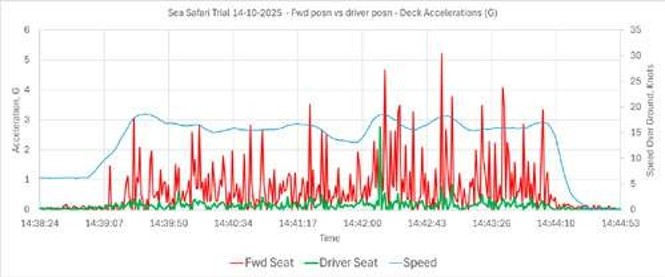
As shown in the graph, accelerations at the bow (red line) are consistently higher than those recorded at the helm (green line), even though the vessel speed (blue line) remains relatively constant. This clearly indicates that passenger location within the vessel has a major influence on exposure levels and perceived comfort.
During testing, forward-seated passengers experienced impacts exceeding 4–5 g, while the driver position remained below 1 g for the same events. Such discrepancies help explain why passengers are at greater risk of acute spinal loading, whereas the driver—often better protected by better seating and a more neutral posture—may remain unaware of passenger discomfort.
This evidence supports the use of the VIMMS system to:
- Quantify motion differences between seating positions.
- Identify operational practices that increase passenger risk.
- Inform training, vessel layout, and seating design improvements.
By integrating VIMMS data into passenger vessel operations, operators can make evidence-based decisions to reduce injury risk, enhance comfort, and demonstrate due diligence with safety regulations.
7 Conclusion
The VIMMS system provides a comprehensive risk management tool addressing both short-term and long-term injury prevention:
- Real-time acceleration monitoring supports immediate response to acute impact events.
- WBV data analytics facilitate identification and mitigation of chronic exposure risks.
Adoption of VIMMS can improve safety culture, reduce injury-related downtime, and provide objective data for both operational and insurance purposes.
About Maritime Systems Ltd
Maritime Systems is a multi-faceted design engineering company based in the UK, producing its own range of products and providing consultancy support for clients around the world.
Maritime Systems was established in 2005 as a design consultancy company. In 2011 we began to produce our own range of products as a direct response to the maritime industries requirement to monitor marine personnel’s levels of expose to shock and vibration during their daily activities.
All of our devices are designed specifically to be easy to set up and provide data in an understandable format. Features including automatic calibration and on-board processing make gathering useful data a simple process.
Maritime Systems Ltd South Western House, Southampton, SO14 3AL, UK
+44 (0) 2380 231 991
info@maritimesys.com www.maritimesys.com