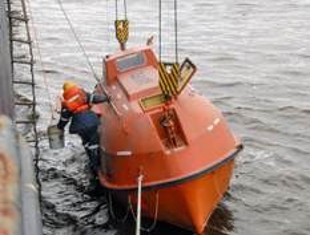
Since lifesaving appliances became mandator y onboard vessels, significant changes have been observed in the design of lifeboats and their launching systems. These changes have largely been driven by the need for larger lifeboat capacity, enhanced protection, easier operation, and improved overall safety.
Traditional open wooden boats have been replaced by fully enclosed lifeboats and free-fall boats, while modern rescue boat designs now support a wide range of maritime rescue operations. Despite these advancements, accidents during lifeboat operations – launching, running, or recovery – continue to occur, resulting in fatalities and injuries. Many of these incidents are linked to increased reliance on technology, despite improvements in design, equipment, and maintenance standards.
Research and industry studies highlight the critical importance of lifeboat and rescue boat systems. Key studies include:
- InterManager (1981–2023) – Lifeboat accidents resulted in approximately 419–420 deaths, 346 serious injuries, and 116 minor injuries.
- MAIB Study 01/2001 (1989–2000) – 115 incidents, with 12 fatalities and 87 injuries.
- Joint Survey by OCIMF, INTERTANKO, and SIGTTO (2000) – Analysis of 75 lifeboat/rescue boat accidents.
EMSA also publishes annual reports on incidents and accidents, including data specific to lifesaving appliances (LSA), though there is no dedicated section for lifeboats.
An important observation from these records is that over 98% of lifeboat-related incidents occur during drills, maintenance, inspections, or training, rather than actual emergencies. Furthermore, in three major European ship abandonment incidents, no casualties were reported related to lifeboats or associated equipment.
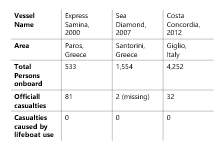
This raises an important question within the maritime industry: why do fire drills or enclosed space drills rarely result in casualties, while lifeboat drills and ship
abandonment exercises consistently reveal safety issues? The answer largely lies in the nature of the operation itself. Launching a lifeboat from a height of more than 10 meters, whether the ship is at slow speed or at anchor, is inherently challenging.
Safe operation depends on several critical factors:
- Proper use and condition of the equipment.
- Competence and training of the crew.
- Weather conditions and the overall status of the ship.
 IMO regulatory updates for enhanced safety
The Maritime Safety Committee (MSC) has taken several steps to enhance lifeboat safety and reduce accidents during drills and operations:
- At its 96th session in May 2016, the MSC adopted amendments to SOLAS regulations III/3 and III/20 through resolution MSC.404(96). These amendments made it mandatory to carry out maintenance, thorough examination, operational testing, overhaul, and repair of lifeboats, rescue boats, launching appliances, and release gear.
- Earlier, at its 82nd session (29 November – 8 December 2006), the MSC amended SOLAS regulation III/19.3.3.4 concerning the launch of free-fall lifeboats during abandon-ship drills. The amendment allows lifeboats to be:
- Free-fall launched with only the required operating crew on board, or
- Lowered into the water using secondary launching equipment without the operating crew on board, and then manoeuvred in the water by the crew.
The purpose of this amendment is to prevent accidents during abandon-ship drills, and it entered into force on 1 July 2008.
- Additionally, on 1 July 2006, amendments to SOLAS Chapter III – Life-saving appliances and arrangements, adopted in May 2004, came into effect. These amendments were introduced following work by the Sub-Committee on Ship Design and Equipment (DE) to address the high number of accidents involving lifeboats. Many crew members had been injured or even killed during lifeboat drills and inspections, and these changes were designed to improve safety and prevent such incidents.
Best Practices
The following list highlights key considerations for the safe operation of lifeboats and related equipment:
- All lifeboats and associated systems must be certified in accordance with applicable regulations and properly installed on board.
- Both the managing company and the company responsible for inspections must ensure that lifeboats and systems are inspected at the required intervals.
- Tests and dynamic inspections should be conducted in accordance with the manufacturer’s instructions.
- Fall preventers (where applicable) must be used.
- Comprehensive training covering all aspects of lifeboat operation and associated systems should be provided on board regularly.
- Maintenance of lifeboats and related systems should be treated as a critical priority.
- A detailed risk assessment must be conducted before the use of lifeboats or any supporting machinery.
- Records of all use, training, maintenance, and inspections of lifeboats and associated systems must be maintained in accordance with the Safety Management System (SMS).
Comprehensive risk assessment is essential before any lifeboat operation. The IMO provides guidance and documentation for the inspection, maintenance, and operational use of lifeboats and related equipment.
Shipping companies must ensure that crews are equipped with fully operational and well-maintained lifeboats and receive the necessary training to perform lifeboat operations safely.