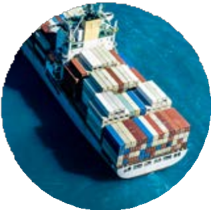
 Steamship Mutual P&I Club has published guidance highlighting critical aspects and considerations for preventing losses associated with reefer cargo. Reefer cargo carriage otherwise known as refrigerated cargo in containers involves transporting perishable or temperature sensitive goods that require controlled temperature, humidity, and airflow to maintain quality during transit. Proper handling, monitoring, and documentation are essential to prevent losses and ensure cargo integrity, the guidance advises.
Claims and common causes
Reefer claims usually arise due to temperature variations. There can be issues which are beyond the control of the ship’s crew such as related to cargo or the container.
Common issues with the cargo – This could be inherent vice or a pre-existing condition of the cargo itself, warm or incorrect stuffing of cargo, stowage of cargo above the maximum load line or obstructed airflow within the container, cargo not secured properly, damaging the reefer unit or insulation, mismanagement of temperature/ atmosphere during various stages of multi-modal transport.
Common issues with the container – Inadequate pre-trip inspection (PTI) to verify the container’s structural integrity, cleanliness, and correct operation of its refrigeration unit. The interior must be clean, dry, and free of odours to prevent contamination of the cargo. Drain holes and the T-bar floor channels must be clear of any debris. A record of the successful PTI is often stored in the container’s data logger and should be verified by the shipping lines before accepting the load.
The liability for reefer claims can be minimised through visual inspections, proper monitoring, record keeping and timely reporting, the controllable aspects for ship’s crew. Of the controllable aspects, common contributory causes can be attributed the following:
- Inadequate pre-trip inspection including initial readings, visual condition and checking container seals
- Incorrect settings for temperature, humidity control, ventilation etc
- Poor monitoring & record keeping of required datasets
- Inadequate maintenance
- Lack of spares availability on board
- Lack of qualified staff for monitoring and maintenance
- Failure to plug and power-on reefer container upon loading
- Failure to supply continuous power to the CTU once loaded on board
- Reefers unplugged and left unpowered during transhipment or restowing at intermediate ports
- Reefer unplugged too early at discharge port CTU not identified as a live reefer and left unpowered
- Generator power failure on board, breaker power trip
- Over loading of ships power points beyond design limit
- Reefer malfunction such as failure of microprocessor control system circuits
- Failure to reject damaged units or not detecting damage to unit (during loading or pre-existing)
Claims can also arise for reasons such as:
- Failure to seek timely expert advice to resolve identified or potential issues on board
- Failure to send timely report on matters such as: clarifying discrepancies in set-point or other settings, instructions and actual condition & readings observed. discrepancies in temperature observed, other issues, alarms noted etc. Any power failures or other issues encountered during the voyage
CTU condition & fitness:
- Visible damages to the CTU
- Damage to reefer power cables or defective reefer power cables, sockets
- Defective refrigeration unit, alarms, sensors, safety cut- outs etc.
- Defective data logger unit or its back-up battery
- Defective data recorder
- Missing/insufficient recording charts (where paper chart recorders used)
- Incorrect ventilator settings (according to cargo type, for example for frozen cargo, the fresh-air vent should be closed)
- Damaged/defective ventilators
Stowage location:
- No safe access for monitoring or maintenance purposes
- Obstructions prevent adequate airflow / ventilation
- Proximity to odours such as from pungent cargo (hides) stowed in the vicinity of reefer air intake that can contaminate the cargo
Recommendations
Effective planning, monitoring, record keeping, and timely reporting are key to avoiding potential claims. Close monitoring of loading operations, good record keeping and reporting and/or rejecting any damaged/ malfunctioning units at an early stage of loading operations, can all minimise and mitigate against potential claims.
Steamship Mutual recommends:
Documentation and pre-planning
- Ensure all pertinent documentation is available and reviewed in advance
- Include cargo documentation such as the Cargo manifest, packing list, and DG manifest
- Obtain formal confirmation from shippers on cargo carriage and care instructions
- Ensure necessary spares are available
- Competent crew – experience, understanding and training
- Reefer slots fully functional – per vessel design
- Vessel’s generators able to handle anticipated loads, with spare capacity
- Seasonal cargo – Additional temporary reefer slots created using powerpacks with due approvals, risk assessment and mitigation
- Stowage location with consideration to anticipated weather, safe access and proximate cargo
Operations
- Verify loading location as per stowage plan
- Brief vessel crew on plan and instructions related to reefers loading / discharging such as: safe access, visual examination of reefer, reefer sockets and power cable condition, power on/off, initial & subsequent readings, record keeping of activities and timely reporting of any concerns / issues to the duty officer/chief officer
- Early identification and rejection of damaged / faulty units at the time of loading are crucial preventive measures.
Monitoring, reporting and expert advice
- Initial reading checks and regular monitoring are key components for assurance.
- Proper record keeping of the timeline for key events (such as power on/off, inspection, maintenance, repairs) helps recreate timelines to supplement the datalogger records to identify the breakpoint in the Cold Chain.
- Report any discrepancies noted at the time of loading or during a voyage to relevant stakeholders.
- Early engagement of expert advice to resolve issues and contain losses.