Norway set to introduce zero-emission requirements for World Heritage fjords
 This is the first of three stories I have chosen to highlight this month, all of which originate from Norway.
For some years, Norway has been at the forefront of driving the decarbonisation agenda and this can be seen in many of their groundbreaking products.
But in many ways perhaps this story is the most striking and boldest illustration so far. I learned that the Norwegian government has Continue reading “What caught my eye: March 2025”
 Let’s face it, we all love a good ghost story, don’t we? Engineers (along with a different branch of the surveying family) have braved spooks and spectres to inspect the Harecastle Tunnel in Staffordshire, UK to ensure it is safe for waterway users to navigate, this and other things caught my eye in January 2025.
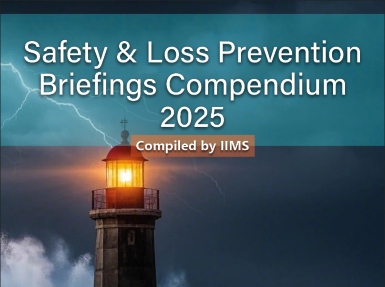 Dear member and fellow maritime professionals
 Edition IV of the IIMS Safety & Loss Prevention Briefings Compendium has been published and is available for download. This is an essential addition to every marine surveyor’s online library. As you read and browse the 172-page publication you will discover:
 When I read this story in December 2024 despite the report coming out in October, it did not shock me, but it certainly saddened me. I guess we all know the inherent dangers that fishers the world over face. So, I read that a global safety charity is calling for urgent change and investment after its latest report named fishing as the world’s most dangerous occupation.
 Well, who wouldn’t want to take a trip down the river in their very own floating hot tub. Sounds like a great and rather cool idea to me. And now you can add San Francisco to the list of cities offering hot tub rides through its scenic waters. This seems to be part of a larger trend as last winter the City of Chicago made headlines by offering holiday hot tub tours down the Chicago River.
 The first artwork on water by Alex Chinneck, the sculpture celebrates Sheffield’s historic waterways and industrial heritage. It takes the form of a full-size canal boat, whose body behaves in an extraordinary way, performing a six metre-high, gravity-defying, loop-the-loop.
 It seems we have gone full circle. Cargo ships powered by sail were lost to us a century or more ago, and to the current generation such vessels are regarded as outmoded transportation from a bygone era. But now they are back, more sophisticated and sustainable than ever. Recently I read about the Anemos, which has claimed the title of the world’s largest sailing cargo ship as she made her inaugural voyage from Concarneau, South Brittany, France.
 The three Palmerston forts in The Solent off the UK’s south coast are iconic structures known to many, dating back to 1859 when they were built to counter the threat of invasion by the French. For me they are a familiar sight, but I have never had the opportunity to land on these extraordinary structures – only admire them from afar with extreme curiosity.
 If you follow my scribblings on a semi regular basis, you will know that the subject of lithium battery fires is one that concerns me greatly and is a topic I have written a great deal about. A recent performance test conducted by Yachting Pages on some of the leading safety cases revealed some startling and concerning findings.