I have spoken about the onslaught of technology many times before and how it is affecting and transforming the shipping and marine surveying industries, but once again, I have made it the central theme of my introduction to this month’s CEO blog.
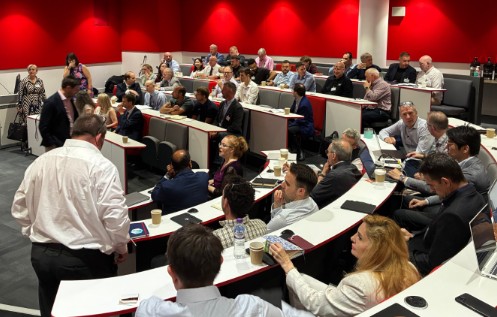
On 30 June, I joined the great and the good from the UK maritime industry at the MCA’s 2026 Autonomy Industry Meeting, held in Southampton, UK. It felt akin to a ‘top-level summit,’ and it was a revelation. We think of autonomous vessels as being new tech and, indeed, they are, yet they have been on the scene for some while. The regulatory framework and landscape, however, have not kept pace. It is a complex and challenging business! Even a report of an incident recently in Portsmouth Harbour involving an autonomous vessel colliding with a yacht has not dampened spirits, it seems, for the brave new autonomous world ahead. An investigation is underway after a Royal Navy uncrewed surface vessel (USV) collided with Lutine, a 55-foot X-55 racing yacht, resulting in damage to both vessels. The collision draws attention to a programme that most UK recreational boaters will never have heard of. The Rattler uncrewed surface vessels are designed to test the future of the UK’s autonomous naval operations – but they are sharing one of the UK’s busiest waterways with ferries, commercial traffic and leisure craft. An anonymous source quoted by English newspaper, The Sun, claimed the drone “went rogue” before striking Lutine, which the source says was under sail and had right of way at the time. This is just one small example of what regulators and insurers are faced with and will need to get their collective minds around. This technology is not without jeopardy, it seems.
The MCA event coincided with the publication of the new non-mandatory Maritime Autonomous Surface Ships (MASS) Code. Under the leadership of Dr Katrina Kemp, the MCA’s Maritime Autonomous Policy Lead, this is the culmination of 8 years of work with assorted industry personnel to reach this point. Katrina is well known to IIMS. Some years ago, she was the MCA’s external monitoring Lead Auditor responsible for our annual Certifying Authority audit. Mandatory adoption of the Code is not expected before 2032 – that will be the best part of 14 years of planning, preparations and endless meetings. And that is remarkable.
The UK delegation, consisting of MCA and Department for Transport leads, plus industry experts, has been instrumental during discussions at the International Maritime Organization (IMO) to develop the MASS Code. Over 100 international partners, including administrations, industry and academia stakeholders, have negotiated and cooperated, culminating in the IMO Maritime Safety Committee’s 111th session from 13-22 May adopting the non-mandatory MASS Code.
The Code provides the first international regulatory framework for remotely operated and autonomous cargo ships covered under SOLAS Chapter I. It was published by the IMO on 1 July 2026.
The MASS Code sets out a comprehensive, goal-based framework to ensure that remotely controlled or autonomous ships are designed and operated to a level of safety, security and environmental protection that is expected of a conventional ship. They will also be required to comply with the International Convention for the Safety of Life at Sea (SOLAS) and other applicable mandatory IMO instruments. The Code applies to cargo ships. As it is a non-mandatory instrument, Member States are given the opportunity to test its use while paving the way for making it mandatory under the SOLAS Convention.
It was clear from the meeting that there are still plenty of unknowns, but as the MCA speakers said honestly, “we have to start somewhere”. What hit home to me was the sheer complexity that those involved in developing the Code are having to deal with.
Sticking with the technological theme for a moment, I have accepted an invitation as a keynote speaker at the recently announced AIMS International Marine Surveyor Symposium to be held in Sydney, Australia, from 19-22 July 2027. Although on the face of it, AIMS and IIMS are competitor organisations, I applaud their initiative and am happy to work with them to support the event and to be in attendance. The title of my keynote address is ‘Transformative AI, its effects on marine surveyors, and the importance of standards’. IIMS intends to host an event whilst I am in Australia, and I hope to meet members next year in Brisbane.
Finally, I wanted to say a few words about our training initiatives. In the past few weeks, I had the pleasure of hosting a factory facility visit at Seldén Mast Ltd in Gosport – a rare and insightful opportunity indeed. The 20 in-person delegates were joined by many more online for the afternoon session presented by Kim Skov-Nielsen, entitled ‘Rigs, Masts & Sails: What surveyors need to know’. Kim shared some frightening photographs taken from his extensive collection as he highlighted and pointed out what and where surveyors should be looking and what they might discover. Judging by the feedback, it was clearly a great event.
Survey well
Mike Schwarz