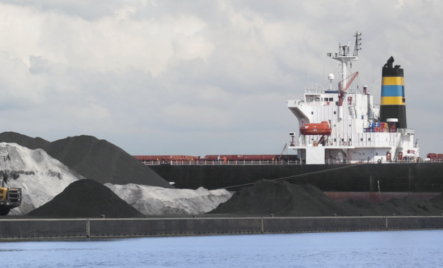
The classification of coal has been amended so that it will be treated as both Group A and B, unless otherwise tested.
On 1 January 2019 amendments to the IMSBC Code will apply. In an article to Gard Club, Penelope Cooke of Brookes Bell LLP, explains the impact of these changes on vessels carrying coal cargoes.
The amendments to the IMSBC Code regard the criteria under which coal cargoes are considered Group A, namely liable to liquefy, in addition to Group B chemical hazards which apply to all coal cargoes. Thus, coal cargoes may need the same TML and moisture certification as other Group A cargoes, such as concentrates, nickel ore and iron ore fines.
MCA releases a notice on the transport of marine pollutants
The UK MCA has released a Merchant Shipping Notice regarding the transport of dangerous goods and marine pollutants in packaged form by sea on ships within UK waters and on UK ships.
The IMO has adopted the amendment 39-18 to the International Maritime Dangerous Goods (IMDG) Code. It will enter into force globally on 1 January 2019, with a twelve month “transitional period” until 31 December 2019.
Two crew members, who were inside the deck slewing crane’s cabin, were seriously injured.
Transport Malta’s MSIU has published its investigation report on the slewing deck crane failure onboard the Maltese-flagged product tanker ‘Bozdag’, while the ship was in the port of Tallinn on 28 November 2017.
The report revealed that the dynamic loading and the sudden halt of the free falling loads were two major contributing factors to the failure of the deck slewing crane.
The London P&I Club together with Paul Willis Senior Associate at Hawkins have published a loss prevention guide regarding the risks of carrying coal cargoes. The report gives special consideration to the issues surrounding gas monitoring and ventilation.
The guide mentions that the management of coal cargoes and the proper use of gas detection equipment are vital to prevent coal fire claims. It also details the basic requirements regarding the installation, use and maintenance of gas detection devices and the different types of sensors involved in their operation.
The International Council on Combustion Engines (CIMAC) has released a statement on marine fuel incidents that have occurred this year highlighting that it is unable to draw any firm conclusions about the cause of the problems.
CIMAC Working Group Fuels – WG7 – made the statement after the unusually large number of ships that experienced marine fuel incidents with seemingly on-spec fuels earlier this year. The statement confirms much of what the International Bunker Industry Association (IBIA) has already said on the issue.
Cargo hold cleaning is a critical aspect of the complex bulk carrier operations that require careful preparation to maintain cargo quality and to avoid any delays. A conventional bulk carrier may transport coal this week and soya beans the next week, which requires thorough wash-downs and cleaning in between. Danish shipping company Norden has said it has tested a cargo hold robot which can be remotely operated to prevent risk and delays, also leading to enhanced safety for crew and others who are required to enter holds.
The prototype, developed by Danish company CLIIN with assistance from the Market Development Fund, is a new belt-driven robot which can be operated remotely to go up and down along the sides of the holds while pressure cleaning them. The robot is driven forward by Continue reading “Cargo hold cleaning robots undergo testing”
The atmosphere in each cargo hold should be monitored, at least on a daily basis, for CO, hydrogen sulphide (H2 S), oxygen (O2) and flammable gas (LEL-methane).
London P&I Club has analysed the problems associated with the transportation of coal in bulk, such as self-heating and flammable gas (i.e. methane) release. Self-heating can lead to fires and the production of carbon monoxide (CO), whilst methane release can lead to an explosive atmosphere being generated in the hold.
Self-heating normally occurs in localised hot spots within a bulk cargo, and temperature measurements are unlikely to identify problems. However, when coal self-heats it produces CO, so measuring the concentration of CO is the most effective method to identify a self-heating cargo.
The atmosphere in each cargo hold should be monitored, at least on a daily basis, for CO, hydrogen sulphide (H2 S), oxygen (O2) and flammable gas (LEL-methane). If the holds are being ventilated, then ventilation should be stopped at least Continue reading “Preventing coal cargo from self-heating”
A number of safe bunkering measures are required for each bunkering operation. These can be divided into four stages and checks
The UK P&I Club has published helpful guidance to ensure safe bunkering operations. The Club said that bunkering operations are routine and critical, high risk operations which require to be carefully planned and performed.
Causes of bunker spills
Although the most of the bunker transfers are carried out without incident, very occasionally, things can and do go wrong. The UK Club notes that only a minority of cases do bunker spills occur because of failure of the hoses or pipelines, while the majority of spills result from a tank overflowing.
But these are not the only causes. Common causes of bunker spills can be summarised as follows:
– Improper set up of pipeline system valves: Potentially causing either overpressure, or flow of bunkers to an unintended location;
– Insufficient monitoring of tank levels during bunkering: All tanks, not only those Continue reading “How to conduct a safe bunkering operation”
The Risk Based Dangerous Goods Stowage principles have been developed to minimise risk to crew, cargo, environment and vessel in case a fire develops. The different container vessel designs were reviewed from a risk mitigation perspective and ultimately six different risk zones defined.
In the aftermath of the major fire that killed five crew members onboard the ‘Maersk Honam’ in March 2018, Danish container ship giant Maersk has conducted a thorough review of their current safety practices and policies with reference to the stowage of dangerous cargo. Consequently, Maersk has now announced the implementation of new guidelines to improve safety across its container vessel fleet.
On 6 March 2018, the container ship ‘Maersk Honam’ suffered a serious fire in its cargo hold where dangerous goods were carried, but up to this time, there is no evidence to suggest that dangerous goods caused the fire, the company noted. In addition, all cargo was accepted as per the requirements of the IMDG Code and stowed onboard the vessel accordingly.
Following the tragic incident, Maersk took measures and implemented additional preliminary guidelines for stowage of dangerous goods. The company evaluated over 3,000 UN numbers of hazardous materials in order to further understand and improve dangerous cargo stowage onboard container vessels and developed a new set of principles called ‘Risk Based Dangerous Goods Stowage’.
Transport Malta’s MSIU issued an investigation report on the fatality of a crew member onboard the Maltese-registered chemical tanker ‘Scot Berlin’ in August 2017. The immediate cause of the accident was the entry into a space which had a significant presence of toxic gases suspended in the air.
The Scot Berlin arrived at Marsaxlokk Oil Tanking Terminal loaded with two parcels of cargo. Following the completion of cargo operation, the crew members started the ballasting of the vessel since her next trip to Spain was a ballast voyage. Ballasting in the forepeak tank started under the supervision of the second mate.
Marine casualty investigation training provided to Red Ensign members. Raman Bala, Director of Shipping, British Virgin Islands (pictured) attending the MAIB training
Red Ensign Group members have been attending an intensive course aimed at working with them to ensure their safety during marine casualty investigation and incidents are carried out in line with international requirements.
While the REG delegates are already experienced in such investigations, the course run by the UK-based Marine Accident Investigation Branch combines the requirements of the International Maritime Organization’s Casualty Investigation Code with its own experience and best practice.
David Wheal, principal inspector of marine accidents at the MAIB is one of the team that created the course. He said: ‘This is not designed to replace the formal training we would expect investigators to have. This course serves as a platform for future refresher and enhanced training.’ Continue reading “Marine casualty investigation training provided to Red Ensign members”
To assist shipping companies to prepare for implementation of the UN IMO global Sulphur rule compliance cap for ships’ fuel oil, the International Chamber of Shipping (ICS) has produced – free of charge – some comprehensive guidance on implementation planning, to help ensure compliance across the shipping industry with this regulatory game changer.
The free ICS guidance has been prepared for the vast majority of ships that will comply after 1 January 2020 using fuel oils with a sulphur content of 0.50% m/m or less.