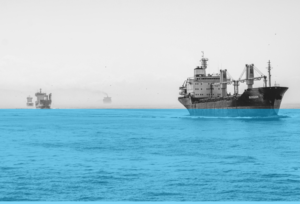
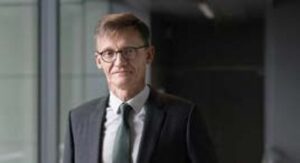
Bureau Veritas Marine & Offshore’s Executive Vice President, Matthieu de Tugny, addresses what is required of class societies if the maritime industry is to achieve a sustainable blue economy.
The maritime industry is currently experiencing a sustained period of growth, with shipping and port industries representing 40% of the ocean economy’s total worth, which today stands at $2.2 trillion. This growth is reflected in the current global orderbook, which – according to the Clarksons newbuilding price index – has seen a 45% increase in newbuild orders since 2021. However, this economic strength is tempered by mounting challenges that cannot be ignored.
Geopolitical instability continues to disrupt maritime operations on a day-to-day basis, whilst elevating the safety risks for seafarers operating within the affected regions. Simultaneously, an unpredictable policy environment is reshaping global trade routes, while shipowners and operators face significant regulatory demands in an effort to cut carbon emissions, pressures that are only expected to increase over the coming years.
Following the outcomes of MEPC 83, the maritime industry awaits the likely introduction of the IMO’s Net Zero Framework (NZF) in October. If enacted, these measures will establish mandatory marine fuel standards and GHG emissions pricing for shipping. The NZF will join a complex regulatory environment such as FuelEU Maritime and the EU Emissions Trading.
However, if the maritime industry is to meet the IMO’s net-zero GHG target by 2050 – not to mention the 20% GHG emissions reduction checkpoints in 2030 – systemic transformation is required in terms of how we finance, fuel and operate the global fleet. Financial institutions that underpin the shipping industry must embrace green financing models that link capital with climate performance. Furthermore, if the current alternative fuels deadlock is to be overcome, the industry must focus on continuing to establish more green corridors as a viable means of synchronizing the development of ships, ports, fuels, and regulatory policies to support zero-emission trade.
As a leading classification society, Bureau Veritas Marine & Offshore (BV) has been working in a risk capacity alongside industry partners, including Fortescue, K Line, and the Australian Renewable Energy Agency, to support the development of the Australia– Japan iron ore corridor. This route is centered around the development of green ammonia, with fuel production in Pilbara, bunkering facilities in Port Hedland, and end-use in Kobe.
This fundamental change also involves the need to address the historic inefficiencies that the industry has operated under for centuries. Practices such as “sail fast, then wait” (SFTW), which denotes the practice of vessels speeding to their destination and then idling at anchor whilst they wait for an available berth at port. However, new initiatives such as the Blue Visby Solution seek to address this ineffective practice. Developed by the Blue Visby Consortium, this multilateral platform utilizes a unique algorithm to provide participating vessels with optimized arrival times that allow them to slow steam. This can reduce shipping emissions by approximately 15% and, based on 2019 figures, has the potential to remove approximately 45 million tonnes of CO2 across the tanker and bulker fleets.
The role of classification societies is central to the success of the industry’s transition. However, whilst maintaining the traditional role of class as custodians of change within the industry, BV is increasingly acting as an enabler of enhanced collaboration throughout the maritime value chain. By utilizing its extensive industry expertise, BV represents a trusted and impartial advisor that facilitates the integration of energy- saving devices and operational measures to cut fuel consumption, whilst providing modelling scenarios and detailed data insight to support evolving financing schemes that will accelerate the development of advanced zero-carbon fuelled vessels.
The industry has certainly made crucial progress in its pursuit of Net Zero, but this momentum must be sustained. This can only be achieved through pragmatic, decisive action that works in tandem with global supply chain partners.
Only through this consolidated effort will we unlock the potential of a truly sustainable blue economy
By Matthieu de Tugny