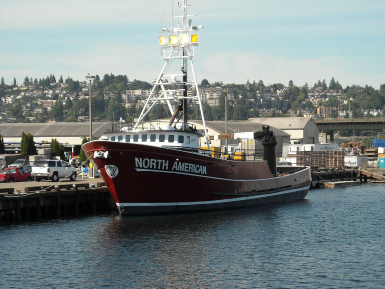
The flooding and sinking of fishing vessel North American in Seattle, Washington, USA was a result of hull corrosion, said the National Transportation Safety Board.
What happened
On May 14, 2024, about 0550 local time, vessel representatives for the fishing vessel North American, which was uncrewed and docked on the Lake Washington Ship Canal, in Seattle, Washington, were notified that the vessel was flooding.
Salvors arrived on scene and attempted to dewater the vessel but were unable to keep up with the flooding, and the vessel eventually sank.
There were no injuries, and no pollution was reported. Damage to the vessel was initially estimated at $3 million.
Analysis
On May 13, the vessel had been underway for about 6 hours on a sea trial to familiarize the new captain and chief engineer with the vessel and its systems. Other than a short trip to get fuel and another trip to drop off equipment at a nearby dock (both in the previous month), the vessel had been laid up for the entire winter at its dock. While underway, a bilge alarm alerted the crew to flooding in the engine room.
Crewmembers stated that the flooding was coming from the shaft alley, which ran beneath the vessel’s three floodable fish holds. Crewmembers emptied all the water from the three fish holds, successfully pumped the bilge, and reported that water was no longer coming from shaft alley. When they returned to the dock that afternoon, crewmembers attempted to identify the source of the flooding into the shaft alley without success. When the last crewmember left about 1830, he reported there was no visible flooding and that there was no water in the bilges.
A postcasualty dive survey found three wastage holes in the hull. The diver found no other potential sources of water ingress after examining the entire hull, the rudder, propeller, and all thru-hull fittings (including the stern tube). The crewmembers did not report striking any objects or grounding during their sea trial, and the dive survey confirmed that there were no signs of collision or grounding. Therefore, it is likely that the source of the flooding into the shaft alley, and subsequently the engine room, was the three holes in the hull, which were located beneath the shaft alley.
The vessel’s owner had been aware of corrosion within the double bottom areas since 2020, when a hole in the hull was found during a survey. The owner conducted additional hull surveys in 2021 and 2023 in an attempt to identify and address any areas needing repair. The survey found potential areas of concern, but immediate repair of the areas was not deemed necessary. It is likely that localized corrosion within the shaft alley resulted in the holes identified postaccident, and that the holes manifested or worsened during the sea trial on May 13.
The crewmembers attributed the flooding on the day of the sea trial to water coming from the floodable fish holds, and were comfortable leaving the vessel unattended that evening because they had emptied the holds of water and did not see additional flooding. It is likely that the flooding continued through the evening, and without pumps running to remove water from the shaft alley, water would have entered the engine room. Because the crew left off the access cover from the aft fish hold to the shaft alley overnight, flood water would have progressed upward into the aft fish hold. Once the engine room filled, flood water would have progressed upward into the accommodation spaces, ultimately causing the vessel to sink.
Why it happened
The National Transportation Safety Board determines that the probable cause of the flooding and sinking of the fishing vessel North American was hull corrosion, which resulted in wastage holes that allowed water ingress into the engine room overnight while the vessel was unattended.
Download the PDF: