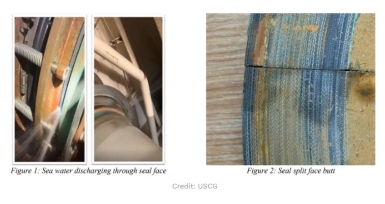
The U.S. Coast Guard (USCG) has issued a safety alert after a prototype component used in a mechanical shaft-seal system failed onboard a USCG inspected deep draft vessel.
In February 2026. a U.S. flagged crude oil tanker transiting near Delaware Bay experienced simultaneous failures of its port and starboard shaft seals, resulting in substantial seawater ingress. The crew subsequently deployed emergency collars supplied by the seal manufacturer and used the vessel’s emergency bilge system to remove the water.
The investigation revealed that the failed component was a prototype composite seal-facing material installed during dry-dock as part of a shaft-seal system previously approved by a Recognized Organization (RO).
Importantly, the investigation found that the RO-approved design drawings lacked specific material details, vaguely describing the seal-facing material only as “composite.” During the vessel’s first post dry-dock voyage, seawater flooded through the seals’ split face butt when exposed to cold seawater after operating in warm conditions. Although the overall seal system was approved by the RO, the seal manufacturer did not disclose its use of the unapproved prototype material. The USCG, RO, and the vessel owner became aware of the substitution only after the incident occurred.
Vessel owners and operators are reminded to inform the cognizant USCG Office in Charge, Marine Inspection (OCMI) and the applicable RO of any deviations from existing approvals, including prototype or substitute materials, prior to installation. They should also ensure that any novel materials or arrangements that deviate from applicable standards are properly communicated and approved in advance.