Panamanian Ship Registry to stop accepting tankers and bulkers more than 15 years old

Panamanian Ship Registry to stop accepting tankers and bulkers more than 15 years old

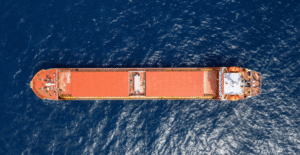
The Panamanian Ship Registry is to stop accepting tankers and bulkers more than 15 years old. The move has been officially communicated to the industry through an update to MMN 11/2024, which specifies the requirements for the Precheck process. It is based on an analysis of data from inspections and detentions of vessels flying the national flag. A key component of Precheck is the risk assessment regarding sanctions and vessel operations.

The regulation was adopted after the Directorate General of the Merchant Marine identified that 71% of fleet detentions between 2023 and the first half of 2025 involved bulk carriers, general cargo vessels, and oil tankers older than 15 years. Continue reading “Panamanian Ship Registry to stop accepting tankers and bulkers more than 15 years old”
Partnership to develop world’s longest-range hybrid electric ship

Partnership to develop world’s longest-range hybrid electric ship Source: Glosten

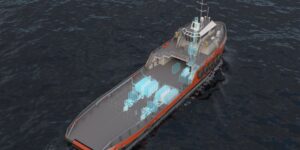
Fleetzero and Glosten have teamed up to develop world’s longest-range hybrid electric ship.

Glosten has been working with Fleetzero on the retrofit of a Lightering Support Vessel owned and operated by AET. The partnership said this collaboration marks a major step forward in the effort to offer zero-emission global shipping and expand the reach of electric propulsion in commercial maritime applications. Continue reading “Partnership to develop world’s longest-range hybrid electric ship”

Liberia launches CIC on compliance with marine notices

Liberia launches CIC on compliance with marine notices

The Liberia Maritime Authority has launches a CIC on compliance with marine notices.
The purpose of the CIC is to determine the level of compliance of all involved parties with the requirements of the Liberian marine notices, especially those related to safety compliance.

Vessel operators and Designated Persons Ashore (DPA) should ensure that:

  • Relevant documents are available onboard and ready for inspection by Liberian inspectors
  • Evidence of communication is preserved and available upon request
  • Crew is aware of Liberian requirements and ready to demonstrate compliance

Continue reading “Liberia launches CIC on compliance with marine notices”

The Hague Rules: 100 years old and still standing

The Hague Rules: 100 years old and still standing

Is simplicity a reason for the success of the Hague Rules? In this opinion piece, Mark Russell, Head of Cargo Claims in Gard, outlines the history – and looks to the future – in a world of competing cargo carriage regimes.

The Hague Rules came into being 100 years ago this year, becoming the first international convention governing the rights and obligations under bills of lading for the carriage of goods by sea. As the volume of internationally traded goods grew, the Hague Rules were born out of a need for uniformity in the allocation of risk between shipowners and cargo interests. Continue reading “The Hague Rules: 100 years old and still standing”

Understanding effective risk assesments

Understanding effective risk assesments

The growing scale and complexity of marine transportation necessitate a proactive and multi-faceted approach to risk management. While professional expertise, experience, and regulatory frameworks provide valuable advantages, they cannot anticipate all potential risks which is why Understanding effective risk assesments is important.

A review of incidents often finds that opportunities were missed to identify and mitigate the risks. As with any process, risk assessments may be ineffective and unlikely to contribute to safety if they are missing the point, are not understood, or seen merely as a ‘tick box exercise’. Risk assessments should ideally occur on many levels, both as a formal, documented process and as a dynamic, ‘on the job’ activity. Continue reading “Understanding effective risk assesments”

Bringing expertise to the UK Maritime Industry

Bringing expertise to the UK Maritime Industry

The UK’s top maritime professional organisations are working together to make their voice heard on key issues and bringing expertise to the UK Maritime Industry.

While the size of the British merchant fleet may have declined significantly over the past several decades the UK continues to be well endowed with maritime expertise.

For generations, professional organisations have provided a key source of expertise helping to maintain the right standards across industrial sectors ashore. However just over three years ago a number of maritime-linked bodies came to the view that this has not been happening within the maritime sector and, often, regulators and employers had been missing out on the years of experience leading professionals can bring to the table. Continue reading “Bringing expertise to the UK Maritime Industry”

How a Navy doctor revolutionized high-speed boat safety

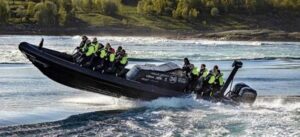
How a Navy doctor revolutionized high-speed boat safety Photo Credit: Ullman Dynamics

For years, operators of high-speed boats have silently endured the physical toll of their profession. Repeated slamming impacts from rough seas caused serious injuries, many of them life-altering. However, one Navy doctor saw these challenges not as an unavoidable consequence but as a problem that could be solved. His solution? A seat that would change the course of high-speed boat safety. This article is about how a Navy doctor revolutionized high-speed boat safety. Continue reading “How a Navy doctor revolutionized high-speed boat safety”

EV harbor tugboat development project launched in Japan

EV harbor tugboat development project launched in Japan
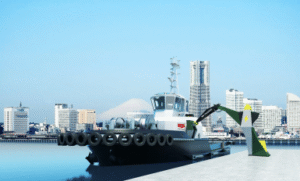
EV harbor tugboat development project launched in Japan. Source: Marindows Inc.

Tokyo Kisen Co., Ltd. and Marindows Inc. have officially launched Japan’s first pure battery-powered EV harbor tugboat development project.

The EV harbor tugboat will operate in the ports of Yokohama and Kawasaki and aims to contribute to “zero GHG emissions from the ports” in accordance with the Carbon Neutral Port (CNP) policy.

In January 2023, Tokyo Kisen put into service TAIGA — Japan’s first series-hybrid electric-powered tugboat equipped with a large-capacity Continue reading “EV harbor tugboat development project launched in Japan”

Managing the growing risk of Lithium-ion battery fires

Managing the growing risk of Lithium-ion battery fires

The global energy transition has led to an acceleration of new and innovative technologies designed to support decarbonization efforts across the global supply chain. The maritime industry  plays a fundamental part in this effort, not simply by addressing its own impact on global CO2 emissions, but also by facilitating the availability and transportation of new and innovative technologies that are designed to mitigate carbon emissions. But not all of this is safe as their is a growing risk of Lithium-ion battery fires.

For instance, the shipping industry is playing a critical role in accelerating the green automotive market, particularly the global transportation of electric vehicles (EVs) and large battery hybrids. According to Statista, the EV market is projected to grow by nearly 10% each year and account for over 17 million vehicles by 2028. However, this development also brings with it significant safety implications that don’t just impact the vessel, but also the health and wellbeing of crew members onboard – specifically in relation to the significant increase in fire risks presented by the lithium-ion (Li-ion) batteries used in EVs. Continue reading “Managing the growing risk of Lithium-ion battery fires”

Container ship fires on the rise again?

Container ship fires on the rise again?

After a seemingly ‘benign’ period, we have seen several serious container ship fires lately, including a large one leading to tragic loss of life. Congested ports in Asia and increasing traffic of large container ships around Africa are also a cause for concern. Which begs the question: are container ship fires on the rise again?

Cargo-related fires on board container ships have long been a hot topic in the industry – and rightly so: In 2023, we saw on average one container cargo fire every 9 days, according to statistics from Cargo Incident Notification System (CINS). This is an increase compared with 2020, when the number was approximately one container fire every two weeks. Continue reading “Container ship fires on the rise again?”

Asphyxiation in cargo hold due to oxygen depletion

Asphyxiation in cargo hold due to oxygen depletion

Britannia P&I Club has published a case study focusing on an incident onboard a bulk carrier nearing the completion of loading corn cargo, which caused the asphyxiation in the cargo hold of two fumigation contractors, one of whom died.

On 3 December 2021, a 33,000 GT bulk carrier arrived in Chennai, India, to load 53,000 tonnes of yellow corn. Fumigation contractors boarded to install ducting for fumigating the cargo. Loading began that day but was intermittently halted due to rain. By 15 December 2021, cargo hold four was loaded and its hatches and accessways were sealed. Loading continued in other holds as weather allowed. Continue reading “Asphyxiation in cargo hold due to oxygen depletion”

Proper Towage of mixed cargoes on bulk carriers

Proper Towage of mixed cargoes on bulk carriers

The American P&I Club has raised concerns that have arisen regarding the loading of finished and unfinished steel products alongside break-bulk, containerized, and project cargoes in the same cargo hold of bulk carriers. Which has caused American P&I Club to create instructions on proper towage of mixed cargoes on bulk carriers.

Examples of break-bulk, containerized, and project cargoes include large, heavy, oversized items, machinery parts, crates, and heavy-duty wheeled items such as trucks, cranes, or pay loaders. Unlike vessels dedicated to carrying break-bulk, containerized, or project cargoes, bulk carriers are not fitted with suitable lashing and securing arrangements. Continue reading “Proper Towage of mixed cargoes on bulk carriers”

Instagram Posts from the IIMS @iimsmarine

Privacy Overview

This website uses cookies so that we can provide you with the best user experience possible. Cookie information is stored in your browser and performs functions such as recognising you when you return to our website and helping our team to understand which sections of the website you find most interesting and useful.

Strictly Necessary Cookies

Strictly Necessary Cookie should be enabled at all times so that we can save your preferences for cookie settings.

Show details Hide details
Performance & Marketing Cookies

This website uses Google Analytics to collect anonymous information such as the number of visitors to the site, and the most popular pages. This also helps us optimise our marketing campaigns. User data sent to Google Analytics may be used for ad personalization and measurement of our ad campaigns. Keeping this cookie enabled helps us to improve our website.

Show details Hide details