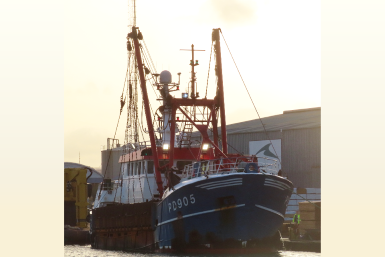
Owners and operators of beam and scallop trawlers have been urged to inspect their vessels’ quick-release arrangements after a deckhand was fatally injured by chain failure on the Honeybourne III in 2023.
IACS updates safety requirements for ammonia-fuelled engines
The International Association of Classification Societies (IACS) has announced a landmark revision to its Unified Requirement UR M78, introducing comprehensive safety requirements for marine engines fuelled by ammonia.
The newly published Rev.4 of UR M78 expands its scope to include ammonia as an approved fuel for reciprocating internal combustion engines. This development reflects IACS’s commitment to enabling innovative propulsion technologies while maintaining the highest safety standards.
LNG-fueled vessels lead alternative-fueled newbuild market
The latest annual data from DNV’s Alternative Fuels Insight (AFI) platform showed that within the container segment, alternative fuels dominated, with the fuel mix by tonnage approximately 58 percent LNG, 36 percent conventional fuels, and 6 percent methanol.
In a first of its kind, the Directorate General of Shipping (DGS) has developed a comprehensive Safety Video Series to improve safety awareness across the maritime workforce.
The DGS has observed recurring safety lapses and incidents attributable to deficiencies in safety awareness by shipping companies, seafarers and trainees as evidenced by casualty investigations conducted by the Directorate. Continue reading “India DGS launches Safety Video Series”
Canal & River Trust has published its Vital Connector for Nature and People report, in which it explores the wellbeing benefits of the UK canal network
The Vital Connector for Nature and People report has highlighted how the UK’s historic canal network — the nation’s longest and most connected corridor of freshwater habitat — is one of Britain’s most important yet under-recognised assets for nature recovery, public wellbeing and community connection.
The Vital Connector for Nature and People report, published by the Canal & River Trust and supported by environmental leaders including Dr Tony Juniper CBE, chair of Natural England, shows how canals can play a unique role in tackling three converging national challenges: biodiversity loss, declining connection with nature, and widening health and wellbeing inequalities. Continue reading “Canal & River Trust Vital Connector for Nature and People report published”
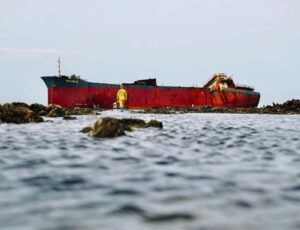
Does the maritime industry value the critical work of salvors?
The marine salvage industry is a vital part of the shipping industry ecosystem, and the International Salvage Union (ISU) is the association that represents the world’s salvage contractors. The core purpose of the ISU is to be the “credible, trusted and unified global voice of its members who facilitate world trade by providing marine services which save life, protect the environment, mitigate risk and reduce loss.” And that statement truly does capture the essence of our association and the critical work of salvors.
The marine salvage industry is a vital part of the shipping industry ecosystem, and the International Salvage Union (ISU) is the association that represents the world’s salvage contractors. The core purpose of the ISU is to be the “credible, trusted and unified global voice of its members who facilitate world trade by providing marine services which save life, protect the environment, mitigate risk and reduce loss.” And that statement truly does capture the essence of our association. Continue reading “Does the maritime industry value the critical work of salvors?”
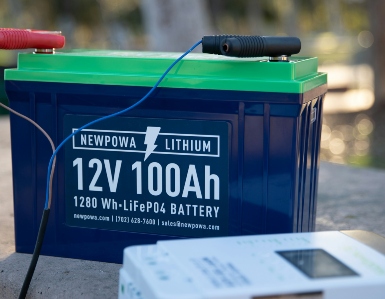
Performance of extinguishing agents against lithium-ion battery fire
This study presents a systematic evaluation of extinguishing agents against lithium-ion Battery Energy Storage Systems (BESS), specifically examining thermal runaway propagation in small domestic system (8 kWh). Five distinct suppression methods were evaluated: water mist, encapsulator agent (water mist with proprietary encapsulator), carbonate agent (water mist with ammonium bicarbonate), mixed agent (containing boron compounds and surfactants), and liquid nitrogen.
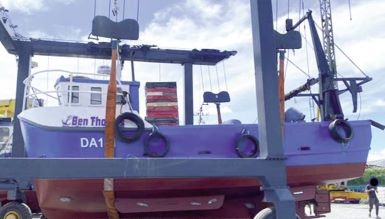
FV Ben Thomas (image supplied by the vessel’s owner). Source: MCIB
A crewmember died after the fishing vessel, Ben Thomas capsize and sank off the Irish coast.
A report into the incident, which took place two years ago, has been released by the Irish Marine Casualty Investigation Board (MCIB), concluding the investigation.
The Bureau of Safety and Environmental Enforcement (BSEE) has identified a potential risk associated with slips, trips and falls (STF incidents) across the Outer Continental Shelf (OCS) between May 2024 and April 2025. During this period, 22% of all injuries reported to BSEE were attributed to STFs, surpassing lifting-related injuries for the first time in recent years. These STF injuries were often severe, resulting in major injuries defined as three or more days away from work, restricted work, or job transfer.
In response to the rise in operator and contractor injuries BSEE initiated a Performance-Based Risk Inspection (PBRI). The inspection covered 19 assets, including production platforms and well operations, across the Gulf. These assets were operated by 17 unique operators. Continue reading “Rise in STF incidents prompts risk inspection”
Industry leaders are merging old school tradition and principles with modern innovation, developing designs that meet sometimes diverging industry demands – a clash between legacy and innovation.
The roots of naval architecture are steeped in tradition with knowledge passed down through generations. Scientific ship design in the 18th century introduced mathematical models used to inform hull design while the Industrial Revolution brought iron and steam, revolutionizing design, materials science and propulsion.
The 21st century ushered in the digital transformation alongside essential new tools in the naval architect’s arsenal. Advanced CAD technology, Artificial Intelligence (AI) and data-driven modelling are now used to optimize designs. From concept through a ship’s lifecycle, digital twins enable predictive maintenance and monitoring to model fuel consumption across voyage profiles. Continue reading “Legacy and Innovation”
Maritime industry must act if it is to achieve a sustainable blue economy
Bureau Veritas Marine & Offshore’s Executive Vice President, Matthieu de Tugny, addresses what is required of class societies if the maritime industry is to achieve a sustainable blue economy.
The maritime industry is currently experiencing a sustained period of growth, with shipping and port industries representing 40% of the ocean economy’s total worth, which today stands at $2.2 trillion. This growth is reflected in the current global orderbook, which – according to the Clarksons newbuilding price index – has seen a 45% increase in newbuild orders since 2021. However, this economic strength is tempered by mounting challenges that cannot be ignored. Continue reading “Maritime industry must act if it is to achieve a sustainable blue economy”
There is a slew of new and revised documentation released by the UK Maritime & Coastguard Agency (MCA) covering the period of December 2025 to January 2026.
Published on 12 December 2025
MSN 1908 (M+F) Amendment 2 – The merchant shipping (control and management of ships’ ballast water and sediments) regulation 2022. This MSN provides the technical requirements of the obligations contained in the merchant shipping (control and management of ships’ ballast water and sediments) regulations 2022 (SI 2022/737). Continue reading “New documentation from the MCA”