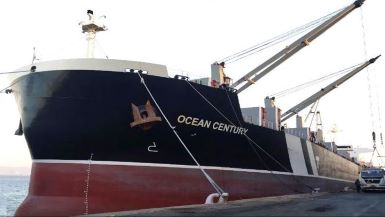
The Marine Safety Investigation Unit of Transport Malta has published a report into the death of a bulker/cargo surveyor after they were trapped during the hatch cover closing process.
What happened
On 24 January 2025, Ocean Century was preparing to load steel Hapo products General at Wharf, Gwangyang, South Korea. The vessel had arrived during the previous evening. Cargo holds were cleaned, and residual cargo collected in drums.
On the morning of the accident, the deck crew opened the hatch covers and removed the stored drums. Meanwhile, the bunker / cargo surveyor left the ship’s office, after meeting with the chief engineer, the master, and the P&I representative.
Shortly after, one of the crew members proceeded to the cargo hold no. 2 hatch cover control station, to close the hatch cover. At approximately 0840, the electro-technical officer discovered the surveyor, fatally trapped between the aft part of cargo hold hatch cover no. 2 and the hatch coaming.
The safety investigation determined that in all probability, the cause of the accident was the surveyor’s becoming trapped during the hatch cover closing process.
The MSIU has taken into consideration the safety actions taken by the Company and no recommendations have been made.
Conclusions
- The bunker / cargo surveyor sustained fatal injuries after becoming trapped between the closing cargo hold hatch cover and the cargo hold hatch coaming.
- The crew members operating the hatch cover lacked direct visibility of the aft section.
- The local control station’s position and design limited the operator’s field of view, making it difficult to detect any obstructions to the moving cargo hold hatch covers.
- There were no implemented mandatory visual inspections, communication protocols, or assigned personnel to oversee the entire closing process of the cargo hold hatch cover.
- Warning and cautionary signs may have been missed due to familiarity and cognitive overload.
- The SMS procedure addressing the opening and closing of cargo hold hatch cover was neither referred to on board, nor communicated to other persons boarding the ship.
- The cargo hold hatch cover closing mechanism, including the hydraulic system, was in good working condition at the time of the accident.
- Regular maintenance and inspections confirmed no malfunctions, wear, or defects.
- There was no technical failure of the cargo hold hatch cover system which could have contributed to the accident.
Safety lessons
This accident highlights the risk posed by moving hatch covers when operations rely solely on a single operator with restricted visibility. Although hatch cover systems may function exactly as designed, they can nonetheless present a fatal hazard. Where operators cannot maintain a clear line of sight to all danger zones, the absence of a dedicated lookout, positive confirmation of a clear deck, or enforced communication protocols creates a latent condition for potentially fatal injuries.
The fatality further demonstrates the limitations of symbolic safety barrier systems when not reinforced by effective procedural controls. Warning signs, while necessary, are insufficient on their own in high-risk tasks. Visiting personnel, including surveyors and contractors, may be unaware of vessel-specific hazards unless actively briefed and integrated into shipboard safety systems. Robust incorporeal barrier systems, such as ship-specific checklists, mandatory deck clearance verification, assigned oversight roles, and clear control of third-party movements, are essential to prevent individuals from unknowingly entering danger zones during hatch cover operations.
Read the full report: