Bad ladders are a major issue for marine pilot safety

Bad ladders are a major issue for marine pilot safety

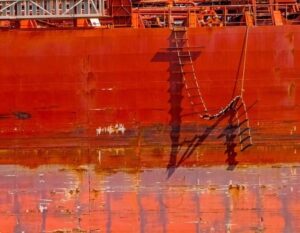
At least eight people died in boarding accidents last year, and bad ladders are part of the problem. Bad ladders are a major issue for marine pilot safety.

Recently I was involved in a case with a non-compliant and dangerous pilot transfer arrangement on a bulk carrier heading to Vlissingen anchorage for partial discharging.

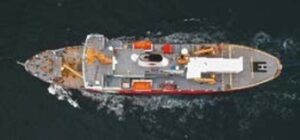
On the 17th August around 2324 local time the first pilot boarded the vessel at Wandelaar pilot station via the SWATH pilot vessel. The ladder that had been rigged was not used because the servicing pilot had been put on board via the retractable gangway of this boat, and therefore was able to step directly onto the deck of the vessel.

The agent asked me for an English explanation on why this ladder would not be safe. I considered it interesting enough for educational purposes to extend my reply a bit and share it online. Continue reading “Bad ladders are a major issue for marine pilot safety”

Guidance on the carriage of grain and seed cargoes

Guidance on the carriage of grain and seed cargoes

Fuel consumed on board a ship requires heating to pump it from its storage to its settling or service tanks. However, some cargoes are extremely heat sensitive and therefore heating of tanks adjacent to cargo holds should be done with caution. The International Maritime Solid Bulk Cargoes Code (IMSBC) identifies the following as heated ship structures and offers guidance on the carriage of grain and seed cargoes:

  • steam pipes;
  • heating coils;
  • top or side walls  of heated fuel and  cargo tanks, and; bulkheads of  machinery spaces

Continue reading “Guidance on the carriage of grain and seed cargoes”

ISM Code: The maritime scam of the century?

Introduction: Why have we created the ISM Code?

ISM Code: The maritime scam of the century?

Created by a strong desire to “do something” after the disaster of the Townsend Thoresen ferry “HERALD of FREE ENTERPRISE” (HOFE), the ISM code was originally issued as a self-management system of a voluntary nature for maritime safety within shipping Companies and aboard ships. Continue reading “ISM Code: The maritime scam of the century?”

RMI maritime authority investigation into enclosed spaces deaths

RMI Maritime Authority investigation into enclosed spaces deaths

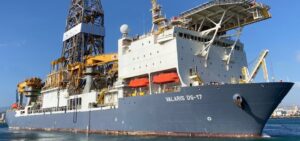
The Republic of the Marshall Islands (RMI) Maritime Administration has released an investigation report into two enclosed spaces deaths on board drill ship Valaris DS-17.

What happened

On 21 April 2023, the Republic of the Marshall Islands-registered drill ship Valaris DS-17, managed by ENSCO International Inc., was alongside in a shipyard at Las Palmas, Canary Islands, Kingdom of Spain. The ship was scheduled to depart Las Palmas on 1 May 2023. Work that needed to be completed prior to the ship’s departure included cleaning the BWT. Continue reading “RMI maritime authority investigation into enclosed spaces deaths”

Swiss Cheese? Improving Survey Practice and Process

Swiss Cheese? Improving Survey Practice and Process

Most marine craft represent Systems of Systems (SoS) and are an ensemble of complex systems, which have the potential for an extraordinary amount of structural and technical complexity and improving survey practice and process.

Because of this, a SoS can be vulnerable to sudden catastrophic collapse because of small and insignificant partial functionality losses in one of the constituent systems. Continue reading “Swiss Cheese? Improving Survey Practice and Process”

Carrying electric vehicles and lithium-ion batteries at sea and the fire risks

Carrying electric vehicles and lithium-ion batteries at sea and the fire risks

In its Shipping and Safety Review 2023, Allianz Global Corporate & Specialty reported that the second top cause of loss of vessels in 2022 was fire or explosion. There were 209 ship fires reported during 2022, the highest in a decade and 17% more than in 2021. Of those fires, 13 occurred on car carriers. Fire was also reportedly the most expensive cause of marine insurance claims furthering the point that electric vehicles and lithium-ion batteries at sea at potent fire risks. Continue reading “Carrying electric vehicles and lithium-ion batteries at sea and the fire risks”

Small craft sector must educate customers of dangers to avoid passenger injury

Small craft sector must educate customers of dangers to avoid passenger injury

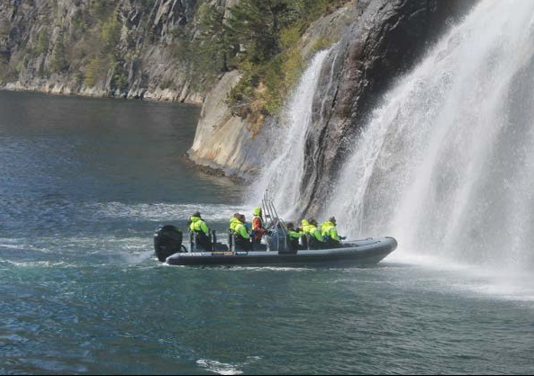
Poor posture, inadequate seating and a host of other factors can lead to life- changing injuries on RIBs as passenger safety is pulled sharply into focus by recent events in the small craft sector. If the sector ’s reputation is to survive accidents like Seadogz, owners and operators need to start owning best practice, controlling the risks and demonstrating that their trips are safe, says MAIB (Marine Accident Investigation Branch) as it cracks down on the small craft sector saying ‘Small craft sector must educate customers of dangers to avoid passenger injury’.

When you are trying to promote the fun element of an activity, telling your customers that it can be hazardous might appear counterproductive. This could explain the reluctance of the ‘small-craft passenger/ experience ride’ industry to acknowledge and take action on the findings from recent accident investigations. Continue reading “Small craft sector must educate customers of dangers to avoid passenger injury”

The risks and benefits of AI translations in safety critical industries

The risks and benefits of AI translations in safety critical industries

In safety-critical industries, clear communication is essential. At Mintra, client interest for multilingual training has increased significantly, reflecting the need for accessible training in workers’ native languages, says Moana Ewald, Quality Assurance & Impact Analysis Coordinator at Mintra as she analyses the risks and benefits of AI translations.

Several factors are at play, primarily fuelled by the availability of AI translation engines to make multilingual training more accessible and affordable. The emerging conversation acknowledges that training undertaken in the mother tongue is not just about convenience, it helps learners ‘feel safer’. There is an increased confidence, a sense of value and a positive learning outcome that directly impacts safety. However, it’s not all plain sailing, relying on AI- powered translation engines without adequate quality review processes can lead to critical errors. There are lessons to be learnt. Continue reading “The risks and benefits of AI translations in safety critical industries”

Do you know what P&I stands for?

Do you know what P&I stands for?

Do you know what P&I stands for? Protection and Indemnity insurance, more commonly known as P&I insurance, is a type of mutual maritime coverage offered by a P&I club. While marine insurance companies offer “hull and machinery” coverage for shipowners and cargo insurance for cargo owners, a P&I club covers broader, open-ended risks that conventional insurers are typically unwilling to insure. Continue reading “Do you know what P&I stands for?”

Inland Waterways Craft and the conflicting regulations

Inland Waterways Craft and the vagaries of the conflicting regulations

IIMS Past President, Geoff Waddington, is a successful yacht and small craft marine surveyor. Over the years he has written a number of articles, including some about the UK inland waterways sector. In this article, he sets out to explain and make sense of some of the confusion and inconsistencies that exist between the various current rules and regulations.

First of all, let’s consider the issue of conformity. Continue reading “Inland Waterways Craft and the conflicting regulations”

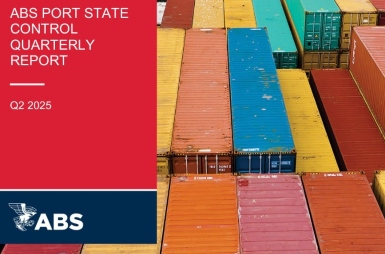
ABS PSC Report Q2 2025: 492 total vessels detained

The latest ABS PSC quarterly statistics reveal 492 vessels were detained
The latest ABS PSC report Q2 2025 statistics reveal 492 vessels were detained

The American Bureau of Shipping (ABS) has published its Quarterly Report on Port State Control (PSC), providing information to owners on deficiencies identified on ABS vessels during inspections carried out by the various PSC regimes globally during the Second Quarter (Q2) of 2025.

Top categories for grounds of detention
Between April 1, 2025, and June 30, 2025, a total of 492 vessels were detained across the Paris MoU, Tokyo MoUand the USCG. Of these, only 25 vessels, representing 5.08%, were ABS vessels. Continue reading “ABS PSC Report Q2 2025: 492 total vessels detained”

UK’s First ROUV certified ahead of trials

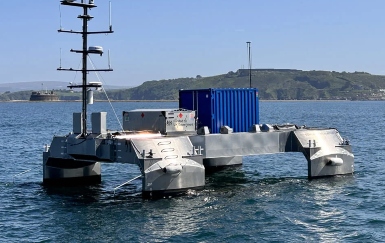
 ACUA Ocean. Pioneer becomes the first certified ROUV in the UK
ACUA Ocean. Pioneer becomes the first certified ROUV in the UK

The hydrogen-powered Pioneer, a remotely operated and unmanned vessel (ROUV), has received the UK’s first certification under Workboat Code 3 ahead of its upcoming trials. Lloyd’s Register (LR), which issued the certification under authorisation from the Maritime and Coastguard Agency, reports it represents a significant development in the evolution of regulatory pathways for uncrewed and autonomous vessels operating in UK waters.

“This certification represents a major step forward – not just for ACUA Ocean or LR, Continue reading “UK’s First ROUV certified ahead of trials”

Instagram Posts from the IIMS @iimsmarine

Privacy Overview

This website uses cookies so that we can provide you with the best user experience possible. Cookie information is stored in your browser and performs functions such as recognising you when you return to our website and helping our team to understand which sections of the website you find most interesting and useful.

Strictly Necessary Cookies

Strictly Necessary Cookie should be enabled at all times so that we can save your preferences for cookie settings.

Show details Hide details
Performance & Marketing Cookies

This website uses Google Analytics to collect anonymous information such as the number of visitors to the site, and the most popular pages. This also helps us optimise our marketing campaigns. User data sent to Google Analytics may be used for ad personalization and measurement of our ad campaigns. Keeping this cookie enabled helps us to improve our website.

Show details Hide details