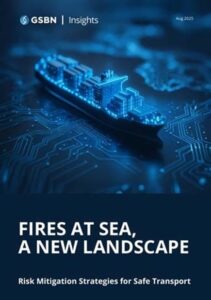
13 fire protection equipment items to check manually

13 fire protection equipment items to check annually

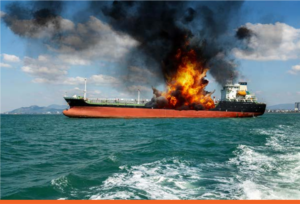
The Isle of Man Ship Registry has issued anew shipping notice earlier this year that sets out the minimum level of maintenance and inspection for 13 fire protection equipment items onboard, as required by SOLAS regulation II-2/14.

Overall, all fire protection systems and appliances must be in good order at all times and be readily available for immediate use while the ship is in service. If a fire protection system is undergoing maintenance, testing or repair, then suitable arrangements must be made to ensure safety is not diminished through the provision of alternate fixed or portable fire protection equipment or other measures. The onboard maintenance plan should include provisions for this purpose. Continue reading “13 fire protection equipment items to check manually”

Ageing fleet driving increase in incidents

Detentions casualties losses and world fleet

A clear uptick in casualties in 2024, driven by machinery damage/failure and an ageing fleet, stands out in the latest analysis of Lloyd’s List Intelligence casualty data.

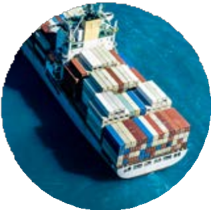
The number of maritime casualties rose by 15% in 2024. Coupled with a 7% rise in casualties in 2023, this represents a concerning development for the maritime industry, particularly with the global fleet growing at a considerably slower rate. This trend has now been established for several years. While the overall number of incidents declined by 5% be tween 2014 and 2018, the figure has increased every year since. Between 2018 and 2024, the number of incidents increased by 42%. Over the same period, the number of vessels in the global fleet increased by 10%. Continue reading “Ageing fleet driving increase in incidents”

Best practices on sampling procedures

Best practices on sampling procedures

West P&I Club has published a loss prevention bulletin addressing the issue of cargo contamination claims and highlights best practices on sampling procedures.

According to West, cargo contamination claims are a major risk for tanker operators, often resulting in expensive disputes. Properly taken, sealed, and stored samples are essential to prove cargo quality at the time of loading. As tanker cargoes are loaded through closed systems, pre-loading inspection is not possible. Samples are the shipowner’s main defence in off-spec claims as they provide critical evidence to identify when and where contamination occurred, reducing claim costs and response time. Continue reading “Best practices on sampling procedures”

CINS issues guidance on shipping lithium-ion cells in containers

CINS issues guidance on shipping lithium-ion cells in containers

CINS – the Cargo Incident Network System – has published its CINS Lithium- ion Cells Guidelines. Published in conjunction with the International Group of P&I Clubs and the TT Club, the document has been produced by Members of the CINS Lithium-ion Cells Work Group and offers guidance on shipping lithium-ion cells.

Lithium-ion cells are primary elements of a battery and can exist in various forms. Commonly used in portable electronics and electric vehicles, their defining characteristic is the ability to accumulate, store and release electrical energy through the movement of lithium-ions between a positive and a negative electrode. Continue reading “CINS issues guidance on shipping lithium-ion cells in containers”

Enhanced safety regulations could advance maritime electrification

Enhanced safety regulations could advance maritime electrification

The maritime industry is having to contend with an increasingly complex regulatory landscape. The introduction of FuelEU Maritime at the beginning of the year has, for the first time, established comprehensive regulations for phasing out the use of fossil fuels by vessels sailing in Europe and the start of maritime electrification. Additionally, the recent outcomes from MEPC 83 suggest a likely introduction of a new global carbon pricing mechanism for international shipping. Continue reading “Enhanced safety regulations could advance maritime electrification”

Navigating the Risks: Lithium-Ion Batteries, Electric Vehicles, and Fire Safety in the Maritime Industry

Navigating the Risks: Lithium-Ion Batteries, Electric Vehicles, and Fire Safety in the Maritime Industry

INTRODUCTION

Lithium-ion (Li-ion) batteries are an everyday essential item embedded in everyday life, found throughout the world and in almost every household or workplace in one form or another. We can find them in portable devices such as mobile phones, laptops, tablets, power banks and cordless vacuums, all the way through to electric vehicles (EVs) – scooters, buses, cars and bikes. However, their widespread use has led to a surge in fire incidents, particularly involving EVs. Recent media reports and insurance data highlight a 17% increase in Li-ion battery-related fires in New Zealand alone1. As the maritime industry embraces the global shift toward electrification, the integration of Li-ion batteries and EVs onboard vessels presents both opportunities and significant fire safety challenges. This article explores the science behind Li-ion batteries, the risks they pose, and the implications for maritime operations, drawing on recent incidents and emerging mitigation strategies. Continue reading “Navigating the Risks: Lithium-Ion Batteries, Electric Vehicles, and Fire Safety in the Maritime Industry”

AI is empowering shipowners to tackle new safety management challenges

AI is empowering shipowners to tackle new safety management challenges

It is no secret that the maritime industry is undergoing a digital transformation, and one of the key innovations increasingly making waves is the integration of artificial intelligence (AI) into safety management systems as AI is empowering shipowners.

The increased documentation required following the gamut of new rules and procedures place increasing demands on seafarers but companies such as WiseStella are leveraging AI to ease the cognitive burden to enhance safety across the global fleet. “Seafarers today are faced with an overwhelming amount of information and documentation to manage,” explains Ali Demiral, Chief Technology Officer, and AI lead at WiseStella. “This cognitive load can be a significant source of stress, especially when it comes to tackling complex safety assessments. But AI-powered technology can provide seafarers and ship managers with the tools they need to navigate these new requirements with confidence.” Continue reading “AI is empowering shipowners to tackle new safety management challenges”

Historic canals repurposed to address modern UK’s challenges

Historic canals repurposed to address modern UK’s challenges

A new report highlights how the UK’s historic canals have been repurposed, originally a product of the Industrial Revolution, they are being adapted to tackle key contemporary issues. These interconnected waterways, rich in biodiversity, are contributing to efforts addressing the biodiversity crisis, improving public health, and mitigating some effects of climate change.

The Canal & River Trust, a charity responsible for maintaining 2,000 miles of canals across England and Wales, has released an Impact Report demonstrating the ongoing relevance of these waterways. The report also details the challenges posed by the ageing infrastructure and the organisation’s efforts to preserve and enhance the UK canal network. Continue reading “Historic canals repurposed to address modern UK’s challenges”

The Hague Rules: 100 years old and still standing

The Hague Rules: 100 years old and still standing

Is simplicity a reason for the success of the Hague Rules? In this opinion piece, Mark Russell, Head of Cargo Claims in Gard, outlines the history – and looks to the future – in a world of competing cargo carriage regimes.

The Hague Rules came into being 100 years ago this year, becoming the first international convention governing the rights and obligations under bills of lading for the carriage of goods by sea. As the volume of internationally traded goods grew, the Hague Rules were born out of a need for uniformity in the allocation of risk between shipowners and cargo interests. Continue reading “The Hague Rules: 100 years old and still standing”

Understanding effective risk assesments

Understanding effective risk assesments

The growing scale and complexity of marine transportation necessitate a proactive and multi-faceted approach to risk management. While professional expertise, experience, and regulatory frameworks provide valuable advantages, they cannot anticipate all potential risks which is why Understanding effective risk assesments is important.

A review of incidents often finds that opportunities were missed to identify and mitigate the risks. As with any process, risk assessments may be ineffective and unlikely to contribute to safety if they are missing the point, are not understood, or seen merely as a ‘tick box exercise’. Risk assessments should ideally occur on many levels, both as a formal, documented process and as a dynamic, ‘on the job’ activity. Continue reading “Understanding effective risk assesments”

Bringing expertise to the UK Maritime Industry

Bringing expertise to the UK Maritime Industry

The UK’s top maritime professional organisations are working together to make their voice heard on key issues and bringing expertise to the UK Maritime Industry.

While the size of the British merchant fleet may have declined significantly over the past several decades the UK continues to be well endowed with maritime expertise.

For generations, professional organisations have provided a key source of expertise helping to maintain the right standards across industrial sectors ashore. However just over three years ago a number of maritime-linked bodies came to the view that this has not been happening within the maritime sector and, often, regulators and employers had been missing out on the years of experience leading professionals can bring to the table. Continue reading “Bringing expertise to the UK Maritime Industry”

How a Navy doctor revolutionized high-speed boat safety

How a Navy doctor revolutionized high-speed boat safety Photo Credit: Ullman Dynamics

For years, operators of high-speed boats have silently endured the physical toll of their profession. Repeated slamming impacts from rough seas caused serious injuries, many of them life-altering. However, one Navy doctor saw these challenges not as an unavoidable consequence but as a problem that could be solved. His solution? A seat that would change the course of high-speed boat safety. This article is about how a Navy doctor revolutionized high-speed boat safety. Continue reading “How a Navy doctor revolutionized high-speed boat safety”

Instagram Posts from the IIMS @iimsmarine

Privacy Overview

This website uses cookies so that we can provide you with the best user experience possible. Cookie information is stored in your browser and performs functions such as recognising you when you return to our website and helping our team to understand which sections of the website you find most interesting and useful.

Strictly Necessary Cookies

Strictly Necessary Cookie should be enabled at all times so that we can save your preferences for cookie settings.

Show details Hide details
Performance & Marketing Cookies

This website uses Google Analytics to collect anonymous information such as the number of visitors to the site, and the most popular pages. This also helps us optimise our marketing campaigns. User data sent to Google Analytics may be used for ad personalization and measurement of our ad campaigns. Keeping this cookie enabled helps us to improve our website.

Show details Hide details