AI in the maritime industry: An overview

 AI in the maritime industry: An overview
AI in the maritime industry: An overview

The maritime sector is experiencing a transformative shift as Artificial Intelligence redefines how ships are operated, maintained, and navigated. Maritime is embracing AI with open arms, driven by the need for increased efficiency, safety, and sustainability. AI’s ability to process vast amounts of data and make real-time decisions is helping optimise voyages, reduce fuel consumption, improve navigational safety, and ensure better reliability across the board. Let’s take a closer look at AI in the maritime industry.

The maritime Artificial Intelligence market is expanding rapidly. Continue reading “AI in the maritime industry: An overview”

Lithium batteries don’t commit suicide. They’re murdered

Lithium batteries don’t commit suicide. They’re murdered

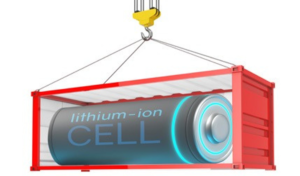
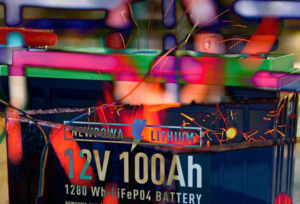
LiBs batteries are increasingly used in the marine industry. Their advantages are many: compact and cheap, with higher energy density, they can help to cut down sharply on fossil fuel use. Problems are rare, but when things go wrong the results have a high impact and take up emergency resources for a considerable time which has spawned the phrase: Lithium batteries don’t commit suicide. They’re murdered. Continue reading “Lithium batteries don’t commit suicide. They’re murdered”

An expert’s guide to lithium-ion battery fire prevention

An expert’s guide to lithium-ion battery fire prevention

Mark shares some essential lithium-ion battery safety advice and guidance to give a better understanding of the risks associated with this technology. Giving his expert’s guide to lithium-ion battery fire prevention.

Lithium-ion battery powered devices don’t pose an increased risk if devices are maintained in good working condition and people follow some basic rules. From a fire service perspective, the vast majority of lithium-ion battery fires we’ve seen have been caused by human error.

Many of these simple rules that should be followed are almost all related to battery charging. Ensure that the charger you use to charge your particular device is the specific charger that’s recommended by the manufacturer. If you buy a quality product from a reputable retailer, you can be confident that the correct charger will be supplied with that product. However, if you buy a discount replacement charger online you need to be very aware where that product is coming from. Continue reading “An expert’s guide to lithium-ion battery fire prevention”

How to identify false readings of exhaust monitoring equipment

How to identify false readings of exhaust monitoring equipment

An increasing number of vessels have encountered unexpected port state issues related to sulphur emissions limit exceedance caused by inaccurate readings. These false readings are of exhaust monitoring equipment. This technical news emphasizes the importance of calibration and maintenance routines, and of monitoring equipment performance. Continue reading “How to identify false readings of exhaust monitoring equipment”

One third of ballast water treatment systems fail PSC inspections

One third of ballast water treatment systems fail PSC inspections

Over one third of ballast water treatment systems fail PSC inspections despite 95% of systems having successfully passed commissioning tests.

Information submitted by Global TestNet to the International Maritime Organization’s Marine Environment Protection Committee MEPC82, which took place last year, revealed that 29% to 44% of operational systems are failing to remove invasive species in the >50µm range, with more than 100 organisms of this size routinely found in every 1m3 of treated water. Continue reading “One third of ballast water treatment systems fail PSC inspections”

New guidance on achieving stable lifting operations

Ensuring the stability of lifting arrangements is of critical importance to mitigate the risk of damage

New guidance on achieving stable lifting operations has been developed by a sub-working group of the Heavy Lift Exchange Forum, a DNV-initiated round table for heavy-lift shipping companies. Members of the working group are from the companies BBC Chartering, BigLift Shipping, DNV, Heerema, Jumbo Maritime, SAL Engineering and United Heavy Lift.

What is best practice when it comes to cranes lifting loads onto, off and between ships in port or at sea? New guidance from an industry forum initiated by DNV dives into the key considerations and calculations to help ensure these hazardous operations are performed safely to reduce the risk of loss to life, property and the environment. Continue reading “New guidance on achieving stable lifting operations”

Consequences of incidents involving Li-ion battery powered vessels

Consequences of incidents involving Li-ion battery powered vessels

ITOPF has studied the potential damage and liabilities arising from a shipping incidents involving Li-ion battery powered vessels.

In its “Fate, Behaviour, Potential Damage & Liabilities Arising from a Shipping Incident Involving a Li-ion Battery Powered Vessel” report, at least half of existing vessels with Li-ion batteries utilise the technology as part of a hybrid system paired with a traditional combustion engine using conventional fuels (or possibly biofuels). Continue reading “Consequences of incidents involving Li-ion battery powered vessels”

The benefits and challenges of electric propulsion for recreational boats

The benefits and challenges of electric propulsion forrecreational boats - recreational boat using electric propulsions
The benefits and challenges of electric propulsion for recreational boats – recreational boat using electric propulsions

Electric propulsion systems are making waves in the world of recreational boating. As technology evolves, these systems bring plenty of perks compared to traditional internal combustion engines. At the same time, they also come with their own set of challenges. Let’s dive into the benefits and hurdles of electric propulsion for recreational boats, giving boating enthusiasts and industry folks a clear picture of what’s on the horizon. Continue reading “The benefits and challenges of electric propulsion for recreational boats”

Corrosion in ballast water & cargo tanks

Container ships - Corrosion in ballast water & cargo tanks
Container ships – Corrosion in ballast water & cargo tanks

DNV offers guidance on the matter of corrosion in ballast water & cargo tanks, highlighting that the actual corrosion rate may differ, with factors like temperature and coating condition playing significant roles in the deterioration process.

According to DNV, the actual corrosion rate in ballast and cargo tanks may differ from the assumptions in the rules and the embedded corrosion models. DNV survey data reveals a significant rise in corrosion findings in water ballast and cargo tanks in oil tankers and bulk carriers at the third renewal survey, with a peak at the fourth renewal. That means that for some vessels, Continue reading “Corrosion in ballast water & cargo tanks”

What’s behind the latest spate of boat fires?

Marseille yacht fire. Image Credit: Tom Moreau/Marine Nationale

IIMS CEO, Mike Schwarz, has been alarmed at what seems to be a growing number of destructive yacht and boat fires incidents reaching his desk since the start of 2025. Mike has been motivated to write this article so he can set out and catalogue some of the higher profile fire incidents, as well as some of the less well publicised ones.

This is an expanded article following the introduction I wrote for the IIMS June News Bulletin on this subject. It may have passed you by, but there seems to have been a string of eye-catching large yacht and boat fires erupting around the world since the start of 2025 with devastating consequences. So, what is behind this surge in yacht and boat fires? Is there a common thread? Not sure yet, is the simple answer. Continue reading “What’s behind the latest spate of boat fires?”

MTF’s report highlights critical safety issues of transporting EV’s

Safe carriage of Electric Vechiles (EV'S)
Safe carriage of Electric Vechiles (EV’S)

Greenhouse gas (GHG) emissions are an environmental issue experienced globally, affecting countries and industries. As one of the measures to decarbonise road transportation by reducing GHG emissions from automobiles, car manufacturers have been developing EVs that are powered by lithium-ion batteries (LiB) instead of conventional fuels, which has caused safety issues transporting EV’s. Continue reading “MTF’s report highlights critical safety issues of transporting EV’s”

Cargo tank cleaning and preparation onboard tankers: Best practices and guidelines

A man cleaning the inside of a cargo tank - Cargo tank cleaning and preparation onboard tankers: Best practices and guidelines. Image credit: West P&I Club
A man cleaning the inside of a cargo tank – Cargo tank cleaning and preparation onboard tankers: Best practices and guidelines. Image credit: West P&I Club

West P&I Club has issued a loss prevention bulletin in which they describe best practices and give guidelines on cargo tank cleaning and preparation onboard tankers. the Club highlights that product and chemical tankers carry a variety of commodities, often necessitating frequent tank cleaning to prevent a cross-subsequent, off-spec claim. Detailed planning of the tank cleaning is crucial, and the ship’s crew must be informed of the schedule. The extent of cleaning required depends on the properties of the previous cargo, the tank coating, the next cargo’s preloading specifications and the shipper’s requirements. Continue reading “Cargo tank cleaning and preparation onboard tankers: Best practices and guidelines”

Instagram Posts from the IIMS @iimsmarine

Privacy Overview

This website uses cookies so that we can provide you with the best user experience possible. Cookie information is stored in your browser and performs functions such as recognising you when you return to our website and helping our team to understand which sections of the website you find most interesting and useful.

Strictly Necessary Cookies

Strictly Necessary Cookie should be enabled at all times so that we can save your preferences for cookie settings.

Show details Hide details
Performance & Marketing Cookies

This website uses Google Analytics to collect anonymous information such as the number of visitors to the site, and the most popular pages. This also helps us optimise our marketing campaigns. User data sent to Google Analytics may be used for ad personalization and measurement of our ad campaigns. Keeping this cookie enabled helps us to improve our website.

Show details Hide details