Checklists for the inspection of ladders and gangways

Man looking up at a ladder and gangway
Man looking up at a ladder and gangways

A risk alert which highlights that a new regulation refers to the construction, installation, maintenance and testing requirements for ladders and gangways as detailed in MSC.1/ Circ.1331 ‘Guidelines for Construction, Installation, Maintenance and Inspection/Survey of Means of Embarkation and Disembarkation’ has been issued. In May 2008 the IMO adopted SOLAS regulation II1/3-9 concerning the ‘Means of embarkation on and disembarkation from ships’, which entered into force on the 1 January 2010. Continue reading “Checklists for the inspection of ladders and gangways”

Lightning protection at sea

Lightning breaking across the dark sky

Venturing across the expansive open sea is an exhilarating yet unpredictable experience, with ever-changing weather patterns constantly threatening the safety of boats, their crew and passengers. Among the most dreaded natural occurrences faced by boat owners are lightning strikes. Fortunately, the advent of advanced technologies, like the Sertec CMCE (Compensador Múltiple de Campo Electroatmosférico) Lightning protection at sea de-ionising technology, now offers boat owners a dependable solution to shield their vessels from the destructive impact of lightning strikes. A technology that does not allow the conditions for a lightning strike by de-ionisation, creating a protected area into a balanced stable state, so that no build-up of opposite charge exists even in the most severe storm and while under motion; a technology that is passive and requires no power. Continue reading “Lightning protection at sea”

Transportation of electric vessels containing lithium batteries

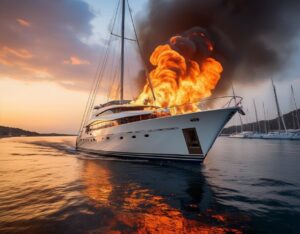
Boat on fire with the red words EV floating above it

The U.S. Department of Transportation’s Pipeline and Hazardous Materials Safety Administration (PHMSA) has issued this safety advisory notice to inform the public and raise awareness of the risks involved in Transportation of electric vessels containing lithium batteries that may have been damaged due to submersion in waters during extreme weather events. When transported in commerce, EVs containing these damaged batteries may present particularly significant hazards to the public, including property damage, injury, and even death. Our intention with this notice is to prevent those things from happening. Continue reading “Transportation of electric vessels containing lithium batteries”

Bills of Lading: Basic concepts and issues

Introduction to Bills of Lading: Basic concepts and issues

A bills of lading is a contractual document issued by the carrier by sea of goods which such carrier takes possession of and transports. Generally, a bill of lading would contain details about the transported goods such as the type, quantity, weight, value, and date of shipment of such goods. From a definitional perspective, it is difficult to give a precise definition of a bill of lading, but it could certainly be said to possess the following essential attributes:

(i)It serves as a transport receipt which the carrier gives to the seller for transporting his goods;

(ii)It serves as evidence of contract between the carrier and the exporter; and

(iii)It serves as a document of title for the importer or the buyer.

From the above, it is evident that there are the following parties primarily involved: Continue reading “Bills of Lading: Basic concepts and issues”

LPG safety on Inland Waterways boats

River canal boat
River canal boat

The aim, with LPG, was to improve boater safety by reviewing key elements of gas safety, while linking design, commissioning and maintenance together as crucial factors to gas system success. There is scant academic work existing that relates to the inland waterways, and virtually no academic research into gas safety on boats. It is hoped this project will open the debate and encourage other projects and ensure LPG safety on Inland Waterways boats. Continue reading “LPG safety on Inland Waterways boats”

Introducing the history of ceramic coatings

A man spraying ceramic coating on a yacht

Ceramic coatings, or to give them their full and correct technical name, Polysilazanes, were introduced into the superyacht sector in the early years of the 21st century, as a transparent, durable protective coating. This article will be introducing the history of ceramic coatings.

Many industrial coating applications of Polysilazanes in their various formulations are well documented and researched. In the plastics and composites industry they were developed and utilised as a release agent for moulds. Most homes are familiar with them as a nonstick coating for pans and knives. In the superyacht industry they were introduced as a surface paint protection, after being used as an anti-graffiti paint for trains in Northern Europe. They are renowned for their high adhesion to most substrates, and their excellent anti- adherent properties. They are also extremely hard, cure well at low temperatures, and have excellent chemical crosslinking that ensures high chemical and thermal stability. Continue reading “Introducing the history of ceramic coatings”

How to improve grain cargo shortage claims?


Grain
There are many kinds of dry bulk cargoes traded worldwide, but the main cargoes are iron ore, coal and grains. This article will explain how to improve grain cargo shortage claims.

The method of determining the trading quantity for these trades is a ship draft survey or a shore scale, and which one to adopt depends on the contract between the shipper and the consignee, but in practice it is generally determined by the type of cargo. Usually, a draft survey is used for iron ore and coal, and a shore scale is used for grains.

In this report, we would like to pick up shortage claims about grain cargo that are occurring frequently around the world and propose improvement measures. Continue reading “How to improve grain cargo shortage claims?”

Minimum Steel Thickness for Narrowboats: A discussion paper

By Tom Keeling MIMarEST and Peter Brookes CEng, MIET, affillIIMS. Tom Keeling and peter Brookes are inland waterways-based marine surveyors. Both have run independent consultancy businesses in this sector for many years, specialising in the survey of steel thickness of narrowboats and their hulls. 

Man on a bargeMarine surveyors and boat owners are regularly heard to say there is a minimum 4.0mm of hull thickness required at time of survey of a steel narrowboat. Some brokers even publish videos of such information, with some surveyors enforcing it (Whilton Marina, 2012 and 2016). Boaters are subject to it and repair often follows. In a recent article, Geoff Waddington (2021) explains there is confusion in the industry about wastage limits, and consequently acceptable residual hull plate thicknesses, and opinions among surveyors ‘vary wildly’, with some quoting 3mm acceptable minimum plate thickness, others using percentage loss. This short paper explores what a standardised acceptable limit for diminution, and therefore residual steel plate thickness for narrowboats, could be. It describes a variety of methods of calculating the design plate thicknesses (scantlings) and the minimum acceptable residual plate thickness. In doing so, this paper aims to serve as a guide for inland waterways marine surveyors, boat owners, repairers, and insurers alike. Continue reading “Minimum Steel Thickness for Narrowboats: A discussion paper”

Lithium-Ion Batteries in Marine applications


Lithium-Ion BatteryThe increase in Lithium-Ion batteries (LIB) technology is affecting every walk of life as we become surrounded by a myriad of differing formats and chemistries. With the millions of batteries already in circulation and the ever-increasing demand, incidents involving lithium-Ion batteries in Marine applications are inevitably, becoming more common place. There is currently a thirst for knowledge around battery technology which means as incidents occur, they are very much thrust into the spotlight. We should however get some perspective around these incidents, acknowledging the quantity of them is still relatively small, and look to rationalise the reasons behind them. Continue reading “Lithium-Ion Batteries in Marine applications”

Firefighting at Sea


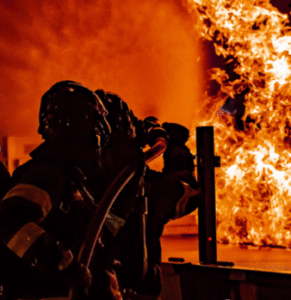
Paper boat on fireThe most important of all international maritime safety conventions is the International Convention for the Safety of Life at Sea (SOLAS). The first version was adopted at a conference in London in 1914. The catalyst for this conference was the sinking of the Titanic on her first voyage in April 1912, which cost the lives of more than 1,500 passengers. This was the beginning of the journey that put in place a regulatory framework to protect those who work and travel by sea and protecting them from harm especially fires at sea. This article highlights the importance of firefighting at sea.

Whilst the sinking of the Titanic was not fire-related, the convention introduced new international requirements dealing with, among other things, the provision of fireresistant bulkheads, fire prevention devices and firefighting appliances on passenger ships. The convention came into force in July 1915, some three years after the loss of the Titanic. Continue reading “Firefighting at Sea”

The storage of batteries and their on-board maintenance

The storage of batteries and their on-board maintenance is crucial. The batteries themselves do not produce power but they provide the stored power which is produced during the charging phase by other power producers.

“The Port State Control code 04103: Emergency, lighting, batteries, and switches is one of the most common inspection deficiency codes marked worldwide and includes battery related items. Most of the findings are related to battery room and protective measures and missing equipment.” Continue reading “The storage of batteries and their on-board maintenance”

State the facts in post incident reporting

By Geraldine Koon. Legal Advisor, ITCGeraldine Koon

Managers are often required to produce a report post-incident, whether for Flag State, Owners or in accordance with the Vessel’s SMS, for example. While it is helpful to have a report outlining the facts of the incident, what went wrong, and what could be improved, managers must take care when drafting a review of this kind that any  findings are not used against them or their principal. The ISM code promotes a no blame culture. However, when something goes wrong, it can be the very opposite.

Any post incident reporting may lead to a dispute and costly litigation. Parties involved will inevitably ask for any reports into the incident and scrutinise them for anything that can be used to assign blame and liability. Continue reading “State the facts in post incident reporting”

Instagram Posts from the IIMS @iimsmarine

Privacy Overview

This website uses cookies so that we can provide you with the best user experience possible. Cookie information is stored in your browser and performs functions such as recognising you when you return to our website and helping our team to understand which sections of the website you find most interesting and useful.

Strictly Necessary Cookies

Strictly Necessary Cookie should be enabled at all times so that we can save your preferences for cookie settings.

Show details Hide details
Performance & Marketing Cookies

This website uses Google Analytics to collect anonymous information such as the number of visitors to the site, and the most popular pages. This also helps us optimise our marketing campaigns. User data sent to Google Analytics may be used for ad personalization and measurement of our ad campaigns. Keeping this cookie enabled helps us to improve our website.

Show details Hide details