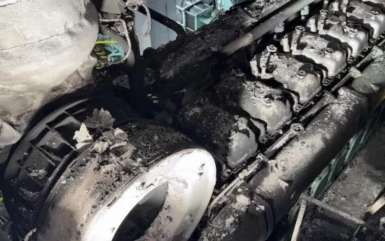
Fire in the engine room remains the most common and costly risk in Hull and Machinery insurance, due to the combination of flammable materials, complex machinery and human factors, according to Skuld Club. Skuld has seen recent cases of engine room fires due to (fusible) erosion plug failure. An erosion plug failure in a fuel pump can cause engine room fires by allowing pressurised fuel to escape as a fine spray, which can ignite instantly upon contact with hot surfaces. An erosion plug is a safety device built into fuel pumps, and particularly in high-pressure fuel pumps.
Erosion plugs are made from a low-melting-point alloy and are designed to relieve pressure during overheating, preventing the fuel pump casing from rupturing or exploding. However, excessive temperatures, internal friction, pump seizure and inadequate maintenance can cause the plug to melt, erode or blow out prematurely. When this happens, pressurised fuel oil escapes, often as a fine atomised spray rather than a liquid leak. This fine mist presents a serious fire hazard. If it comes into contact with hot surfaces such as exhaust manifolds or turbochargers, it can ignite almost instantly.
Combined with high fuel pressure and the presence of hot machinery, the resulting flash fire can spread rapidly through lagging gaps, cable runs and accumulated oil deposits, significantly increasing the extent of damage in the engine room. Skuld strongly advises to always strengthen their maintenance controls and inspection.
Recommendations
- Ensure strict compliance with the manufacturer specifications, such as torque setting, verification of installation of the locking devices, such as locking wire, and tabs. To implement post-maintenance inspection and sign-off procedures.
- Conduct operational checks after reassembly and under load conditions of the fuel pumps, fuel lines, and their fittings.
- If the maintenance is conducted by shipboard personnel, ensure adequate competency and training of the personnel performing the maintenance. Avoid critical repairs when appropriate tools are unavailable and where spare parts are not compliant or incomplete.
- Conduct frequent inspections of the fuel system, implement leak detection routines and thermal imaging for early identification of abnormal conditions.
- Ensure that exhaust systems and turbochargers are properly insulated. Repair the damage immediately and treat any exposed hot surface as a critical hazard.
- Perform regular tests on fire detection systems and fixed firefighting systems onboard. Conduct regular fire drills focusing on early isolation and shutdown action for fuel spray fire scenarios.
- Furthermore, operators are encouraged to review their planned maintenance systems, work controls and verification processes.
- Implementing a robust Safety Management System (SMS) can help ensure compliance with procedures for fuel handling, maintenance and hot work operations, reducing the risk of similar incidents.