The Isle of Man Ship Registry 2025 casualty summary report has been released – highlighting that mooring and anchoring operations remained one of the most common activities being undertaken at the time of an incident.
The Annual Summary of Casualties, Accidents and Incidents on Isle of Man Registered Vessels provides statistics and analyses the trends identified from the Accident Report Forms (ARF) submitted to the registry over the course of 2025.
Key points:
- There were 53 Incidents, 15 Accidents and 5 Casualty Reports in 2025
- The most common occurrences in 2025 were personal injury and machinery / equipment failures
- Mooring operations were the most common activity reported on the ARF forms
- There was 1 fatality, 10 serious injuries and 21 minor injuries reported in 2025
- Times of no activity and manoeuvring operations presented the most dangerous periods for seafarers
- The most common root cause were procedural and operational factors and human factors
- The most common causes identified for each causal factor were:
- Workplace and Ergonomic Factors – Slippy, uneven floors and Awkward/Inaccessible equipment
- Procedural & Operational Factors – Failure to comply with safe working practices
- Management Systems Factors – Inadequate Processes and Inadequate supplies of spares or equipment
- Machinery & Equipment Factors – Machinery/Equipment breakdown, Electrical installation failures/inadequacy
- Human Factors – Poor judgement and decision making, Unsafe acts and negligence
- External Factors – Navigational hazards and tides/currents
Personal injury and machinery / equipment failures
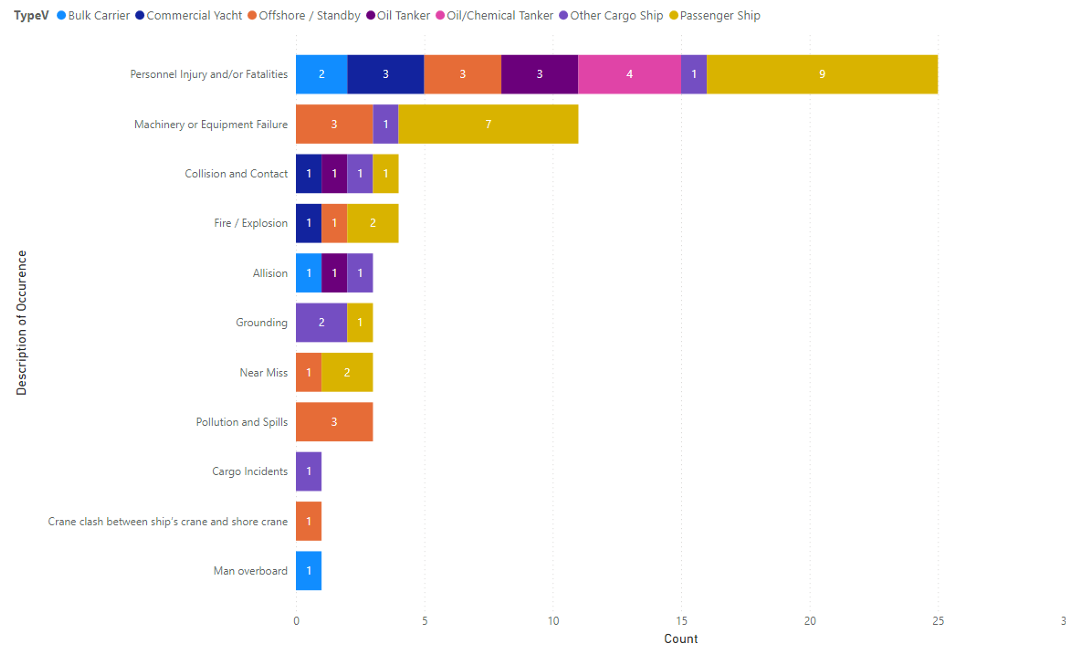
In 2025, the most frequently reported occurrence to the Ship Registry was personal injury. While the Ship Registry continues to emphasise the importance of undertaking comprehensive risk assessments and establishing clear plans of work before commencing any task, many of the injuries reported during the year appear to have resulted from momentary lapses in judgement, or a failure to follow standard procedures.
Shipowners are encouraged to ensure that all personnel receive appropriate guidance on fatigue, its potential effects on performance and decision-making, and the importance of remaining vigilant when moving around the vessel, including during periods when they are off duty. Senior officers and vessel managers should also take fatigue management into account when planning work schedules and consider postponing non-critical tasks where necessary to ensure that work is carried out by personnel who are adequately rested and alert.
The year also saw an increase in occurrences involving machinery and equipment failure. These incidents highlight the importance of effective planned maintenance systems, thorough inspections, and the prompt rectification of identified defects. Shipowners and operators are reminded to ensure that critical equipment is maintained in accordance with manufacturers’ recommendations and statutory requirements, and that emerging issues are addressed before they develop into more significant failures that could affect the safety of the vessel or its crew.
Mooring and anchoring
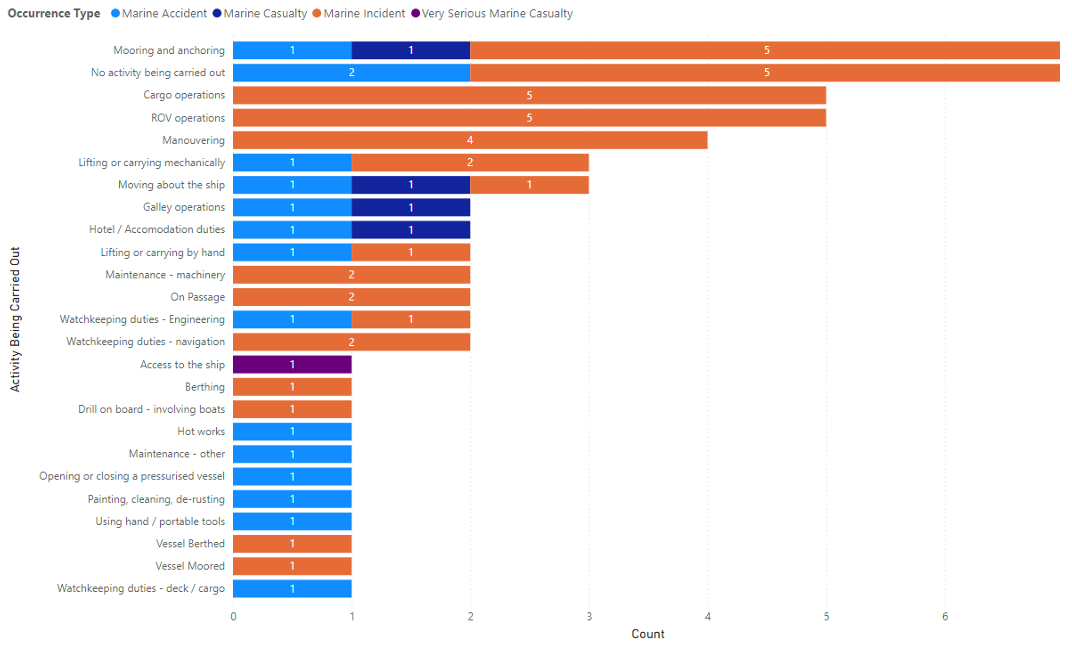
Mooring and anchoring operations remained one of the most common activities being undertaken at the time of an incident. These operations present significant risks due to the substantial forces and stored energy involved in mooring lines and associated equipment. Operators should ensure that all mooring equipment is subject to regular inspection and maintenance to identify wear, damage, or deterioration. Reliance solely on manufacturers’ recommended replacement intervals may not be sufficient, as the marine environment can accelerate degradation and adversely affect both the performance and service life of ropes and associated components. It is vital to ensure that all crew involved in mooring operations have been trained appropriately and are well aware of the risks involved in mooring operations, snap-back zones should be clearly marked by well maintained visuals and these areas should be covered as part of the pre-operation toolbox talk.
Conclusions
The findings of the 2025 casualty data continue to demonstrate that many occurrences arise not from a single cause, but from a combination of human, operational, technical, environmental, and organisational factors. While the specific circumstances of each incident vary, common themes remain evident, including the importance of effective planning, robust maintenance regimes, clear procedures, good communication, and ongoing training.
A strong safety culture remains one of the most effective safeguards against accidents. Companies should ensure that personnel are provided with the tools, resources, and support necessary to work safely, while seafarers should be encouraged to take an active role in identifying hazards, reporting concerns, and learning from incidents and near misses. Adherence to safe working practices, established procedures, and industry best practice is fundamental to preventing harm and maintaining safe vessel operations.
Ultimately, the lessons identified from the occurrences reported in 2025 reinforce the need for continuous vigilance both on and off duty. By promoting a proactive approach to risk management and fostering an environment where safety takes precedence over operational or commercial pressures, the maritime industry can continue to reduce the likelihood of future casualties and improve outcomes for all those working at sea
Download the full report: