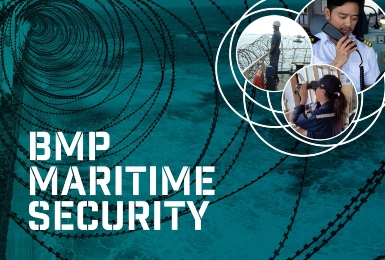
The recently published second edition of Best Management Practices Maritime Security continues to contribute to the security and safety of merchant shipping transiting the High Risk Areas around the world.
In an era defined by volatile geopolitical dynamics, evolving maritime piracy, and sophisticated state and non-state threats at sea, the global shipping industry has taken a definitive step forward. The major international shipping associations—including BIMCO, ICS, CLIA, IMCA, INTERCARGO, INTERTANKO, and OCIMF—have jointly published the comprehensive consolidated edition.
From regional fragmentation to global cohesion
Historically, shipping operators, Company Security Officers (CSOs), and Ship Security Officers (SSOs) had to navigate a patchworked matrix of location-specific guidance, ranging from the Red Sea and Indian Ocean to dedicated guidance for the Gulf of Guinea and Southern Seas. While effective in their respective zones, this fragmentation increased operational complexity for vessels operating on multi-regional international voyages.
The newly released Best Management Practices Maritime Security guidance addresses this challenge by consolidating disparate regional manuals into a single, standardized, and globally applicable publication. Rather than redefining security protocols for every geographic boundary crossed, the publication establishes a universal threat and risk management process adaptable to any maritime theatre across the globe.
Key objectives of the consolidated global framework
- Universal Risk Management: Standardizes risk assessment models across all ship types and trade routes.
- Dynamic Regional Referencing: Separates core operational protocols from localized threat intelligence, directing operators to real-time external security feeds.
- Enhanced Seafarer Protection: Focuses on active detection, avoidance, deterrence, delay, and emergency reporting.
- Operational Streamlining: Reduces administrative clutter for bridge teams while maintaining strict compliance.
- Understanding the Core Structure & Philosophy.
- The foundational principle of the new publication is that maritime threats, whether criminal piracy, political violent extremism, opportunistic theft, or state-backed aggression, share core operational vulnerabilities that can be mitigated through disciplined, layered defences.
Rather than treating security as a static checklist, the new framework centres on a continuous Detect, Avoid, Deter, Delay, and Report doctrine.
Practical guidance for CSOs, SSOs, and Masters
The introduction of the new global Best Management Practices Maritime Security guidance requires immediate alignment within every shipowner’s Safety Management System (SMS) and Ship Security Plan (SSP). Key action points for maritime security leaders include:
a) Conducting ship and voyage specific risk assessments The guidance emphasizes that generic security measures are insufficient. Prior to entering high-risk or transit corridors, the CSO and Master must perform a joint risk assessment factoring in vessel freeboard, speed capabilities, crew size, cargo characteristics, and current intelligence feeds from flag states and regional reporting centres.
b) Complementing, not overriding, the ISPS Code It is critical to note that the new Best Management Practices Maritime Security publication serves as a complementary operational layer. It does not replace or override statutory obligations under the International Ship and Port Facility Security (ISPS) Code or Flag State regulations. Instead, it provides actionable execution steps to fulfil ISPS security level requirements.
Crew welfare and preparedness drills
Seafarer safety remains the central priority. Crew training must go beyond routine physical drills to include scenario-based responses to aggressive boarding, hostage mitigation protocols, and citadel activation. Clear communication channels must be established to reassure crew members and maintain welfare support during high-stress transits.
Strategic benefits for shipowners and charterers
Adopting the new consolidated BMP framework offers tangible commercial and operational advantages:
- P&I and Hull Insurance Alignment: Demonstrating strict adherence to global BMP standards supports favourable risk profiling and compliance with warranty conditions set by war risk underwriters.
- Charterparty Clarity: Provides a standardized benchmark for charterparty clauses regarding security measures, speed requirements, and transits through volatile maritime zones.
- Streamlined Reporting Workflows: Reduces confusion regarding emergency contact points, providing structured reporting paths directly linked to regional naval operations and maritime safety agencies.
Looking ahead
The release of the unified Best Management Practices Maritime Security document marks a major milestone in global maritime safety. By bridging regional silos and establishing a cohesive, risk-driven standard, the maritime industry equips its crews and fleets with the tools needed to navigate increasingly complex security environments. As maritime security threats continue to evolve, adherence to these recommendations remains the single most effective shield for protecting seafarers and preserving global supply chain resilience.
Download the new guidance: