Background & History
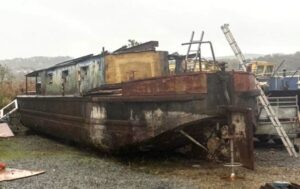
To introduce the vessel 43M. Heritage Boat 43M is from the Irish Grant canal system which was built in Ringsend boatyard by Vickers in 1927. The boat was built for the Grand Canal Company as a transport barge serving the Grand Canal, the River Shannon Navigation and the River Barrow Navigation.
The boat operated from the late 1920s until the late 1950s when the canal ceased trading. The boat had an unfortunate set of uses from 1959 onwards. The boat was cut down by 11” to open the hold up so it could be used as a small boat floating drydock. 43M was later converted to a pleasure boat but had many years neglect and dereliction in private ownership until it sank around 2009,
The boat was removed from the navigation by Waterways Ireland and sat until 2025 on the hard in a boatyard. Waterways Ireland offered the boat for tender, and Damien Buckley was the tender bid winner. And here this snapshot of our journey starts. Continue reading “Rescue and Restoration: A snapshot in the journey of Heritage Boat 43M”
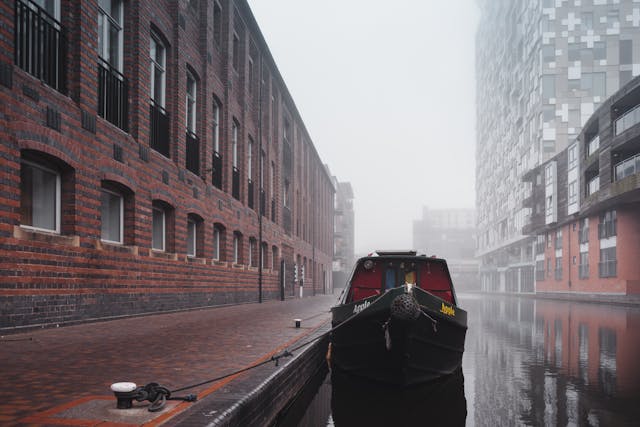


 Marine surveyors and boat owners are regularly heard to say there is a minimum 4.0mm of hull thickness required at time of survey of a steel narrowboat. Some brokers even publish videos of such information, with some surveyors enforcing it (Whilton Marina, 2012 and 2016). Boaters are subject to it and repair often follows. In a recent article, Geoff Waddington (2021) explains there is confusion in the industry about wastage limits, and consequently acceptable residual hull plate thicknesses, and opinions among surveyors ‘vary wildly’, with some quoting 3mm acceptable minimum plate thickness, others using percentage loss. This short paper explores what a standardised acceptable limit for diminution, and therefore residual steel plate thickness for narrowboats, could be. It describes a variety of methods of calculating the design plate thicknesses (scantlings) and the minimum acceptable residual plate thickness. In doing so, this paper aims to serve as a guide for inland waterways marine surveyors, boat owners, repairers, and insurers alike.


