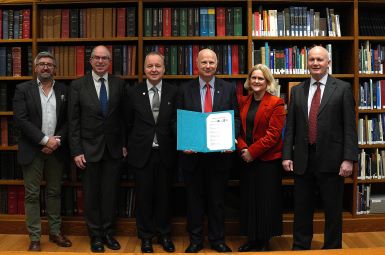
The UK is taking a decisive step towards leading the global race to decarbonise shipping with the launch of the Maritime Nuclear Consortium and its plans for a nuclear-powered fleet.
Convened by Lloyd’s Register (LR), the group unites leading expertise from the nuclear, maritime, insurance and regulatory sectors to set the highest international standards for safe, secure and commercially viable nuclear-powered ships.
Maritime nuclear power is a proven, advanced and safe energy source that can tackle one of the toughest challenges in the energy transition. The next generation of advanced modular reactors (AMRs) will allow ships to sail for years without refuelling, with zero carbon emissions and rigorous safety built in from the start.
Nuclear produces no CO₂. Reactors run for years, not weeks. With no need to trade efficiency for emissions standards, ships can run at full design speed instead of slow steaming.
The core membership includes:
- Lloyd’s Register (Lead, Safety & Secretariat)
- Rolls-Royce (Reactor Design)
- Babcock International Group (Ship Design, Construction and Support)
- Global Nuclear Security Partners (Security & Safeguards)
- Stephenson Harwood (Legal & Regulatory)
- NorthStandard (Insurance)
The UK has a long history of leading maritime innovation and is now in a strong position to support the safe adoption of maritime nuclear power. With trusted regulators, world-class engineering and shipbuilding, and decades of naval nuclear experience, it has the credibility to shape international standards from the start.
From London’s capital markets to northern engineering hubs, the UK also offers a complete ecosystem to support nuclear shipping – covering design, regulation, finance and insurance.
But the window for leadership is narrowing. Other nations are moving quickly to set their own standards and develop technology. Without coordinated UK action, the chance to define the rules, create high-skilled jobs and anchor a global supply chain could be lost to faster competitors.
Acting now would give the UK first-mover advantage, and ensure those standards, jobs and supply chains are built here.
The consortium’s first programme will:
- Demonstrate a Statement of Design Acceptability (SODA) for a generic, site-licensed advanced modular reactor
- Develop a class certification framework integrating nuclear and maritime regulation
- Define a security and safeguards architecture to meet regulatory requirements.
- Establish insurability pathways for nuclear-powered vessels
- Publish guidance for industry and government to accelerate safe adoption
Nick Brown, CEO of Lloyd’s Register, said, “Decarbonisation demands cleaner power, higher standards and a duty to the generations that follow. Nuclear is ready to meet that test.
“Used safely in naval fleets for decades, the next generation of advanced modular reactors brings tougher safeguards and the chance to bring nuclear power into everyday commercial shipping.
“If the UK leads on global standards, nuclear will mean more than zero-carbon ships. It will mean work in British shipyards, new business in the city, and lasting jobs for those who build, insure and sail the world’s fleet.”