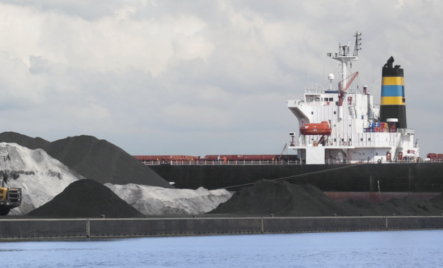
London P&I Club publish guidance on Gas monitoring and ventilation on coal cargoes

Coal cargo ship - Photo credit: London P&I Club
Coal cargo ship – Photo credit: London P&I Club

The London P&I Club together with Paul Willis Senior Associate at Hawkins have published a loss prevention guide regarding the risks of carrying coal cargoes. The report gives special consideration to the issues surrounding gas monitoring and ventilation.

The guide mentions that the management of coal cargoes and the proper use of gas detection equipment are vital to prevent coal fire claims. It also details the basic requirements regarding the installation, use and maintenance of gas detection devices and the different types of sensors involved in their operation.

According to the report, the gas detection and monitoring equipment on board ships can vary from large units such as the Riken Keiki RX–515 to smaller more portable types such as the BW Gas Alert Max XT II. Continue reading “London P&I Club publish guidance on Gas monitoring and ventilation on coal cargoes”

CIMAC unable to explain marine fuel incidents that occurred earlier this year

marine fuel accidents

The International Council on Combustion Engines (CIMAC) has released a statement on marine fuel incidents that have occurred this year highlighting that it is unable to draw any firm conclusions about the cause of the problems.

CIMAC Working Group Fuels – WG7 – made the statement after the unusually large number of ships that experienced marine fuel incidents with seemingly on-spec fuels earlier this year. The statement confirms much of what the International Bunker Industry Association (IBIA) has already said on the issue.

In March 2018, a number of ships experienced operational problems using residual fuels bunkered in Houston. The analyzed fuels met the Continue reading “CIMAC unable to explain marine fuel incidents that occurred earlier this year”

Cargo hold cleaning robots undergo testing

Cargo cleaning robot

Cargo hold cleaning is a critical aspect of the complex bulk carrier operations that require careful preparation to maintain cargo quality and to avoid any delays. A conventional bulk carrier may transport coal this week and soya beans the next week, which requires thorough wash-downs and cleaning in between. Danish shipping company Norden has said it has tested a cargo hold robot which can be remotely operated to prevent risk and delays, also leading to enhanced safety for crew and others who are required to enter holds.

The prototype, developed by Danish company CLIIN with assistance from the Market Development Fund, is a new belt-driven robot which can be operated remotely to go up and down along the sides of the holds while pressure cleaning them. The robot is driven forward by Continue reading “Cargo hold cleaning robots undergo testing”

CRT to create regional teams to improve customer service

Richard Parry, CRT CEO (pictured right)

Canal & River Trust will move resource from its centrally based roles into its six regional customer-facing teams to improve customer service and engage with local communities.

The changes will be made as part of the trust’s waterways and well being strategy and will see operational management roles adapted to meet the requirements of the new regions.

Richard Parry, CEO, commented: “The Canal & River Trust has been repositioning as a charity for the waterways and well being, with a new structure that has seen us move from ten waterways to six larger regions, with some activities previously managed centrally now devolved to these regional teams, and a reduction in senior manager numbers overall.

Continue reading “CRT to create regional teams to improve customer service”

Recommendations on reducing yacht racing risks released

The report team found that the risk clearly depends on the level of congestion.

A new Volvo Ocean Race (VOR)-commissioned report has examined ocean racing at night in areas of high vessel traffic density to establish possible steps to mitigate risk following the death of a fisherman during the race.

The independent Volvo High Traffic Density Report follows the collision between Vestas 11th Hour Racing and a fishing vessel this January, in the final stages of the leg into Hong Kong during the most recent edition of the race. The crews recounted that virtually all the vessels had some form of lighting and exhibited AIS. The fishing vessels were either stationary or travelling at slow speeds of 3-6 knots and they did not form an impenetrable barrier.

Recommendations made in the report included use of Continue reading “Recommendations on reducing yacht racing risks released”

Cley Harbour rejuvenated after many years of disuse

Cley harbour before remodel - Photo credit: Chris Taylor
Photo credit: Chris Taylor

Norfolk’s Cley Harbour has received its largest traditional working sailing vessel for more than 60 years, marking its return to activity after falling into disuse.

The Coastal Exploration Company owned 30ft open wooden gaff rigged whelk boat Salford came into the harbour to deliver a cargo of North Norfolk beer from Barsham Brewery to the Cley Windmill.

Simon Read, chairman of Cley Harbour committee said: “This is the largest traditional working sailing vessel to visit Cley in over 60 years and will be mark a key moment in the rejuvenation of Cley Harbour.”

The clinker-built traditional Norfolk fishing boat has remained in and around Norfolk’s waters since it was built in the 1950s and was recently in the filming of Continue reading “Cley Harbour rejuvenated after many years of disuse”

IMO has adopted a plan to address the issue of marine plastic

Dumping plastics into the sea is already prohibited under MARPOL regulations, which also oblige governments to ensure adequate port reception facilities to receive ship waste.

The IMO has pledged to address the significant problem posed by plastics to the marine environment, with the adoption of an action plan to address the issue of marine plastic being ejected from ships.

The plan was adopted on October 26 by IMO’s Marine Environment Protection Committee (MEPC).

Dumping plastics into the sea is already prohibited under MARPOL regulations, which also oblige governments to ensure adequate port reception facilities to receive ship waste. Under the London Convention and Protocol on the dumping of wastes at sea, only permitted materials can be dumped and this waste – such as from dredging – has to be fully assessed to ensure it does not contain harmful materials like plastics.

However, studies demonstrate that despite the existing regulatory framework to prevent marine plastic litter from ships, discharges into the sea continue to occur. Recognising that more Continue reading “IMO has adopted a plan to address the issue of marine plastic”

New dry dock initiative uses inflatable buoyancy

For the next phase of construction; the installation of the upper decks to take place, the dry dock needed to be flooded and the hull then towed to the wet dock.

Unique Group’s Buoyancy & Ballast division has recently facilitated a high-profile dry dock initiative in Romania, involving the supply and operation of 840t of Seaflex inflatable buoyancy.

The hull and lower decks of the Australian Antarctic Division’s (AAD) new icebreaker Nuyina were constructed in the dry dock initiative at Damen’s Galati Shipyard.

“Our Buoyancy & Ballast division is truly unique within the market and we consistently bring added value to our clients, working in partnership,” said Chris Sparrow, global sales manager, Buoyancy & Ballast at Unique Group.

“We get right up to speed early on in a project during Continue reading “New dry dock initiative uses inflatable buoyancy”

Preventing coal cargo from self-heating

The atmosphere in each cargo hold should be monitored, at least on a daily basis, for CO, hydrogen sulphide (H2 S), oxygen (O2) and flammable gas (LEL-methane).

London P&I Club has analysed the problems associated with the transportation of coal in bulk, such as self-heating and flammable gas (i.e. methane) release. Self-heating can lead to fires and the production of carbon monoxide (CO), whilst methane release can lead to an explosive atmosphere being generated in the hold.

Self-heating normally occurs in localised hot spots within a bulk cargo, and temperature measurements are unlikely to identify problems. However, when coal self-heats it produces CO, so measuring the concentration of CO is the most effective method to identify a self-heating cargo.

The atmosphere in each cargo hold should be monitored, at least on a daily basis, for CO, hydrogen sulphide (H2 S), oxygen (O2) and flammable gas (LEL-methane). If the holds are being ventilated, then ventilation should be stopped at least Continue reading “Preventing coal cargo from self-heating”

How to conduct a safe bunkering operation

A number of safe bunkering measures are required for each bunkering operation. These can be divided into four stages and checks

The UK P&I Club has published helpful guidance to ensure safe bunkering operations. The Club said that bunkering operations are routine and critical, high risk operations which require to be carefully planned and performed.

Causes of bunker spills

Although the most of the bunker transfers are carried out without incident, very occasionally, things can and do go wrong. The UK Club notes that only a minority of cases do bunker spills occur because of failure of the hoses or pipelines, while the majority of spills result from a tank overflowing.

But these are not the only causes. Common causes of bunker spills can be summarised as follows:

– Improper set up of pipeline system valves: Potentially causing either overpressure, or flow of bunkers to an unintended location;
– Insufficient monitoring of tank levels during bunkering: All tanks, not only those Continue reading “How to conduct a safe bunkering operation”

Loss of propulsion led FRPD 309 to collide with loaded barge

The FRPD 309 sustained damage to the shell plating and forepeak tank forward of the collision bulkhead. In addition, the port anchor was disconnected from its housing and became wedged in the Evco 60's hull
The FRPD 309 sustained damage to the shell plating and forepeak tank forward of the collision bulkhead. In addition, the port anchor was disconnected from its housing and became wedged in the Evco 60’s hull

The Transportation Safety Board of Canada released its investigation report into the collision of the dredger FRPD 309 with the loaded barge Evco 60, on 5 December 2017, in the Fraser River.

The incident

On 04 December 2017, the dredger FRPD 309 departed a shipyard in Delta, BC, to begin dredging in the Fraser River. The vessel is a conventional trailing arm suction dredger, with the bridge and accommodation located forward and machinery space located aft. Before departure, the crew had carried out pre-departure checks, a safety meeting, and emergency drills.

After arriving at the dredging location, the vessel started dredging sand and sediment from the river bed into the hopper using the 2 trailing arms and a dredging pump. When the hopper was filled, the sand and sediment was pumped ashore via a pipeline. The master left the bridge, handing over the command of the vessel to the officer of the watch (OOW). Two engineers, 2 deckhands, and a pipe operator were also on duty.

As the vessel was turning and the pipe operator was raising the trailing arms to the deck level, the vessel experienced Continue reading “Loss of propulsion led FRPD 309 to collide with loaded barge”

Bavaria Yachts is relying on 100 percent Made in Giebelstadt

Bavaria Yachts logo
Bavaria Yachts logo

The future development of Bavaria is taking clear shape: The yacht builder, respected worldwide for its good price/performance ratio, will once again build its boats one hundred percent in Germany. Bearing the seal of quality “Made in Giebelstadt”, both sailing and motor yachts will be manufactured and handed over to customers in Franconia. The R55 motor yacht, previously produced in Croatia, will for the first time be hand-built at the company’s headquarters in the first half of 2019. The moulds and tools are currently being transported from Croatia to Germany and installed in Giebelstadt.

“We want our outstandingly well trained and committed employees to develop and build all our yachts primarily under own management. The workforce identifies strongly with Bavaria Yachts; it is the key feature of our company,” explains Managing Director Erik Appel, who has been Chief Operating Officer of Bavaria Yachts since December 2017. “This is why we intend to further increase our permanent staff and simultaneously reduce the proportion of temporary workers. This will help considerably to bring down Continue reading “Bavaria Yachts is relying on 100 percent Made in Giebelstadt”

Instagram Posts from the IIMS @iimsmarine

Privacy Overview

This website uses cookies so that we can provide you with the best user experience possible. Cookie information is stored in your browser and performs functions such as recognising you when you return to our website and helping our team to understand which sections of the website you find most interesting and useful.

Strictly Necessary Cookies

Strictly Necessary Cookie should be enabled at all times so that we can save your preferences for cookie settings.

Show details Hide details
Performance & Marketing Cookies

This website uses Google Analytics to collect anonymous information such as the number of visitors to the site, and the most popular pages. This also helps us optimise our marketing campaigns. User data sent to Google Analytics may be used for ad personalization and measurement of our ad campaigns. Keeping this cookie enabled helps us to improve our website.

Show details Hide details