The International Marine Contractors Association (IMCA) has released its annual IMCA Safety Statistics Report, revealing fatalities more than doubled despite overall safety performance improving last year.

The International Marine Contractors Association (IMCA) has released its annual IMCA Safety Statistics Report, revealing fatalities more than doubled despite overall safety performance improving last year.

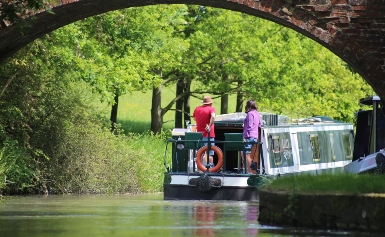
The Canal & River Trust boater consultation, which will be co-created with boaters over the coming months, forms part of our response to the independent commission on boat licensing. Which reported at the end of 2025 and highlighted that the existing licensing system doesn’t work well for boaters or the Trust. It also raised concerns about communication and relations between the Trust and boaters.
About the consultation and why it is happening
The consultation will consider a wide range of topics, including boat safety, support for boaters, greater certainty around navigation requirements, fair sharing of the space, and managing the canal network responsibly. Continue reading “Canal & River Trust boater consultation to launch in December 2026”

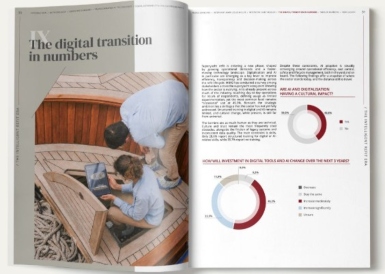
MB92 Group today announces the publication of its fifth report examining the major trends shaping the future superyacht refit industry. Entitled The Intelligent Refit Era: How Digitalisation and AI Will Redefine the Future of Yacht Refit, the report explores how digitalisation is changing the way yachts are designed, operated and maintained; and the capabilities the industry will need to benefit from this transformation.
Its findings draw on MB92’s operational experience, research and interviews, a panel of specialists from yachting and other industries, and a survey of more than 70 stakeholders within the superyacht ecosystem, including captains, crew, owner and manager representatives, shipyards, designers and service providers. Continue reading “How digitalisation and AI will impact the future of superyacht refit”

The UK Maritime and Coastguard Agency has published MGN165 Amendment 2 (F) which shows guidance on how to reduce the risk of flooding and the action to take if flooding occurs on fishing vessels.
MGN165 Amendment 2 (F) fishing vessels: risk of flooding provides guidance on bilge systems, during construction and operation, to help reduce the number of vessels and lives lost as a result of flooding.
It noted that MAIB investigations into fishing vessel losses continue to show flooding as the primary cause. Between 2016 and 2024, 86 vessels were involved in flooding or foundering incidents. Of these, 29 vessels were lost. Continue reading “MCA releases MGN165 Amendment 2 (F) on how to reduce risk of flooding on fishing vessels”

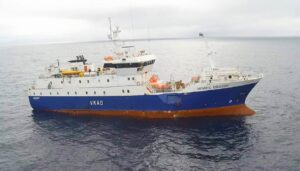
Four crewmembers were hospitalised after decomposing fish offal was accidentally pumped into a machinery space on board FV Antarctic Discovery, according to the Transport Accident Investigation Commission of New Zealand (TAIC).
The investigation report identified four systemic safety issues involving machinery isolation, confined-space hazards, coordination between multiple organisations, and oversight of safety-critical modifications. Continue reading “Toxic gas from rotting fish in confined space hospitalised four crewmembers aboard FV Antarctic Discovery”

Plastic pellet pollution remains a concern in shipping due to incidents of nurdle spillage. West P&I Club has highlighted a circular from India’s DGS, Circular No. 19 of 2026, which introduces specific requirements for transporting plastic pellets (nurdles) in freight containers. Nurdles are increasingly recognised as an environmental risk that warrants targeted control.
In the circular, DGS said recent incidents along the Indian coastline have highlighted serious concerns regarding marine pollution caused by the loss of freight containers carrying plastic pellets at sea. Continue reading “India introduces new requirements for transporting plastic pellets in containers”

Ship operators are facing a growing risk from fuels that appear compliant under routine ISO 8217 testing but still present operational risks once on board, according to Lloyd’s Register. In its latest Fuel Oil Bunker Analysis and Advisory Service (FOBAS) LR Fuel Quality Report, covering the first half of 2026, off-specification fuels remain a persistent challenge.
However, some of the most disruptive cases now involve fuels that pass routine compliance testing but show poor stability or compatibility, or contain non-conventional blend components that are only identified through more detailed investigative analysis. Continue reading “LR Fuel Quality Report reveals operational challenges of ISO-compliant fuels”

The World Shipping Council welcomes the European Commission’s practical EU ETS revisions to accelerate alternative maritime fuels and channel revenues back into shipping’s decarbonisation.
The proposed fuel mechanism announced for the maritime sector follows the policy logic already used in aviation. Helping close the price gap between conventional and alternative fuels can encourage uptake, support investment in production and position Europe as a leading alternative fuel bunkering hub. Continue reading “WSC welcomes EU ETS revisions for maritime decarbonisation”

Boiler tubes play a critical role in both heat transfer and in maintaining the pressure integrity of marine boilers. When leaks occur, careful evaluation is required to prevent secondary damage.
And DNV has shared guidance on class acceptance criteria, including the assessment of repair feasibility and the follow-up of plug repairs on defective boiler tubes.
Boiler tubes are often exposed to high temperatures, corrosive environments and fluctuating operating conditions, making them susceptible to various forms of degradation. In case of leaks, plugging is often used as a rapid method to restore boiler integrity. Continue reading “DNV guidance on boiler tube plugging class requirements”

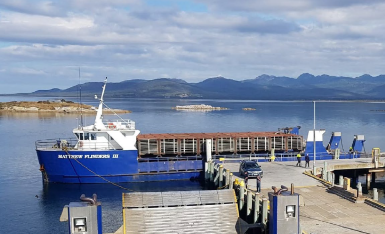
A cargo ship’s crew were unable to the use of the backup control system after a mechanical fault left the ship without steering for more than eight hours. The Australian Transport Safety Bureau (ATSB) said inadequate training on the system and unclear instructions in ship’s safety management system (SMS) contributed to the incident.
What happened
On 23 July 2025 at 2345, Matthew Flinders III was in transit between Bridport and Lady Barron, Tasmania, when a rudder angle feedback failure in its autopilot system caused a loss of steering. The failure caused both rudders to lock in the hard to port position and caused an uncontrolled turn to port. In response the ship’s master reduced engine power and alerted the engineer. Continue reading “Matthew Flinders III lost steering in Bass Strait following mechanical fault”

The Transportation Safety Board of Canada (TSB) received 990 reports of marine transportation occurrences in 2025, including six fatalities, as recorded in the TSB annual report.
The total of 257 marine transportation accidents represents an increase from the 213 accidents in 2024 but is 4% below the 10-year average of 267. In 2025, 85% were shipping accidents, slightly more than 83% on average over the previous 10 years. The remaining 15% of accidents in 2025 were aboard ship (when a person is seriously or fatally injured), just below the 10-year annual average of 17%. Continue reading “Commercial fishing remains key safety issue says TSB annual report”

The American Bureau of Shipping (ABS) has issued guidance for cargo ships equipped with rescue boat launching appliances that rely entirely on manual operation without stored mechanical power.
The guidance follows the adoption of IMO Resolution MSC.459(101), which introduced an exemption applicable only to rescue boats installed on or after 1 January 2024. The exemption does not apply to systems installed before that date, meaning existing arrangements remain subject to previous requirements. Continue reading “Manual rescue boat davits raise PSC compliance concerns”
Instagram Posts from the IIMS @iimsmarine