Tokyo MOU on maintenance and rigging of pilot transfer arrangements

Defective pilot ladder. Source: Tokyo MOU

Tokyo MOU has reinforced an awareness of the potential risks associated with the improper maintenance and rigging of pilot transfer arrangements. Therefore they released a guidance on maintenance and rigging of pilot transfer.

Tokyo MOU has reported that recent reports and Port State Control (PSC) inspections have highlighted recurring issues related to pilot ladders and hoist/pilot transfer arrangements, the improper rigging of pilot transfer arrangements. Continue reading “Tokyo MOU on maintenance and rigging of pilot transfer arrangements”

AMSA on using exhaust gas cleaning systems (EGCS)

 AMSA has provided guidance on using exhaust gas cleaning systems (EGCS) in Australian waters.
AMSA has provided guidance on using exhaust gas cleaning systems (EGCS) in Australian waters.

The Australian Maritime Safety Authority (AMSA) has released guidance on how to use an exhaust gas cleaning system (EGCS) to meet the fuel sulphur limit of 0.50% m/m, as required under MARPOL Annex VI and Australian law. This what AMSA has to say on exhaust gas cleaning systems.
Marine notice 2025/04 provides guidance on using an exhaust gas cleaning system (EGCS) to support compliance with the sulphur limit of 0.50 mass per cent concentration (m/m) in fuel oil.
The sulphur limit is required by the International Convention for the Prevention of Pollution from Ships (MARPOL) Annex VI and Australia’s domestic law. Continue reading “AMSA on using exhaust gas cleaning systems (EGCS)”

National Recreational Boating Statement reveals blue economy delivers high values for Australian boating

BIA releases National Recreational Boating Statement at the Sydney boat show

The Boating Industry Association recently launched the National Recreational Boating Statement at the new-format Sydney Boat Show to an audience of government, stakeholder and industry representatives. BIA CEO Andrew Fielding said the National Recreational Boating Statement report found boating participation was set to reach more than 2.9 million by 2030, when there would be 1 million registered boats and Australians were expected to spend $20 billion on getting out on the water in all forms of watercraft.

“Australia is a lucky country, with some of the best conditions for boating in the world,” Fielding said. Continue reading “National Recreational Boating Statement reveals blue economy delivers high values for Australian boating”

Panamanian Ship Registry to stop accepting tankers and bulkers more than 15 years old

Panamanian Ship Registry to stop accepting tankers and bulkers more than 15 years old

The Panamanian Ship Registry is to stop accepting tankers and bulkers more than 15 years old. The move has been officially communicated to the industry through an update to MMN 11/2024, which specifies the requirements for the Precheck process. It is based on an analysis of data from inspections and detentions of vessels flying the national flag. A key component of Precheck is the risk assessment regarding sanctions and vessel operations.

The regulation was adopted after the Directorate General of the Merchant Marine identified that 71% of fleet detentions between 2023 and the first half of 2025 involved bulk carriers, general cargo vessels, and oil tankers older than 15 years. Continue reading “Panamanian Ship Registry to stop accepting tankers and bulkers more than 15 years old”

Liberia launches CIC on compliance with marine notices

Liberia launches CIC on compliance with marine notices

The Liberia Maritime Authority has launches a CIC on compliance with marine notices.
The purpose of the CIC is to determine the level of compliance of all involved parties with the requirements of the Liberian marine notices, especially those related to safety compliance.

Vessel operators and Designated Persons Ashore (DPA) should ensure that:

  • Relevant documents are available onboard and ready for inspection by Liberian inspectors
  • Evidence of communication is preserved and available upon request
  • Crew is aware of Liberian requirements and ready to demonstrate compliance

Continue reading “Liberia launches CIC on compliance with marine notices”

The Hague Rules: 100 years old and still standing

The Hague Rules: 100 years old and still standing

Is simplicity a reason for the success of the Hague Rules? In this opinion piece, Mark Russell, Head of Cargo Claims in Gard, outlines the history – and looks to the future – in a world of competing cargo carriage regimes.

The Hague Rules came into being 100 years ago this year, becoming the first international convention governing the rights and obligations under bills of lading for the carriage of goods by sea. As the volume of internationally traded goods grew, the Hague Rules were born out of a need for uniformity in the allocation of risk between shipowners and cargo interests. Continue reading “The Hague Rules: 100 years old and still standing”

EV harbor tugboat development project launched in Japan

EV harbor tugboat development project launched in Japan
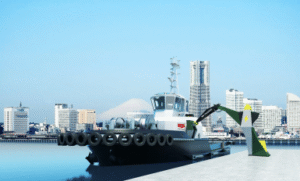
EV harbor tugboat development project launched in Japan. Source: Marindows Inc.

Tokyo Kisen Co., Ltd. and Marindows Inc. have officially launched Japan’s first pure battery-powered EV harbor tugboat development project.

The EV harbor tugboat will operate in the ports of Yokohama and Kawasaki and aims to contribute to “zero GHG emissions from the ports” in accordance with the Carbon Neutral Port (CNP) policy.

In January 2023, Tokyo Kisen put into service TAIGA — Japan’s first series-hybrid electric-powered tugboat equipped with a large-capacity Continue reading “EV harbor tugboat development project launched in Japan”

Valve failures is the lead cause of ammonia-related maritime accidents

EMSA has reviewed critical causes and patterns in ammonia-related maritime accidents

The European Maritime Safety Agency (EMSA) in its newest series of reports regarding the safety of ammonia use in ships has reviewed critical causes and patterns in ammonia-related maritime accidents. Among the alternative fuel options, anhydrous ammonia has drawn a lot of interest from the marine industry for its potential to become a long-term solution for decarbonisation. The comprehensive review of accidents however, highlighted on EMSA’s report “Safety of Ammonia for Use in Ships”, has underscored critical causes of these incidents that allow identifying recurring patterns and highlighting critical areas for preventive or corrective measures for application in the maritime sector. Continue reading “Valve failures is the lead cause of ammonia-related maritime accidents”

AMSA National Compliance Plan 2025-2026 published

The AMSA National Compliance Plan 2025-2026 is published and is available to read   
The AMSA National Compliance Plan 2025-2026 is published and is available to read

The AMSA National Compliance Plan 2025-2026 has been published by the Australian Maritime Safety Authority. It outlines a number of key compliance activities that support welfare, safety and pollution prevention across domestic and foreign-flagged vessels.

According to the AMSA National Compliance Plan 2025-2026, the authority outlines priority activities for the upcoming year, providing industry with a clear understanding of the regulatory focus and rationale. Continue reading “AMSA National Compliance Plan 2025-2026 published”

Rotten wood caused historic Grace Bailey demasting

Rotten wood caused historic Grace Bailey demasting says US Coast Guard report

The is a distressing case about a fatal accident that should never have happened. And as the investigation has revealed, a series of poor, inadequate and ineffective inspections and surveys that failed to discover serious rotten wood, would appear to be largely to blame.

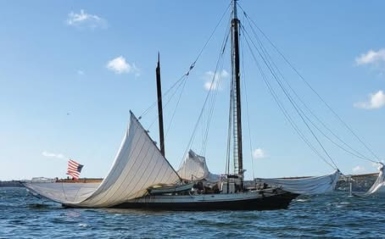
The U.S. Coast Guard (USCG) has released a critical report on the demasting of a historic schooner, blaming the catastrophic incident on rotten wood that had gone unnoticed for years due to poor inspections.

About three years after the mainmast of the 144-year-old schooner Grace Bailey Continue reading “Rotten wood caused historic Grace Bailey demasting”

ABS IMO III 11 summary brief

ABS has provided an overview on the key issues at the ABS IMO III 11 summary brief.

The IMO Sub-Committee on the Implementation of IMO Instruments III held its 11th session in July 2025. Here is the ABS IMO III 11 in a summary brief.
The Sub-Committee has a key role in casualty analysis and issuing lessons learned from marine incidents. It receives and analyses port state control data and keeps under review the procedures for port state control. Guidelines for survey and certification including the survey guidelines under the Harmonized System of Survey and Certification (HSSC) also come under the remit of this Sub-Committee. Continue reading “ABS IMO III 11 summary brief”

PFOS banned in fire extinguishing media from January 2026

From January 2026 PFOS will be banned in fire extinguishing media

Lloyd’s Register (LR) has issued a regulatory update stating that, PFOS will be banned in fire extinguishing media from January 2026 – including firefighting foam. This applies to both fixed and portable systems and equipment.

In particular, the IMO developed amendments to SOLAS Chapter II-2 and the High Speed Craft (HSC) Codes (1994 and 2000) which were adopted in the following resolutions: Continue reading “PFOS banned in fire extinguishing media from January 2026”

Instagram Posts from the IIMS @iimsmarine

Privacy Overview

This website uses cookies so that we can provide you with the best user experience possible. Cookie information is stored in your browser and performs functions such as recognising you when you return to our website and helping our team to understand which sections of the website you find most interesting and useful.

Strictly Necessary Cookies

Strictly Necessary Cookie should be enabled at all times so that we can save your preferences for cookie settings.

Show details Hide details
Performance & Marketing Cookies

This website uses Google Analytics to collect anonymous information such as the number of visitors to the site, and the most popular pages. This also helps us optimise our marketing campaigns. User data sent to Google Analytics may be used for ad personalization and measurement of our ad campaigns. Keeping this cookie enabled helps us to improve our website.

Show details Hide details