The $2,000 toilet that inspired a homemade boat
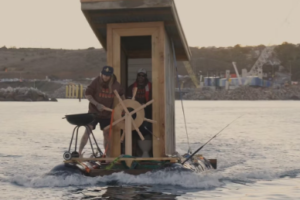
This bizarre story ranks of one of my top finds this year. It is a bit of fun but completely bonkers! The stupidity of the two men, mixed with their sheer initiative has to be admired, although their antics are not recommended to be attempted or replicated. Here’s the story.
Two Australian boating enthusiasts built a homemade barge to transport a toilet across open water after deciding the AUS $2,000 cost of transporting it was too much. The four-hour crossing was powered by a 9.9 hp outboard and included a barbecue on the open water.
The two men crossed the Backstairs Passage to Kangaroo Island in Australia aboard a homemade barge carrying an old-fashioned toilet, a barbecue, and a small outboard motor. Why? To avoid a $2,000 transport fee.
Alex Craig and Paul Graham made the crossing from Cape Jervis on the South Australian mainland to Christmas Cove near Penneshaw on Kangaroo Island. The viral video of their adventure has received the full attention of the boating community.
Craig said that the barge was constructed using eight 44-gallon drums, arranged four on each side, then rafted together. The outhouse-style toilet was installed on top, with a 1980 Johnson 9.9 outboard giving them the necessary horsepower to cross Backstairs Passage. He also told local media that the toilet-barge crossing would not be the last of the pair’s adventures. Graham said further trips were planned to bring more supplies across to Craig’s property.
Tamworth childminder brings canal wildlife to life in new children’s book
 Enthusing the next generation of boaters is an important consideration. So, it was interesting to read about the motivation of a UK based childminder (and now author) with a passion for Britain’s canals and waterways. She has turned her enthusiasm into a children’s book designed to introduce young readers to counting and waterside wildlife.
Sophie Hendrick has written Adventures of Charlotte Rose, an educational counting and rhythm picture book which follows its young character on a canal boat adventure. Along the way, Charlotte Rose counts the wildlife she encounters, using rhythm and gentle repetition to encourage early learning while introducing toddlers and pre-schoolers to some of the wildlife found around waterways.
Sophie said she has a “huge passion for the life on the canal and waterways” and wanted to combine this with her experience working as a childminder. Describing the book, she said, “Join Charlotte Rose on a magical canal boat adventure as she counts wonderful wildlife along the waterways.”
With Christmas looming, what a great gift idea for a youngster. Adventures of Charlotte Rose is available to order online through Amazon.
Project proposes use of underwater drones to help recover lost fishing gear
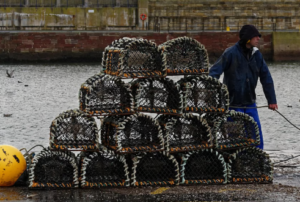
These days, sadly, we seem to associate drones with warfare more than anything else. That’s a shame, as it masks some of their other remarkable uses. Here’s just one such example. Scotland’s Heriot-Watt University and the Orkney Fisheries Association have secured European Horizon funding for a five-year initiative to test underwater drones for locating and recovering lost creels in Orkney waters.
The programme will begin with fishermen and other local residents identifying areas where gear is often lost and considering how it could be retrieved safely. Drone trials are then expected to start in spring 2027. Researchers will test different underwater drones to see whether they can find and film creels. They will then explore whether a drone could attach a hook and line to the gear so it can be winched to the surface.
Fishermen deploy hundreds of pots around Orkney to catch crab and lobster. Losing a creel valued at more than £100 (US$130) increases the financial burden on small fishing businesses, which already face tight margins and high fuel bills.
Orkney Fisheries Association Chief Executive Alistair Buchan said local creels weigh around 25 kg and are usually lost during adverse weather. He said, Lost gear is an expensive issue for fishermen, and we are extremely keen to explore practical ways to minimise those losses.
Surveying of a different kind: A canal tunnel in Cheshire
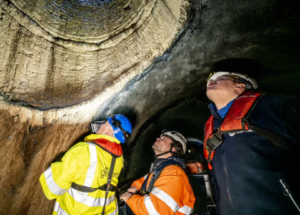 And here’s yet another story inspired by the UK canal network! Engineers recently surveyed and inspected Preston Brook Tunnel near Dutton in the northwest UK. At 1,138 metres long, it is believed to be one of the world’s oldest canal tunnels still in operation. The team undertook this essential work using a combination of traditional techniques and cutting-edge technology.
Built more than 250 years ago, the tunnel dates from a period that transformed civil engineering. While tunnels had long been excavated for mining, the rapid expansion of Britain’s canal network drove the development of large-scale tunnelling techniques that helped shape the construction methods still used today.
The team carried out a full hands-on inspection of the tunnel using poles, hammers and spikes, alongside hi-tech equipment including drone fly-through footage and 3D image mapping technology to build a comprehensive picture of the tunnel’s condition. Their observations and findings are being analysed to determine whether any major repairs are required.
Construction of the tunnel began in 1766 under the direction of canal pioneer James Brindley, one of the foremost engineers of the Industrial Revolution. Following Brindley’s death, the project was completed by his student and fellow engineer Hugh Henshall in 1775.
Marine workforce shortage threatens Canada’s trade expansion
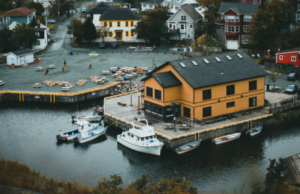 This story is not really new news, but once again it is making headlines. We are all becoming increasingly aware of the challenges being presented to the marine industry by a lack of skilled people. Where does the next generation of marine surveyors (as well as fellow industry professionals) come from as ageing practitioners retire and pass away? The answer is not clear and obvious to me – far from it in fact. So, it was interesting to read this news article coming from Canada specifically, although this story could have been written about any number of places around the world.
The facts are stark. Canada’s growing marine trade faces a significant workforce challenge, with 86 per cent of marine employers reporting recruitment difficulties and an estimated 8,300 new workers needed by 2029 to meet demand and replace retirees. I read that the shortage is particularly acute on the Pacific Coast, where vessel traffic could increase by 60 per cent by 2040 and skilled mariners such as tug masters and marine pilots can take 10 to 20 years to train and develop. Current marine training capacity is expected to meet only about 40 per cent of employer demand for key seafaring positions over the next five years.
The article argues that Canada must integrate workforce development with trade and infrastructure planning by expanding recruitment, improving access to training, increasing regional and simulation-based training opportunities, and strengthening coordination among governments, industry, labour and educational institutions.
This is not a Canada wide issue alone; it is a wakeup call for the wider world. Those of us involved in all aspects of the maritime sector must take responsibility for identifying and engaging with the next generation of talent for our industry sector and making it an attractive profession in which to make a living.
More next month.
Mike Schwarz
Chief Operating Officer