Future of superyacht refits: Sustainability and smart tech

Future of superyacht refits: Sustainability and smart tech

With the future of superyacht refits market evolving faster than ever, shipyards are under pressure to keep up with rising client expectations. Sustainability, advanced technology, and operational transparency have shifted from being optional extras to defining factors in determining where and how yacht owners choose to refit.

For many in the fast-paced world of yachting, gathering the insights needed to make informed refit decisions can be time-consuming and complex. That’s why, with the expertise of KRM Yacht Refit & Rebuild, Turkey’s first official superyacht rebuild and refit facility, Yachting Pages explores how priorities have changed, what truly makes a shipyard stand out, and how sustainability and smart technology can be marketed as a competitive edge in today’s market. Continue reading “Future of superyacht refits: Sustainability and smart tech”

New EU ETS rules take effect from January 2026

New EU ETS rules take effect from January 2026

This year marks a turning point for the EU Emissions Trading System. After a two-year phase-in, maritime transport will face full compliance under the EU ETS, alongside an expanded scope covering additional greenhouse gases and a tighter emissions cap.

These changes reinforce the EU’s climate ambition while significantly raising the stakes for affected sectors. Continue reading “New EU ETS rules take effect from January 2026”

The burning question: understanding shipboard firefighting foam regulations

The burning question: understanding shipboard firefighting foam regulations

When it comes to firefighting foams for shipboard use, many marine surveyors feel uncertain about new and upcoming regulation and how it affects their clients. In addition to the new International Maritime Organisation’s regulations on PFOS in shipboard firefighting foam regulations, there are also new EU regulations on PFAS, and the UK’s Health and Safety Executive  is currently in a consultation period concerning its draft legislation on PFAS. Many countries have also issued their own PFAs regulations or plan to do so, so the regulatory landscape is complex, contradictory and fragmented. Continue reading “The burning question: understanding shipboard firefighting foam regulations”

Safety recall of flares issued due to spontaneous combustion

Safety recall of flares issued due to spontaneous combustion
Safety recall of flares issued due to spontaneous combustion. Source: USCG

The United States Coast Guard (USCG) has sent out a warning following a manufacturer recall of nearly 50,000 affected signal flares.

The USCG Office of Design and Engineering Standards was notified of a manufacturer recall of the Orion Skyblazer II Red XLT Aerial Signal (also called Orion XLT Skyblazer self-contained red meteor flare) due to three incidents of spontaneous combustion. There were no reported injuries. Continue reading “Safety recall of flares issued due to spontaneous combustion”

Research finds maritime professionals rejecting full AI adoption

Research finds maritime professionals rejecting full AI adoption

A recent study by Thetius in partnership with Marcura, has revealed maritime companies are stuck in the early stages of AI adoption, unable to scale beyond small experiments as widespread optimism collides with implementation reality.

The study “Beyond the Hype: What the maritime industry really thinks about AI” combined over 130 survey responses and in-depth interviews with maritime professionals, revealing a sector that is both eager and cautious: 82% are optimistic about AI and 81% are running pilot projects. However, 37% have personally witnessed AI failures and only 11% have formal policies to guide scaling. Continue reading “Research finds maritime professionals rejecting full AI adoption”

Global Shipping Business Network report

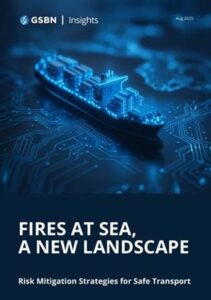
Global Shipping Business Network report argues that dangerous goods reshape the fires at sea landscape. The Global Shipping Business Network report focuses on the risk mitigation of the transportation of lithium-powered products in the maritime industry, which finds itself under increasing pressure to safely transport larger volumes of dangerous goods.

According to the Global Shipping Business Network report “Fires at Sea, A New Landscape – Risk Mitigation Strategies for Safe Transport” dangerous goods (DG) given their potential consequences, have received significant attention in conversations surrounding cargo handling. Continue reading “Global Shipping Business Network report”

How well do you know the different types of marine spills?

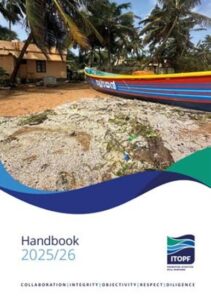
ITOPF Handbook 2025/6

ITOPF has published the 2025/26 edition of its Handbook, providing information on the different types of pollutants encountered at sea and the challenges, impacts, and response options associated with each especially marine spills.

Marine spills can involve a wide variety of substances beyond oil, including vegetable oils, chemicals, bulk cargoes, and plastics, each behaving differently in the marine environment and posing distinct risks. In its latest Handbook, ITOPF outlines the main categories of pollutants, their effects, and the approaches typically taken to manage them. Continue reading “How well do you know the different types of marine spills?”

Lessons from three generations of marine surveyors

By Austin O’Keefe Local Lloyd’s Agent, Marine Surveyor and Cargo Claims Specialist

When I think about what ties my career to my father ’s and grandfather ’s careers before me, three generations of marine surveyors, one word comes to mind: integrity.

In this line of work, credibility is your currency. A surveyor’s report can carry weight equal to millions of dollars in insurance liability, and if you’re not willing to stand by what you’ve written, you have no business putting pen to paper. That’s not to say you can’t change your opinion upon receipt of further evidence; but in such instances the facts together with the surveyor’s revised position should be presented promptly otherwise, there could be consequences, i.e., loss of trust, loss of clientele, and in worse cases, professional liability. Continue reading “Lessons from three generations of marine surveyors”

Review of Maritime Transport 2025 Report published by UNCTAD

Rebeca Grynspan, UNCTAD secretary-general

In her foreword to this year’s Review of Maritime Transport 2025 report, UNCTAD secretary-general writes as follows:

“Global maritime transport has entered uncharted waters.

Not since the closure of the Suez Canal in 1967 have we witnessed such sustained disruption to the arteries of global commerce. Ships that once transited the Red Sea in days now sail for weeks around the Cape of Good Hope. Freight rates that were relatively stable for years now swing wildly from month to month. Supply chains we thought were resilient have proven fragile. Continue reading “Review of Maritime Transport 2025 Report published by UNCTAD”

MCA: MGN 710 (M) safety management systems for small workboats and pilot boats

The UK Maritime and Coastguard Agency (MCA) has published MGN 710 (M) safety management systems for small workboats and pilot boats.

Guidance on how owners and operators of small workboats and pilot boats can meet the Safety Management System (SMS) requirements of the recently launched Workboat Code Edition 3 is now available. Continue reading “MCA: MGN 710 (M) safety management systems for small workboats and pilot boats”

MCA lithium-ion battery update to fire safety MGN 681 (M)

MCA lithium-ion battery update to fire safety MGN 681 (M)

The UK Maritime and Coastguard Agency (MCA) has update to fire safety MGN 681 (M) and storage of small electric powered craft on yachts.

MGN 681 (M) Amendment 1 includes clarification for the functionality of storage and charging cabinets or boxes where these are used as part of the solution for the carriage of li-ion batteries used on personal vehicles. Continue reading “MCA lithium-ion battery update to fire safety MGN 681 (M)”

SYBAss announces new Executive Director

Robert van Tol takes charge as Executive Director of SYBAss

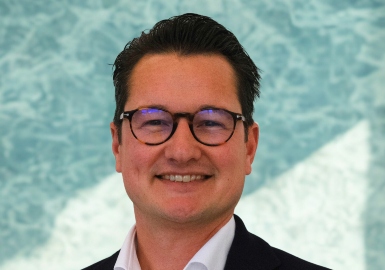
Robert van Tol will be the new executive director of SYBAss (Superyacht Builders’ Association) effective 1st of January 2026. Following his past 7 years successfully establishing and scaling up the Water Revolution Foundation, a non-profit organisation dedicated to driving environmental progress within the yachting sector, he brings fresh energy and a modern perspective to SYBAss.

Building on SYBAss’s position in the current maritime world, Van Tol’s appointment Continue reading “SYBAss announces new Executive Director”

Instagram Posts from the IIMS @iimsmarine

Privacy Overview

This website uses cookies so that we can provide you with the best user experience possible. Cookie information is stored in your browser and performs functions such as recognising you when you return to our website and helping our team to understand which sections of the website you find most interesting and useful.

Strictly Necessary Cookies

Strictly Necessary Cookie should be enabled at all times so that we can save your preferences for cookie settings.

Performance & Marketing Cookies

This website uses Google Analytics to collect anonymous information such as the number of visitors to the site, and the most popular pages. This also helps us optimise our marketing campaigns. User data sent to Google Analytics may be used for ad personalization and measurement of our ad campaigns. Keeping this cookie enabled helps us to improve our website.