Engine room fire risk highlighted due to auxiliary engine erosion plug failure

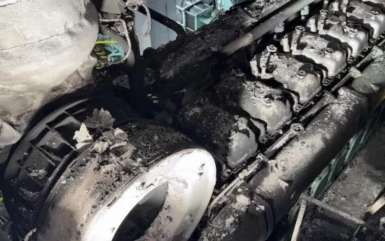
Engine room fire risk highlighted due to auxiliary engine erosion plug failure. Photo credit: Skuld Club

Fire in the engine room remains the most common and costly risk in Hull and Machinery insurance, due to the combination of flammable materials, complex machinery and human factors, according to Skuld Club. Skuld has seen recent cases of engine room fires due to (fusible) erosion plug failure. An erosion plug failure in a fuel pump can cause engine room fires by allowing pressurised fuel to escape as a fine spray, which can ignite instantly upon contact with hot surfaces. An erosion plug is a safety device built into fuel pumps, and particularly in high-pressure fuel pumps. Continue reading “Engine room fire risk highlighted due to auxiliary engine erosion plug failure”
Rising detention rates and recurring areas of concern in Paris MoU Annual Report 2025

Rising detention rates and recurring areas of concern in Paris MoU Annual Report 2025

The Paris MoU has published its 2025 Annual Report with a total of 16,474 inspections recorded last year. In 2025, there were 9,879 were inspections with deficiencies, 688 detentions and 19 bannings.

Bans, detentions and deficiencies

During 2025, the number of refusals-of-access (bans) increased to 19, marking a rise following several years of relatively low figures.

The detention rate also trended upward, reaching 4.18% in 2025, Continue reading “Rising detention rates and recurring areas of concern in Paris MoU Annual Report 2025”

AMSA reveals 4,174 marine incidents in 2025

AMSA reveals 4,174 marine incidents in 2025

The Australian Maritime Safety Authority (AMSA) has published its Marine Incident Annual Report 2025, revealing it had received a total of 4,174 marine incident reports along with 452 marine safety concerns.

The Report analyses marine incidents across domestic commercial vessels (DCVs), foreign-flagged vessels (FFVs) and regulated Australian vessels (RAVs), identifying trends across the entire fleet over the past five years. Continue reading “AMSA reveals 4,174 marine incidents in 2025”

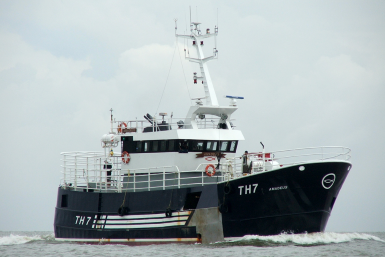
Deckhand died after falling overboard potting vessel Amadeus in North Sea

Deckhand died after falling overboard potting vessel Amadeus in North Sea
Amadeus courtesy of Frits Olinga (Shipspotting.com).

Exhaustion combined with ineffective fall prevention measures led to a fatal man overboard incident on crab potting vessel Amadeus (TH7). The Marine Accident Investigation Branch (MAIB) has released its report into the incident. They have also published a safety flyer to the fishing industry about the dangers of pot hauling and the need for effective fall prevention measures, including fatigue management. Continue reading “Deckhand died after falling overboard potting vessel Amadeus in North Sea”

Boiler burner inspection and operational safety recommendations

Boiler burner inspection and operational safety recommendations

The United States Coast Guard (USCG) has issued a safety alert following an investigation into a serious engine-room fire following a boiler burner inspection aboard a cargo ship in the Port of Mobile, Alabama. On January 4, 2025, while moored in the Port of Mobile, Alabama, a foreign-flagged cargo vessel equipped with a SAACKE Monoblock Rotary Cup Burner SKVJ-M 14 Mark I burner system on a marine boiler experienced a significant engine room fire.

The incident began with a high-pressure fuel leak from the oil fittings block, which caused atomized marine diesel oil to ignite on the hot surface of a nearby auxiliary generator exhaust stack. The fire rapidly spread from the boiler flat through two upper deck levels, resulting in extensive structural and equipment damage, though no personnel were injured. Continue reading “Boiler burner inspection and operational safety recommendations”

TSB final report says Titan submersible operated without oversight

TSB final report says Titan submersible operated without oversight

The Transportation Safety Board of Canada (TSB) has published its investigation report into the 2023 implosion of the Titan submersible.  On June 18, 2023, the Titan submersible, owned by U.S. based company OceanGate, imploded while descending to the wreck of the Titanic with five people on board.  As a result of its investigation, TSB has also issued six recommendations.

At the time of the incident, the operation was supported by a Canadian cargo vessel operated by Canadian company Horizon Maritime Services Ltd., the Polar Prince, which towed the Titan from St John’s, Newfoundland and Labrador, to dive locations, and provided a base for OceanGate’s operations at sea. Horizon Maritime also provided this service to OceanGate in 2021 and 2022. Continue reading “TSB final report says Titan submersible operated without oversight”

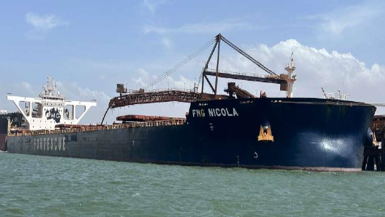
FMG Nicola engine shutdown due to erroneous switch activation

FMG Nicola. Source: ATSB

The Australian Transportation Safety Bureau (ATSB) has said that bulk carrier FMG Nicola’s went adrift after a main engine emergency shutdown switch erroneously activated.

What happened

On 7 February 2025, the fully laden bulk carrier FMG Nicola was departing Port Hedland under the conduct of 2 marine pilots with 3 tugs in attendance. At 1515 local time, about 5 miles into the pilotage, FMG Nicola’s main engine unexpectedly shut down. An emergency was declared, and the pilots immediately took action to control the ship’s movement Continue reading “FMG Nicola engine shutdown due to erroneous switch activation”

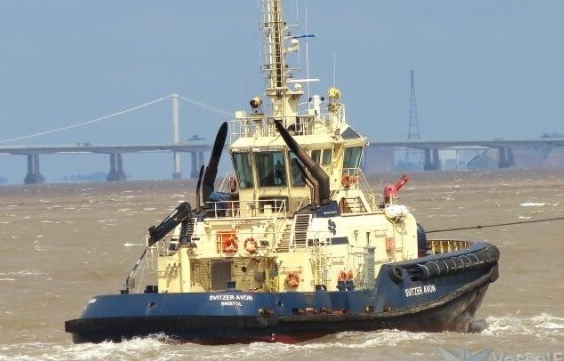
Tow rope failure injured crew on board tug Svitzer Avon

Tow rope failure injured crew on board tug Svitzer Avon.Photo credit: Marko VesselFinder
Tow rope failure injured crew on board tug Svitzer Avon. Photo credit: Marko VesselFinder

The UK Marine Accident Investigation Branch (MAIB) has closed an investigation into an incident that left two injured.

The tug Svitzer Avon crewmembers were hurt after the vessel’s tow rope snapped and shattered the wheelhouse windows.

The MAIB investigated a similar accident involving Svitzer Mercurius in 2019, resulting in a recommendation 2022/138 to Svitzer Marine Limited to:

“Undertake a fleetwide risk assessment to determine the level of risk associated Continue reading “Tow rope failure injured crew on board tug Svitzer Avon”

Cargo liquefaction greatest contributor to seafarer deaths in INTERCARGO bulk carrier report

Cargo liquefaction greatest contributor to seafarer deaths in INTERCARGO bulk carrier report

Between 2016 and 2025, 17 bulk carriers of more than 10,000 deadweight tonnes were reported lost, with a tragic 71 seafarer deaths, according to an INTERCARGO annual report.

And cargo liquefaction remains the greatest contributor to loss of life with 37 lives – 52.1% of the total loss of life in the past ten years.

INTERCARGO’s annual Bulk Carrier Casualty Report examines the safety performance of bulk carriers over a rolling 10-year period in order to identify risks and improve safety for seafarers and vessel operations. Continue reading “Cargo liquefaction greatest contributor to seafarer deaths in INTERCARGO bulk carrier report”

Safety alert: Prototype shaft seal failure causes engine room flooding

Safety alert: Prototype shaft seal failure causes engine room flooding

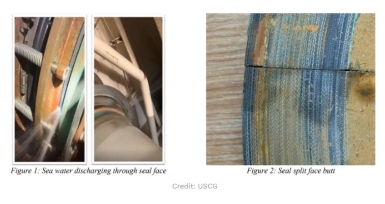
The U.S. Coast Guard (USCG) has issued a safety alert after a prototype component used in a mechanical shaft-seal system failed onboard a USCG inspected deep draft vessel.

In February 2026. a U.S. flagged crude oil tanker transiting near Delaware Bay experienced simultaneous failures of its port and starboard shaft seals, resulting in substantial seawater ingress. The crew subsequently deployed emergency collars supplied by the seal manufacturer and used the vessel’s emergency bilge system to remove the water. Continue reading “Safety alert: Prototype shaft seal failure causes engine room flooding”

Responding to an engine high temperature alarm

Responding to an engine high temperature alarm

According to the U.S Coast Guard, a fire aboard a small passenger vessel resulted in the death of one passenger, injuries to multiple passengers, and the total loss of the vessel. The investigation into the cause of the fire yielded several findings that warrant immediate review by all vessel operators.

While underway, in response to a high jacket water-temperature alarm, the master shifted Continue reading “Responding to an engine high temperature alarm”

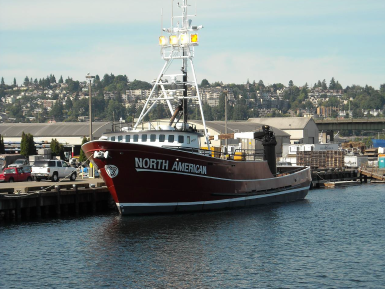
Hull corrosion sank fishing vessel

A photo of a red fishing vessel called North American alongside
Fishing vessel North American. Source: Daniel Ramirez

The flooding and sinking of fishing vessel North American in Seattle, Washington, USA was a result of hull corrosion, said the National Transportation Safety Board.

What happened

On May 14, 2024, about 0550 local time, vessel representatives for the fishing vessel North American, which was uncrewed and docked on the Lake Washington Ship Canal, in Seattle, Washington, were notified that the vessel was flooding.

Salvors arrived on scene and attempted to dewater the vessel Continue reading “Hull corrosion sank fishing vessel”

Instagram Posts from the IIMS @iimsmarine

Privacy Overview

This website uses cookies so that we can provide you with the best user experience possible. Cookie information is stored in your browser and performs functions such as recognising you when you return to our website and helping our team to understand which sections of the website you find most interesting and useful.

Strictly Necessary Cookies

Strictly Necessary Cookie should be enabled at all times so that we can save your preferences for cookie settings.

Performance & Marketing Cookies

This website uses Google Analytics to collect anonymous information such as the number of visitors to the site, and the most popular pages. This also helps us optimise our marketing campaigns. User data sent to Google Analytics may be used for ad personalization and measurement of our ad campaigns. Keeping this cookie enabled helps us to improve our website.