DNV white paper on design, safety, and regulatory considerations for CO2 fleet

DNV logo
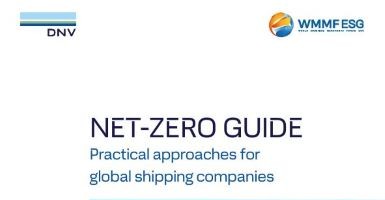
DNV has published a white paper into the critical elements in the design, construction, and operation of CO2 carriers.

DNV has released a white paper providing insights into the critical elements in the design, construction, and operation of CO2 carrier fleet.

Carbon capture and storage (CCS) markets are developing quickly and this needs to be mirrored by growth in the CO2 carrier fleet, which can provide flexible transport of CO2 over longer distances and facilitate its transportation to final storage.

DNV’s recent Energy Transition Outlook (ETO) estimated that 210 million tonnes per annum of CO2 will be captured by 2030 and 1.3 gigatonnes per annum by 2050, equating to about 6% of global emissions.

Continue reading “DNV white paper on design, safety, and regulatory considerations for CO2 fleet”

World Shipping Council reinstates cargo inspection deficiency data

World Shipping Council logo
The World Shipping Council (WSC) has revived cargo inspection deficiency data.

The World Shipping Council (WSC) has released a new report summarising deficiencies found in government cargo inspection programmes, reviving a vital data series that the International Maritime Organization (IMO) discontinued last year.

The 2024 report shows that 11.39% of inspected cargo shipments were found to have deficiencies, up slightly from the IMO’s final 2023 figure of 11%. These include mis-declared and undeclared dangerous goods, incorrect documentation, and improper packing – all of which can lead to serious safety incidents, including ship fires.

Continue reading “World Shipping Council reinstates cargo inspection deficiency data”

IUMI best practice for safely transporting EVs

IUMI best practice and recommendations for safely transporting EVs

IUMI has released an update to its best practice and recommendations for safely transporting EVs.
In 2023, IUMI published a set of best practice and recommendations for the safe carriage of electric vehicles. This was part of its ongoing support of loss prevention guidance to the global marine insurance and shipping sectors.
In September 2025, IUMI issued an updated version titled “Risk mitigation for the safe ocean and short-sea carriage of electric vehicles”. Continue reading “IUMI best practice for safely transporting EVs”

Panamanian Ship Registry to stop accepting tankers and bulkers more than 15 years old

Panamanian Ship Registry to stop accepting tankers and bulkers more than 15 years old

The Panamanian Ship Registry is to stop accepting tankers and bulkers more than 15 years old. The move has been officially communicated to the industry through an update to MMN 11/2024, which specifies the requirements for the Precheck process. It is based on an analysis of data from inspections and detentions of vessels flying the national flag. A key component of Precheck is the risk assessment regarding sanctions and vessel operations.

The regulation was adopted after the Directorate General of the Merchant Marine identified that 71% of fleet detentions between 2023 and the first half of 2025 involved bulk carriers, general cargo vessels, and oil tankers older than 15 years. Continue reading “Panamanian Ship Registry to stop accepting tankers and bulkers more than 15 years old”

Container ship fires on the rise again?

Container ship fires on the rise again?

After a seemingly ‘benign’ period, we have seen several serious container ship fires lately, including a large one leading to tragic loss of life. Congested ports in Asia and increasing traffic of large container ships around Africa are also a cause for concern. Which begs the question: are container ship fires on the rise again?

Cargo-related fires on board container ships have long been a hot topic in the industry – and rightly so: In 2023, we saw on average one container cargo fire every 9 days, according to statistics from Cargo Incident Notification System (CINS). This is an increase compared with 2020, when the number was approximately one container fire every two weeks. Continue reading “Container ship fires on the rise again?”

Guidance on the carriage of grain and seed cargoes

Guidance on the carriage of grain and seed cargoes

Fuel consumed on board a ship requires heating to pump it from its storage to its settling or service tanks. However, some cargoes are extremely heat sensitive and therefore heating of tanks adjacent to cargo holds should be done with caution. The International Maritime Solid Bulk Cargoes Code (IMSBC) identifies the following as heated ship structures and offers guidance on the carriage of grain and seed cargoes:

  • steam pipes;
  • heating coils;
  • top or side walls  of heated fuel and  cargo tanks, and; bulkheads of  machinery spaces

Continue reading “Guidance on the carriage of grain and seed cargoes”

ISM Code: The maritime scam of the century?

Introduction: Why have we created the ISM Code?

ISM Code: The maritime scam of the century?

Created by a strong desire to “do something” after the disaster of the Townsend Thoresen ferry “HERALD of FREE ENTERPRISE” (HOFE), the ISM code was originally issued as a self-management system of a voluntary nature for maritime safety within shipping Companies and aboard ships. Continue reading “ISM Code: The maritime scam of the century?”

Safe carriage of charcoal in containers

Safe carriage of charcoal in containers

The Cargo Incident Notification System (CINS) Charcoal Work Group has updated its “Guidelines for the Safe Carriage of Charcoal in Containers”, reflecting the updated IMDG Code requirements, Britannia P&I Club has highlighted.

The 2024 edition of the International Maritime Dangerous Goods (IMDG) Code included changes in the requirements applying to charcoal. This edition, incorporating Amendment 42-24, became voluntary from 1 January 2025 and will become mandatory from 1 January 2026. According to Britannia Club, charcoal as a cargo presents unique stowage and handling requirements and requires strict safety protocols. In addition to the fire hazard, misdeclaration is known to result in the carrier being unaware of the risks. Continue reading “Safe carriage of charcoal in containers”

Electrification continues to bear risks for the shipping industry

Capt Rahul Khanna, pictured, indicated insurers have seen large losses from lithium-ion batteries

Electrification of the global economy continues to  bear risks for the shipping industry and supply chains, according to Allianz Commercial’s latest Safety and Shipping Review.

Electrification of the global economy is driving huge demand for lithium-ion batteries, from electric cars and e-bikes to industrial scale battery storage systems. The global battery market is forecast to reach US$322bn by 2030, more than double its value in 2024, driven by growing demand for electric vehicles and battery storage systems required to support the transition to renewable energy. Continue reading “Electrification continues to bear risks for the shipping industry”

Allianz Safety and Shipping Review 2025

The key finding of the Allianz Safety and Shipping Review 2025 reveals the number of ships lost in 2024 were at a record low.

Given that 90% of international trade is transported across oceans, maritime safety is critical, and the shipping industry has made significant improvements in recent years. During the 1990s, the global fleet lost 200+ vessels a year. This total had halved by 10 years ago and is now down to a record low of 27 as of the end of 2024 is a key finding of the Allianz Safety and Shipping Review 2025.

This compares with 35 a year earlier (vessels over 100 gross tonnage [GT]), down by around 20%, with a 75% decline in total losses over Continue reading “Allianz Safety and Shipping Review 2025”

PSC CIC on ballast water management

DNV has announced the 2025 PSC CIC on ballast water management

This year’s Port State Control Concentrated Inspection Campaign (PSC CIC) will focus on ballast water management, DNV has announced.

The CIC is set to take place from 1 September to 30 November 2025.

Every year, PSC regimes determine a specific focus area during regular inspections. For 2025, the Paris and Tokyo MoUs have agreed to run a CIC on the topic of ballast water management (BWM). It is expected that the majority of PSC MoUs will participate in this year’s CIC. Continue reading “PSC CIC on ballast water management”

Corrosion in ballast water & cargo tanks

Container ships - Corrosion in ballast water & cargo tanks
Container ships – Corrosion in ballast water & cargo tanks

DNV offers guidance on the matter of corrosion in ballast water & cargo tanks, highlighting that the actual corrosion rate may differ, with factors like temperature and coating condition playing significant roles in the deterioration process.

According to DNV, the actual corrosion rate in ballast and cargo tanks may differ from the assumptions in the rules and the embedded corrosion models. DNV survey data reveals a significant rise in corrosion findings in water ballast and cargo tanks in oil tankers and bulk carriers at the third renewal survey, with a peak at the fourth renewal. That means that for some vessels, Continue reading “Corrosion in ballast water & cargo tanks”

Instagram Posts from the IIMS @iimsmarine

Privacy Overview

This website uses cookies so that we can provide you with the best user experience possible. Cookie information is stored in your browser and performs functions such as recognising you when you return to our website and helping our team to understand which sections of the website you find most interesting and useful.

Strictly Necessary Cookies

Strictly Necessary Cookie should be enabled at all times so that we can save your preferences for cookie settings.

Show details Hide details
Performance & Marketing Cookies

This website uses Google Analytics to collect anonymous information such as the number of visitors to the site, and the most popular pages. This also helps us optimise our marketing campaigns. User data sent to Google Analytics may be used for ad personalization and measurement of our ad campaigns. Keeping this cookie enabled helps us to improve our website.

Show details Hide details