Black Sea MoU publishes preliminary results of the CIC on ballast water management

Black Sea MoU publishes preliminary results of the CIC on ballast water management

The Memorandum of Understanding on Port State Control in the Black Sea Region has released the preliminary results of a Concentrated Inspection Campaign (CIC) which focused on Ballast Water Management.

The campaign, carried out from 1 September to 30 November 2025, involved the member Authorities of the BS MoU that have ratified the International Convention for the Control and Management of Ships’ Ballast Water and Sediments, 2004 (BWM Convention). Continue reading “Black Sea MoU publishes preliminary results of the CIC on ballast water management”

Transport Malta concludes investigation into death of bulker/cargo surveyor

Transport Malta concludes investigation into death of bulker/cargo surveyor

The Marine Safety Investigation Unit of Transport Malta has published a report into the death of a bulker/cargo surveyor after they were trapped during the hatch cover closing process.

What happened

On 24 January 2025, Ocean Century was preparing to load steel Hapo products General at Wharf, Gwangyang, South Korea. The vessel had arrived during the previous evening.  Cargo holds were cleaned, and residual cargo collected in drums. Continue reading “Transport Malta concludes investigation into death of bulker/cargo surveyor”

AET adds first hybrid electric Dynamic Positioning Shuttle Tanker to fleet

Digital rendering of AET’s first hybrid electric dynamic positioning shuttle tanker. Credit: Dalian Shipbuilding Industry Co.

AET has signed an agreement with Dalian Shipbuilding Industry Corp for its first hybrid electric Dynamic Positioning Shuttle Tanker (DPST).

The latest newbuild has been designed to be dual-fuel, lower-emissions-ready and secured on long-term charter.

A global leader in shuttle tankers, AET operates one of the world’s largest DPST fleets, with 17 vessels deployed across Brazil and Norway, and further growth planned. With dual-fuel capability across all tanker segments, the addition of hybrid electric propulsion further broadens lower-emissions optionality for customers whilst enhancing competitiveness. Continue reading “AET adds first hybrid electric Dynamic Positioning Shuttle Tanker to fleet”

CIMAC and MBF second joint whitepaper “Environment for the Use of Batteries in Deep-Sea Shipping”

CIMAC and the Maritime Battery Forum have published the second paper “Environment for the Use of Batteries in Deep-Sea Shipping”.

This paper examines the regulatory framework for battery use in deep-sea shipping, including requirements from flag states, classification societies, and industry standards. While the foundation is strong, gaps remain—especially around Continue reading “CIMAC and MBF second joint whitepaper “Environment for the Use of Batteries in Deep-Sea Shipping””

LNG-fueled vessels lead alternative-fueled newbuild market

LNG-fueled vessels lead alternative-fueled newbuild market

The latest annual data from DNV’s Alternative Fuels Insight (AFI) platform showed that within the container segment, alternative fuels dominated, with the fuel mix by tonnage approximately 58 percent LNG, 36 percent conventional fuels, and 6 percent methanol.

A total of 275 orders for alternative-fuelled vessels were placed in 2025, representing a year-on-year decrease of 47%. This mirrored a broader drop in the overall newbuild market, which fell to 2,403 orders, from 4,405 in 2024. Continue reading “LNG-fueled vessels lead alternative-fueled newbuild market”

Does the maritime industry value the critical work of salvors?

Does the maritime industry value the critical work of salvors?

The marine salvage industry is a vital part of the shipping industry ecosystem, and the International Salvage Union (ISU) is the association that represents the world’s salvage contractors. The core purpose of the ISU is to be the “credible, trusted and unified global voice of its members who facilitate world trade by providing marine services which save life, protect the environment, mitigate risk and reduce loss.” And that statement truly does capture the essence of our association and the critical work of salvors.

The marine salvage industry is a vital part of the shipping industry ecosystem, and the International Salvage Union (ISU) is the association that represents the world’s salvage contractors. The core purpose of the ISU is to be the “credible, trusted and unified global voice of its members who facilitate world trade by providing marine services which save life, protect the environment, mitigate risk and reduce loss.” And that statement truly does capture the essence of our association. Continue reading “Does the maritime industry value the critical work of salvors?”

Guidelines for the safe inspection of methanol dual-fuel ships

Image credit: MTF
Image credit: MTF

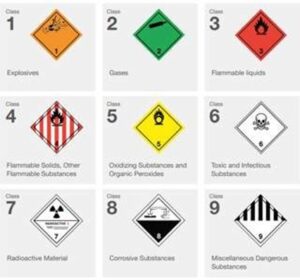
The Maritime Technologies Forum (MTF) has issued new guidelines for the safe inspection of methanol dual-fuel ships. As the maritime industry accelerates its transition to alternative fuels under increasingly stringent IMO emission regulations, methanol as fuel has emerged as a particularly attractive option, as documented by the increasing number of orders.

However, according to the Maritime Technologies Forum, methanol’s unique properties, including its flammability, toxicity, and corrosivity, present distinct challenges for ship inspectors and surveyors. Continue reading “Guidelines for the safe inspection of methanol dual-fuel ships”

Safe Carriage of Refrigerated Cargo in Containers

Steamship Mutual P&I Club has published guidance highlighting critical aspects and considerations for preventing losses associated with reefer cargo. Reefer cargo carriage otherwise known as refrigerated cargo in containers involves transporting perishable or temperature sensitive goods that require controlled temperature, humidity, and airflow to maintain quality during transit. Proper handling, monitoring, and documentation are essential to prevent losses and ensure cargo integrity, the guidance advises. Continue reading “Safe Carriage of Refrigerated Cargo in Containers”

Research finds maritime professionals rejecting full AI adoption

Research finds maritime professionals rejecting full AI adoption

A recent study by Thetius in partnership with Marcura, has revealed maritime companies are stuck in the early stages of AI adoption, unable to scale beyond small experiments as widespread optimism collides with implementation reality.

The study “Beyond the Hype: What the maritime industry really thinks about AI” combined over 130 survey responses and in-depth interviews with maritime professionals, revealing a sector that is both eager and cautious: 82% are optimistic about AI and 81% are running pilot projects. However, 37% have personally witnessed AI failures and only 11% have formal policies to guide scaling. Continue reading “Research finds maritime professionals rejecting full AI adoption”

Updated IAMSAR manual to be carried onboard from January 2026

The IAMSAR Manual edition III must be carried onboard vessels from 1 January 2026

Lloyd’s Register (LR) has advised about upcoming amendments to the IAMSAR (International Aeronautical and Maritime Search and Rescue) Manual, which operators must have onboard their vessels in hard copy by 1 January 2026 to comply with SOLAS regulations.

According to LR, under SOLAS regulation V/21, all ships are required to carry an up-to-date copy of the IAMSAR Manual Volume III. As stated in MSC-MEPC.2/Circ.2, the IAMSAR Manual Volume III must always be available in hard Continue reading “Updated IAMSAR manual to be carried onboard from January 2026”

Key tips for transferring plastic pellets in containers

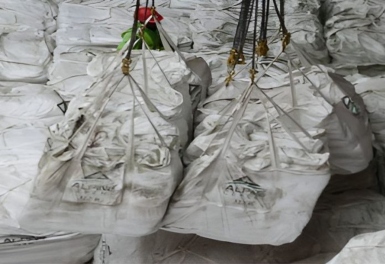
Carriage of plastic pellets in containers is the subject of new guidance from the Steamship Mutual P&I Club

Steamship Mutual P&I Club has provided guidance on the risks associated with the carriage of plastic pellets in containers and provides practical measures to prevent spillage and protect the marine environment.

Understanding the risks of plastic pellets
According to the Club, in recent years, several high-profile incidents have occurred, such as the Trans Carrier in 2020 and the XPress Pearl in 2021, where containers have fallen overboard and resulted in the release of plastic pellets into seas and oceans with subsequent harm to the marine environment. Continue reading “Key tips for transferring plastic pellets in containers”

Rotten wood and poor inspection caused historic Maine schooner demasting

This Schooner photograph for illustration only
This Schooner photograph is for illustration only

The is a distressing case about a fatal accident that should never have happened. And as the investigation has revealed, a series of poor, inadequate and ineffective inspections and surveys that failed to discover serious rotten wood, would appear to be largely to blame and caused historic Maine schooner demasting.

The U.S. Coast Guard (USCG) has released a critical report on the demasting of a historic schooner, blaming the catastrophic incident on rotten wood that had gone unnoticed for years due to poor inspections. About three years after the mainmast of the 144-year- old schooner Grace Bailey broke during a routine voyage, causing the death of one passenger and leaving five others injured, a detailed investigation has established that the structural integrity of the mainmast had long been compromised by rot. Continue reading “Rotten wood and poor inspection caused historic Maine schooner demasting”

Instagram Posts from the IIMS @iimsmarine

Privacy Overview

This website uses cookies so that we can provide you with the best user experience possible. Cookie information is stored in your browser and performs functions such as recognising you when you return to our website and helping our team to understand which sections of the website you find most interesting and useful.

Strictly Necessary Cookies

Strictly Necessary Cookie should be enabled at all times so that we can save your preferences for cookie settings.

Show details Hide details
Performance & Marketing Cookies

This website uses Google Analytics to collect anonymous information such as the number of visitors to the site, and the most popular pages. This also helps us optimise our marketing campaigns. User data sent to Google Analytics may be used for ad personalization and measurement of our ad campaigns. Keeping this cookie enabled helps us to improve our website.

Show details Hide details