On 7 September 2017, the 15.87m crew transfer vessel, Windcat 8, was on passage to Grimsby, UK, from the Lynn Wind Farm in the North Sea with two crew and eight windfarm technicians on board. Shortly after setting off, the vessel’s port engine suffered catastrophic damage and caught fire.
The passengers were quickly transferred on to Windcat 31 and the fire was contained within the port engine space and soon extinguished. Windcat 8’s port engine was badly damaged and the vessel was towed to Grimsby by Windcat 30. There was no pollution and no injuries.
Fleet of battery powered zero emissions barges set for French waterways
A fleet of zero emissions 100t barges that operate solely on battery power are being built for canal trips in France.
UK company Backwater Cruising is currently constructing the first of 21 38m long vessels barges that will have a 300kWh battery bank powered by purpose-built canalside charging points to achieve zero carbon operation.
Isle of Wight-based Hybrid Marine will provide hybrid systems for the vessels, which Graeme Hawksley, founder and managing director, explained can ‘operate in serial hybrid mode, parallel hybrid mode and for five hours propulsion under battery alone along with air-conditioning’.
Guidelines for ensuring the safe carriage of cocoa butter in freight containers
Members of the CINS Organisation (the Cargo Incident Notification System) have issued guidance and guidelines for the carriage of cocoa butter in freight containers, under the principles set out in the IMO/ILO/UNECE Code of Practice for Packing of Cargo Transport Units (CTU Code).
Nature of cocoa nutter cargo
Cocoa butter is derived from whole cocoa beans which are fermented, roasted, and then separated. About 54–58% of the residue is cocoa butter, containing 57-64% of saturated fats and 43-36% unsaturated fats. Cocoa butter becomes soft and malleable at 30-32°C and can melt at 37°C. Having become warm or molten, it can retain the latent heat and remain in such a condition down to as low as 17°C.
Operators and surveyors urged to test cargo hold bilge systems to minimise claims
The UK P&I Club has reminded those working in the marine industry that significant insurance damage claims can result if a bulk cargo is damaged due to the leakage of the bilge system into a loaded bulk cargo hold.
To reduce the chance of such cargo damage, operators and surveyors are advised to inspect and test the cargo hold bilge system as part of the routine pre-loading checks of the cargo holds.
Boat patrolling the golden gate bridge – Photo credit: Rolls-Royce
Rolls-Royce will supply the tug boat sector with its first hybrid propulsion arrangement for installation to a multi-purpose tractor tug undergoing construction for Baydelta Maritime LLC. The vessel is being built at Nichols Brothers Boat Builders, in Washington State, U.S.A.
The order represents the first hybrid tug using proven Rolls-Royce hybrid technology, the first installation of a hybrid system for Nichols Brothers and the first hybrid tug designed by Jensen Maritime, Crowley Maritime Corp’s Seattle-based naval architecture and engineering firm.
Revolutionary ultraviolet light-emitting diodes fouling prevention technology under development
AkzoNobel has teamed up with Netherlands based healthcare company Royal Philips to develop ultraviolet light-emitting diodes fouling prevention technology.
The system will use technology developed by Royal Philips with the aim of combining experience from both companies to produce an economically viable solution for underwater fouling prevention.
The system will integrate UV light-emitting diodes in a protective coating, which AkzoNobel says will allow for the UV light to be emitted from the coating surface, preventing biofouling from accumulating.
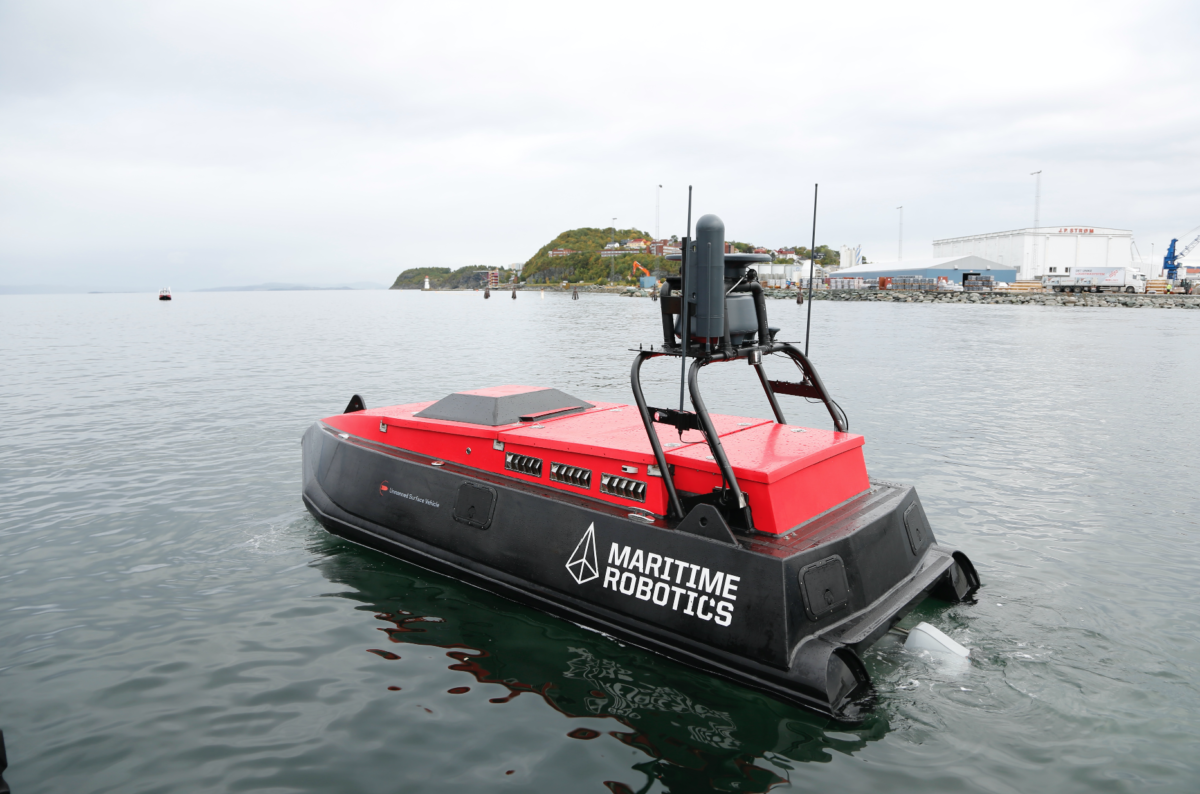
Autonomous vessels – the challenges and opportunities in design
Automation presents a set of unique challenges to designers, insurers and operators of ships. In this article, reprinted from the Shipowners P&I Club website Keir Gravil, a naval architect at Frazer-Nash Consultancy in Bristol, UK discusses some of the key issues that could face automated ships of the future from a design perspective.
It is a truth recognised by many industries that the future of transportation lies with greater automation. Over the last 50 years we have seen huge changes not only in shipping, but in every form of transportation and vehicle. Aircraft now incorporate automation routinely on flights around the world, cars are being developed to drive themselves and many railways have been totally automated for some time. As each step in the evolution of transportation progresses, the human element of control is reduced or eliminated altogether. But what of shipping? Surely an industry the size and scope of international shipping faces unique challenges in the realm of automation?
Remotely operated fireboat set to tackle fires in ports
To address the evolving safety and security needs of modern ports, Vancouver based naval architects and marine engineers Robert Allan Ltd., and international marine technology specialist Kongsberg Maritime are collaborating on the development of a radically new remotely-operated fireboat that will allow first responders to attack dangerous port fires more aggressively and safer than ever before.
The un-crewed RALamander fireboat will offer in-close firefighting and ‘eye in the fire’ capability that keeps marine firefighting professionals out of harm’s way. Fires involving containers, petrochemicals, shore-side structures or vessels can be attacked more quickly Continue reading “Remotely operated fireboat set to tackle fires in ports”
Improper maintenance of ventilation system – Photo credit: UK P&I Club
In UK P&I Club’s latest ‘Lessons Learned’ series of case studies, Captain David Nichol presents the case regarding improper maintenance of ventilation after a maintenance operation, which could have led to the deaths of two surveyors during a third party survey on the emergency fire pump.
About the incident
During a third party survey, the surveyor made a request to test the emergency fire pump, which was arranged with the assistance of the chief engineer. The emergency fire pump was located in a recessed well in the steering gear compartment, approximately 3 metres deep and accessed by an inclined stairway. At the start of the test, the surveyor asked to observe the pump being started locally and operating before proceeding on deck to check the hoses rigged fore and aft.
The largest ever China (Shanghai) International Boat Show gets ready
Preparations for the 23rd China (Shanghai) International Boat Show 2018 are well underway for April 2018, with organisers announcing more exhibitors, conferences and initiatives than ever before.
As Asia’s biggest boat show, organisers are expecting over 40,000 visitors to explore all aspects of the boating industry, from yachting culture and maritime lifestyles to water sports, water tourism, accessories, equipment and entertainment.
Photo credit: CPD Deputy Director Peter Paul Coleiro.
Nineteen boats and yachts were destroyed by a fire which broke out at a private boatyard near Gharghur, Malta in the early hours of Thursday 1st February.
The incident happened in the Tal-Balal area just before 1:00am after a loud explosion was heard, with all 19 boats having been completely destroyed. The Civil Department reported that personnel managed to prevent the fire from spreading further, despite a quantity of tar also believed to have caught fire.
The Swedish P&I Club has described the case of cargo damage on a bulk carrier caused by water ingress, as a result of the poor condition of hatch covers.
The incident
The bulk carrier had seven cargo holds which had been fully loaded with soybeans. The vessel had side rolling cargo hatch covers. For six days, the vessel encountered heavy weather of force 9 on the Beaufort scale, causing the vessel to pitch and roll heavily. It were repeatedly washed over by seawater.
All were opened when the vessel was at anchor and waiting for an available berth. This was to ensure the vessel was gas free since fumigation had been carried out in all cargo holds at the loading port. When the cargo hatch covers were removed, it was found that Continue reading “Cargo damage caused by leaking hatch covers”