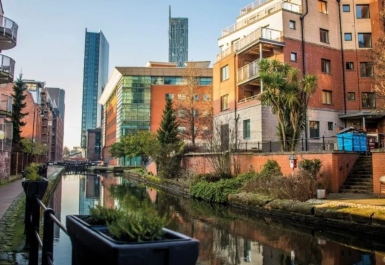
The Vital Connector for Nature and People report has highlighted how the UK’s historic canal network — the nation’s longest and most connected corridor of freshwater habitat — is one of Britain’s most important yet under-recognised assets for nature recovery, public wellbeing and community connection.
The Vital Connector for Nature and People report, published by the Canal & River Trust and supported by environmental leaders including Dr Tony Juniper CBE, chair of Natural England, shows how canals can play a unique role in tackling three converging national challenges: biodiversity loss, declining connection with nature, and widening health and wellbeing inequalities.
Originally engineered as transport routes during the 18th and 19th centuries, canals today support a remarkable range of wildlife, including bats, kingfishers, otters, aquatic plants, pollinating insects and rare invertebrates. As linear corridors, canals allow species to move across urban and rural landscapes, a role that is particularly important in post-industrial and intensively farmed regions of central England where natural habitats have been heavily reduced.
The Vital Connector for Nature and People report explains that canals now function as one of the UK’s most effective wildlife corridors, linking landscapes in ways that other green spaces cannot. By running directly through urban areas, canals bring nature into daily life, allowing people to experience wildlife close to where they live and work. Canals are also increasingly important for people’s health and wellbeing. Research shows that access to green and blue spaces is a key determinant of physical and mental health, yet access remains unequal, particularly in urban and minority communities. Many of these communities have limited access to traditional green spaces and experience poorer health outcomes.
Download the report: