News

Marine surveyor hit with US$70000 settlement after subcontractor error

 Marine surveyor hit with US$70,000 settlement after subcontractor error. Mark Brattman, Claims Director at ITIC
Marine surveyor hit with US$70000 settlement after subcontractor error. Mark Brattman, Claims Director at ITIC

A single technical error by an uninsured individual has resulted in the marine surveyor being hit with US$70000 settlement and prompted International Transport Intermediaries Club (ITIC) to warn ship and marine surveyors of the financial exposure they face when relying on third-party data without contractual protection.

The dispute arose after a marine surveyor was appointed by a prospective buyer to confirm that a commercial fishing vessel met the requirements of the relevant maritime safety authority. As part of the survey, the surveyor instructed a third-party naval architect to provide technical information needed to calculate the ship’s freeboard. The data supplied was wrong, which led the surveyor to report the wrong freeboard and conclude that the vessel’s recorded lightweight in the existing stability book was inaccurate. Continue reading “Marine surveyor hit with US$70000 settlement after subcontractor error”

The dry dock danger zone: Why a shipyard safety plan must be bulletproof

The dry dock danger zone: Why a shipyard safety plan must be bulletproof

Shipyards are singular industrial environments, combining the hazards of heavy construction, manufacturing, and complex marine operations into one sprawling, high-stakes location. For any vessel owner, operator, or contractor, the yard represents a necessary but incredibly risky dry dock danger zone. The complex nature of repair, maintenance, and construction, often conducted under tight deadlines, elevates the potential for catastrophic accidents.

A shipyard is a constantly evolving workspace. One moment, a section of the hull is being pre-fabricated in a clean workshop; the next, it is being hoisted by cranes over active work zones to be welded into place many meters above the dry dock floor. This dynamic, multi-hazard environment necessitates a safety culture that is not merely compliant, but proactively rigorous. Continue reading “The dry dock danger zone: Why a shipyard safety plan must be bulletproof”

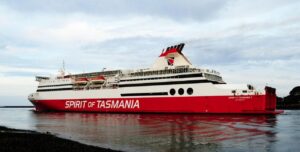
ATSB investigation into serious fall injury in engine room of Spirit of Tasmania I

ATSB investigation into serious fall injury in engine room of Spirit of Tasmania I. Gopal Vijayaraghavan (via Wikimedia Commons) CC BY 2.0

Safety management system procedures were not effectively implemented when the Spirit of Tasmania I’s second engineer was seriously injured in a fall during engine maintenance earlier this year, said the final report from the Australian Transport Safety Bureau.

 What happened

At about 0600 on 6 March 2025, the second engineer of Spirit of Tasmania I began a routine oil change on one of the ship’s main engine turbochargers. Problems were encountered during the oil change, and it was decided to replace the turbocharger’s bearing housing cover plate. This significant change to the scope of work required access to the top of the engine. Continue reading “ATSB investigation into serious fall injury in engine room of Spirit of Tasmania I”

ABS releases report on retrofitting for alternative fuel use and energy efficiency

ABS releases report on retrofitting for alternative fuel use and energy efficiency

ABS’ new Retrofits for Energy and Emissions Improvement publication provides insights into best practices, incentive scenarios, and a market update on energy efficiency technologies (EETs) and retrofitting for alternative fuel use.

The report identifies the classification and statutory requirements shipowners and managers must understand before considering retrofitting vessels to use alternative fuels and energy efficiency technologies (EETs).

This comes in light of regulations from the International Maritime Organization (IMO) and the European Union (EU) are shaping how the maritime industry tackles greenhouse gas emissions. Continue reading “ABS releases report on retrofitting for alternative fuel use and energy efficiency”

DNV highlights leading container ports of the world

DNV highlights leading container ports of the world

Singapore is the world’s leading container port according to a new report published by DNV and Menon Economics.

The first edition of the Leading Container Ports of the World (LCP) report also showed that Shanghai and Ningbo-Zhoushan in second and third place, with Rotterdam and Busan completing the global top five.

Maritime transport carries close to 90 percent of global trade by volume, and container ports alone handle more than 80 percent of non-bulk merchandise. Today, these ports are undergoing a profound transformation, driven by rising trade flows, rapid advances in technology, and mounting pressure to meet climate targets. Continue reading “DNV highlights leading container ports of the world”

BSafe case study: Benzene vapour death following unauthorised tank entry

BSafe case study: Benzene vapour death following unauthorised tank entry

Britannia P&I Club have cautioned its members on the dangers of entering an enclosed space after a benzene vapour death in the cargo hold of a tanker.

Background

An 8,270 gt oil/chemical tanker had discharged benzene on its previous voyage and was proceeding in ballast towards Korea to load its next nominated cargo. The ship had completed discharge at Jiangyin, China and departed for Yeosu, Korea. The planned sequence between voyages included a full cycle of gas freeing and cleaning of cargo tanks in preparation for the next chemical cargo. Continue reading “BSafe case study: Benzene vapour death following unauthorised tank entry”

MAIB publishes preliminary report on scrap metal fire on Altay

Images courtesy of Humberside Fire & Rescue Service

A report regarding a scrap metal fire in the cargo hold of bulk carrier Altay has highlighted the importance of cargo loading monitoring and cargo pre-loading inspection.

The UK Marine Accident Investigation Branch (MAIB) has released a preliminary assessment of the incident which took place in 2025. Nearby residents and business owners had been advised to keep their doors and windows securely closed while firefighters tackled the blaze. Continue reading “MAIB publishes preliminary report on scrap metal fire on Altay”

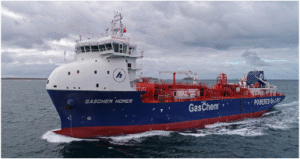
Gaschem Homer blackout due to generator issue in Port of Brisbane

Gaschen Homer blackout due to generator issue in port of Brisbane. Source: ATSB
Gaschem Homer blackout due to generator issue in port of Brisbane. Source: ATSB

The gas tanker had just left its berth at the Port of Brisbane when it lost propulsion for two minutes as two of its three electrical generators were not properly configured causing the Gaschem Homer blackout, according to an Australian Transport Safety Bureau (ATSB) final report.

What happened

At 1100 local time on 15 March 2025, Gaschem Homer was departing for sea from its berth in the port of Brisbane, Queensland, under the conduct of a harbour pilot. At 1104, while the ship was being turned towards the port’s entrance, it experienced an electrical blackout, resulting in the total loss of propulsion and steering control. About two minutes later, the crew restored the electrical power. The incident did not result in damage or injury. Continue reading “Gaschem Homer blackout due to generator issue in Port of Brisbane”

IIMS launches brand new course for lithium batteries

IIMS has launched a brand new four-module course for lithium batteries

After some months of preparation and development, IIMS has launched a new four-module course dedicated to the subject of lithium batteries, one of the most talked about and misunderstood topics in the marine surveying profession right now.

The course has been authored by leading lithium-ion battery experts David and Magda O’Neill, who are based at akuPalma in Mallorca. The course digs deep into the chemistry, as well as assessing how to survey and inspect installations of lithium batteries. Continue reading “IIMS launches brand new course for lithium batteries”

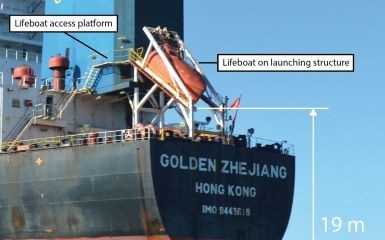
TSB Canada highlights importance of safeguards to prevent accidental lifeboat releases

The Transportation Safety Board of Canada (TSB) is urging stronger safety measures after a crew member was seriously injured aboard the bulk carrier Golden Zhejiang’s lifeboat in 2023. The TSB highlights the need for proper procedures for risk assessments, equipment-specific training, and a safety management system supported by a mature safety culture with a trusted process for communication between crew and shore personnel to prevent accidental lifeboat releases. Continue reading “TSB Canada highlights importance of safeguards to prevent accidental lifeboat releases”
MCA published its new Sport or Pleasure Code

MCA new Sport or Pleasure Code for commercial craft published

Safety and innovation are at the heart of updated regulations for small commercial vessels used for sport or pleasure that was laid before Parliament on 20 November 2025 with application to be phased in from 12 December 2025 by the UK Maritime and Coastguard Agency (MCA), starting only with new vessels entering either code for the first time.

The new Merchant Shipping (Vessels in Commercial Use for Sport or Pleasure) Regulations 2025 will set clear, pragmatic standards across the sector by underpinning two codes of practice for vessels below and above 24 metres in length. The changes will apply gradually to more vessels as their certificates come up for renewal or within three years, whichever is longer. Continue reading “MCA published its new Sport or Pleasure Code”

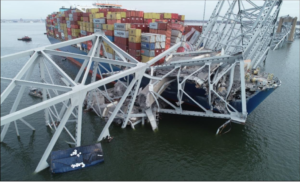
NTSB: loose wire on containership Dali led to Scott Key Bridge collision

The containership Dali with portions of the collapsed Francis Scott Key Bridge across its forward deck. (Source: NTSB)

​​The US National Transportation Safety Board said a single loose wire on the Dali containership caused an electrical blackout that led to the vessel hitting the Francis Scott Key Bridge, which then collapsed, killing six highway workers.

At a public meeting, investigators said the loose wire in the ship’s electrical system caused a breaker to unexpectedly open – beginning a sequence of events that led to two vessel blackouts and a loss of both propulsion and steering near the 2.37-mile-long Key Bridge on March 26, 2024. Investigators found that wire-label banding prevented the wire from being fully inserted into a terminal block spring-clamp gate, causing an inadequate connection. Continue reading “NTSB: loose wire on containership Dali led to Scott Key Bridge collision”

Instagram Posts from the IIMS @iimsmarine

Privacy Overview

This website uses cookies so that we can provide you with the best user experience possible. Cookie information is stored in your browser and performs functions such as recognising you when you return to our website and helping our team to understand which sections of the website you find most interesting and useful.

Strictly Necessary Cookies

Strictly Necessary Cookie should be enabled at all times so that we can save your preferences for cookie settings.

Show details Hide details
Performance & Marketing Cookies

This website uses Google Analytics to collect anonymous information such as the number of visitors to the site, and the most popular pages. This also helps us optimise our marketing campaigns. User data sent to Google Analytics may be used for ad personalization and measurement of our ad campaigns. Keeping this cookie enabled helps us to improve our website.

Show details Hide details