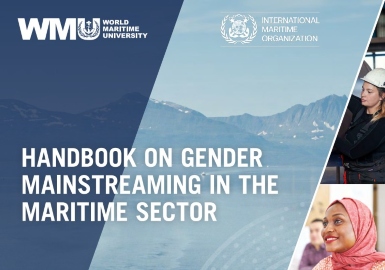
New Handbook on Gender Mainstreaming in Maritime Sector released by WMU and IMO

Gender Mainstreaming in the Maritime Sector is a joint collaboration by WMU and IMO

The World Maritime University and the International Maritime Organization have jointly published a new handbook focused on integrating gender perspectives into the maritime sector.

The handbook, titled the Handbook on Gender Mainstreaming in the Maritime Sector, was released on 18 May to coincide with the International Day for Women in Maritime, according to the IMO. The document was written by WMU Professor Momoko Kitada, who this year received the IMO Gender Equality Award. According to the source, Continue reading “New Handbook on Gender Mainstreaming in Maritime Sector released by WMU and IMO”

Minister of Transport calls for proposals to improve boating safety across Canada

Minister of Transport calls for proposals to improve boating safety across Canada

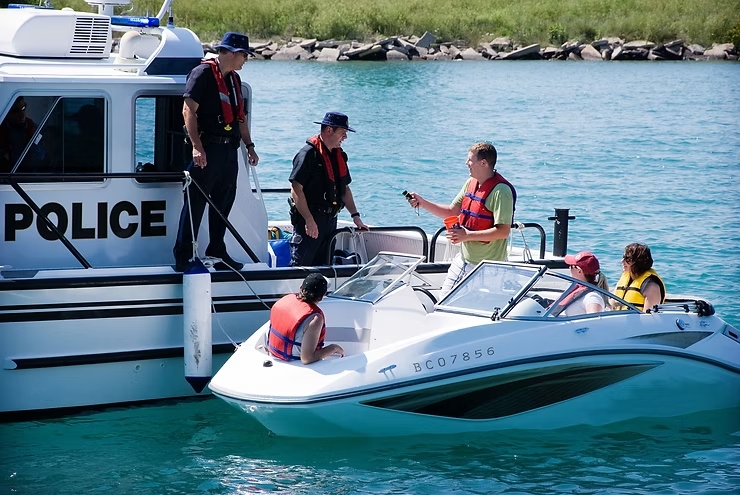
More than 12 million Canadian adults participate in recreational boating every year, but preventable accidents continue to result in injuries and fatalities on the water. To help improve safety, Transport Canada is supporting education and awareness initiatives that promote safe boating practices and behaviours on the water.

As part of the Safe Boating Awareness Week, the Honourable Steven MacKinnon, Minister of Transport and Leader of the Government in the House of Commons, announced a call for proposals under the Boating Safety Contribution Program. The application period is open until 21st September 2026. Continue reading “Minister of Transport calls for proposals to improve boating safety across Canada”

New Bill introduced to eliminate diesel-powered ferries across New York State

New Bill introduced to eliminate diesel-powered ferries across New York State

On 19 May, US lawmakers introduced the Clean Ferries Bill (A11303/S10381), a proposal aimed to eliminate diesel-powered ferries emissions across New York State. The bill requires publicly funded ferry operators to purchase only zero-emission vessels starting in 2028, with all public vessels in state waters required to be zero-emission by 2032. It also directs the New York State Energy Research and Development Authority to study charging infrastructure along major waterways, including the Hudson River.

Supporters say the measure targets a major source of pollution Continue reading “New Bill introduced to eliminate diesel-powered ferries across New York State”

UK support for the Cape Town Agreement is huge step forward for international fishing safety

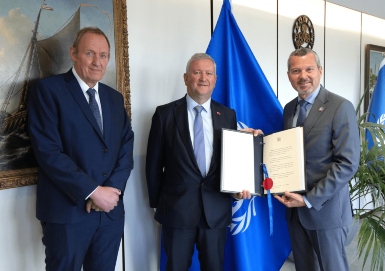
IMO Secretary-General Arsenio Dominguez receives MCA Director for Technical Maritime Services Fraser Heasley and MCA Fishing Vessel Safety Lead David Fenner, to confirm the UK’s accession to the Cape Town Agreement

Fishing is one of the world’s most dangerous industries, and the International Maritime Organization’s Cape Town Agreement (2012) aims to improve the safety of fishers on an international scale via the Cape Town Agreement.

The agreement sets out mandatory minimum safety standards for fishing vessels, more than 24m in length, and their crew, as well as the combating of illegal, unregulated, and unreported fishing. Coming into force next year, the Cape Town Agreement is expected to boost safety standards for tens of thousands of vessels worldwide, covering areas like survey and inspection, protection of crew, emergency procedures, and construction. Continue reading “UK support for the Cape Town Agreement is huge step forward for international fishing safety”

Sisters run virtual TCS London Marathon in support of Sailors’ Society

Finishing in under six hours, IIMS member Catherine Linley ran the virtual TCS London Marathon MyWay in support of Sailors’ Society – IIMS’ chosen charity.

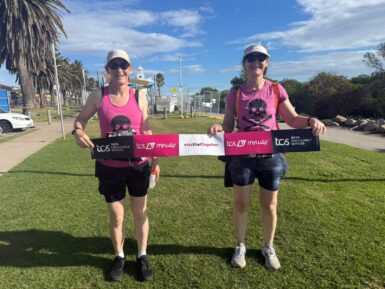
Two women in running gear smiling and holding a TCS London Marathon MyWay banner on a sunny, grassy area with blue skies.
Catherine Linley and her sister, Hilary, ran the virtual TCS London Marathon MyWay 2026.

Catherine first contacted the maritime charity to take part in the event on their behalf after hearing about it via IIMS. She went on to complete the event with her sister, Hilary, by running along the Linear Trail and the beaches of Adelaide in “glorious weather”.

Despite managing injuries in the lead up to the day, the sisters supported each other to the finish line where they were swept up by family members.

Catherine said she was proud of their effort but was acutely aware of the privilege wrapped around it. Continue reading “Sisters run virtual TCS London Marathon in support of Sailors’ Society”

IACS finds common failure modes in emergency generator systems

IACS finds common failure modes in emergency generator systems

After the loss of power leading up to the MV Dali Francis Scott Key Bridge strike, marine casualty investigators noted an extended delay in the automatic start-up of the ship’s emergency generator. While the small generator was not sufficient in itself to run most major systems, it could provide low-speed hydraulic power to turn the rudder slowly – and could have provided that vital capability much sooner if it had started within standard time parameters, illustrating the importance of automated emergency power start-up. Continue reading “IACS finds common failure modes in emergency generator systems”

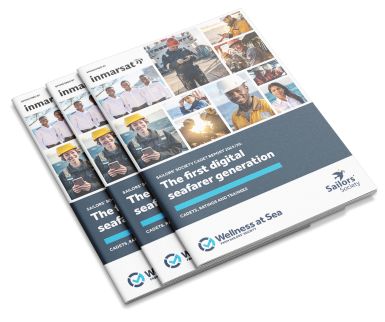
Sailors’ Society highlights ‘first digital seafarer generation’ in latest Cadet Report

Sailors’ Society highlights ‘first digital seafarer generation’ in latest Cadet Report

Sailors’ Society has published its latest Cadet Report – ‘the first digital seafarer generation.’

Sponsored by Inmarsat Maritime (a Viasat company), the report captures the voices of cadets, ratings and trainees from 30 countries.

Drawing on insights gathered from more than 9,000 Gen Z seafarers who attended the maritime charity’s global 2025 Wellness at Sea Conferences, this unique data offers the maritime industry an unparalleled look into the experiences, pressures and aspirations of its future workforce. Continue reading “Sailors’ Society highlights ‘first digital seafarer generation’ in latest Cadet Report”

ITIC warning to marine surveyors following US$30,000 off-spec grain cargo dispute

ITIC warning to marine surveyors following US$30,000 off-spec grain cargo dispute

A US$30,000 off-spec grain cargo dispute claim directed at the wrong surveyor has prompted International Transport Intermediaries Club (ITIC) to warn marine surveyors of the liability exposure they face when the scope of their instructions is not precisely recorded.

A marine surveyor was appointed by the seller of a grain cargo to conduct a joint survey at the load port. The buyer accepted the cargo and subsequently sold it on. At the discharge port, the ultimate buyer and consignee alleged the grain was off-spec due to the presence of ambrosia seed and other impurities. Continue reading “ITIC warning to marine surveyors following US$30,000 off-spec grain cargo dispute”

Engine retrofit market continues to prepare but not fully commit

Engine retrofit market continues to prepare but not fully commit

The future of engine retrofits will depend heavily on regulatory developments says Lloyd’s Register in its latest Engine Retrofit Report.

LR added the longer conventionally fuelled vessels remain in service, the greater the pressure will be to retrofit them later to meet emissions targets, potentially compressing demand into a narrower and more costly timeframe.

The 2026 update shows that 2025 delivered limited growth in announced retrofit projects, but significant progress in capability. Continue reading “Engine retrofit market continues to prepare but not fully commit”

2010 HNS Convention moves closer to entry into force

Four states set to ratify the HNS Convention

Four States deposited their instruments of ratification of the International Convention on Liability and Compensation for Damage in Connection with the Carriage of Hazardous and Noxious Substances by Sea, 2010 (2010 HNS Convention), bringing the treaty’s entry into force a step closer.

As announced, Belgium, Germany, the Kingdom of the Netherlands, and Sweden have deposited their instruments of ratification to the 2010 HNS Convention, marking an important step toward its entry into force. The Convention seeks to Continue reading “2010 HNS Convention moves closer to entry into force”

Lithium-ion Battery Fires: What We Know So Far – edition 2 published

Edition 2 of the lithium-ion battery fires: What we know so far guide has been published

In edition 2 of the “Lithium-ion Battery Fires: What We Know So Far”, the Maritime Professional Council of the UK (MPC) warns of the rising risks and dangers of lithium-ion battery fires to ships, boats and their crews.

The maritime industry faces increasing incidents and fires due to lithium-ion technology, particularly with the growing use of electric vehicles (EVs) and a myriad of devices powered by these batteries. Lithium-ion batteries have a high energy density, making them efficient but also prone to catastrophic failures if mishandled. Continue reading “Lithium-ion Battery Fires: What We Know So Far – edition 2 published”

IMPA warns of risks of deregulation in maritime pilotage

The International Maritime Pilots’ Association (IMPA) has sent out a warning of the consequences of deregulation and competition in maritime pilotage.

Maritime pilotage is a public, not commercial, service that exists for safety of navigation — protecting people, the environment and trade. IMPA said some jurisdictions are tempted by the idea that deregulation and competition deliver a better service at a lower cost. This is a mistake, and the evidence agrees. Continue reading “IMPA warns of risks of deregulation in maritime pilotage”

Instagram Posts from the IIMS @iimsmarine

Privacy Overview

This website uses cookies so that we can provide you with the best user experience possible. Cookie information is stored in your browser and performs functions such as recognising you when you return to our website and helping our team to understand which sections of the website you find most interesting and useful.

Strictly Necessary Cookies

Strictly Necessary Cookie should be enabled at all times so that we can save your preferences for cookie settings.

Show details Hide details
Performance & Marketing Cookies

This website uses Google Analytics to collect anonymous information such as the number of visitors to the site, and the most popular pages. This also helps us optimise our marketing campaigns. User data sent to Google Analytics may be used for ad personalization and measurement of our ad campaigns. Keeping this cookie enabled helps us to improve our website.

Show details Hide details