We Have Been Here Before
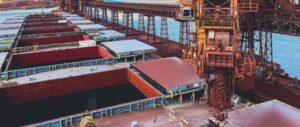
Fifteen years ago, India exported over 100 million tonnes of iron ore annually, with Goa alone contributing half of that volume. During that period, two vessels—MV Black Rose at Paradip and MV Asian Forest at Mangalore— capsized and sank after loading iron ore fines. Crew members lost their lives. Other vessels were held in litigation, stopped from sailing, their crews unknowingly saved from potential disaster. The cause in each case was cargo liquefaction: wet iron ore fines loaded during monsoon rains turned into slurry, shifted catastrophically, and destroyed the vessel’s stability within minutes.
Those casualties prompted immediate regulatory intervention. The Directorate General of Shipping established a framework for marine laboratory approval. The IMSBC Code became mandatory. Shippers began covering stockpiles with tarpaulins. Masters gained clearer authority to refuse unsafe cargo. The industry learned, adapted, and improved.
Today, as iron ore exports from India prepare to resume after years of decline, we face a troubling reality: the infrastructure, expertise, and vigilance that emerged from those 2009 tragedies have quietly deteriorated. We are returning to the conditions that caused those casualties. The question is not whether another incident will occur, but when.
The Cycle of Decline
The numbers tell part of the story. India’s iron ore exports collapsed from over 100 million tonnes in 2010 to less than 10 million tonnes by 2015. Goa’s mining ban in 2012 removed 50 million tonnes from the market overnight. This decline was not merely statistical—it represented the systematic dismantling of an entire safety ecosystem.
Shippers facing zero revenue laid off contract labour and machinery operators, retired experienced mining and shipping staff, and closed offices. The 450 barges that operated in Goa in 2010 sat idle, degrading and wasting. Ports that had relied on iron ore export income faced severe cash flow constraints. Survey and sampling companies, which had thrived when handling hundreds of samples monthly, suddenly received only occasional requests. Many reduced staff and equipment. Others closed entirely. Those that remained often resorted to untrained contract labour with no accountability.
The marine laboratories approved by the Directorate General of Shipping—starting with the pioneering eDOT Marine Laboratory and eventually expanding to eight facilities—struggled to maintain standards when sample volumes dropped to a fraction of previous levels. The economic pressure was immense. When business declines by 90%, maintaining ISO accreditation, calibrated equipment, trained personnel, and quality systems becomes financially unsustainable for commercial entities.
The Present Danger
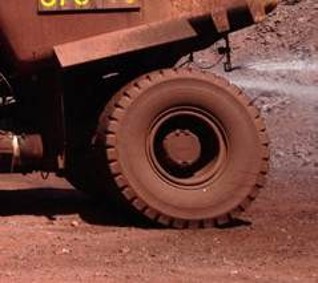
This season, iron ore fines exports from Goa are set to resume, with some mining activity being allowed in the state; an estimated 15 to 25 million tonnes will be shipped. This is welcome news for the economy, but it presents a significant safety concern for critical reasons: the cargo intended for shipment has been stockpiled and exposed to the elements for many years. Freshly mined cargo, if any at all, will be blended with these “dumps” as they are commonly called. But how does one sample a stationary stockpile-especially ones which have existed forever and even have green vegetation growing on their surfaces? This is not a theoretical concern. Representative sampling of large static stockpiles is extraordinarily difficult even under ideal conditions. The IMSBC Code Chapter 4 provides guidance, but proper execution requires a trained team, a detailed sampling plan, heavy machinery such as bulldozers to dig into the cargo, and multiple rounds of sampling as the stockpile is progressively broken down during its transportation. Very few organizations in India currently possess this capability.
 The Commercial Pressure
The resumption of exports has created intense commercial pressure. Shippers who have held non- performing assets for over a decade are eager to monetize their cargo. Shipowners and charterers, facing tight freight markets, are reluctant to refuse cargo or delay sailing for additional testing. Surveyors and sampling companies, having survived years of minimal business, face pressure to provide “cargo pass” certificates at the lowest possible cost.
The writer has witnessed this pressure firsthand. Samples are delivered to accredited laboratories and fail testing. Shortly afterward, another sample arrives, purportedly from the same stockpile for the same vessel, and passes. How these samples are drawn, where they are drawn from, and how they are mixed remains unclear. While the laboratory may note that samples were not drawn under their supervision, this disclaimer means little to a master who sees a certificate from a competent authority- approved laboratory and accepts the cargo.
Shippers are appointing surveyors with no experience or competency in iron ore sampling, selecting them purely on cost. Some requests are explicit: provide a certificate that allows the cargo to be loaded, regardless of actual conditions. Surveyors who maintain proper standards risk losing business to competitors willing to provide the desired result.
The Institutional Memory Gap
The officers currently serving in the Competent Authority, in P&I Clubs, and in correspondent organizations have largely changed since 2009. The new generation has studied cargo liquefaction in training courses. Few have seen it occur. Fewer still experienced the landscape as it existed before the 2009 casualties—the commercial pressures, the inadequate testing, the near-misses, and the ultimate tragedies.
This gap in institutional memory is dangerous. Those who witnessed the Black Rose and Asian Forest casualties understood viscerally why proper sampling and testing procedures are non-negotiable. They saw the consequences of cutting corners. They knew that behind every certificate and every test result stood the lives of seafarers who would sail with that cargo.
Today’s decision-makers may lack that direct experience. Commercial considerations have begun to influence survey appointments by clubs and their correspondents. Correspondents, who serve as the clubs’ eyes and ears in port, appear to have forgotten that the best surveyor should be appointed, not the most convenient or least expensive one. Some correspondents have abandoned professional ethics entirely and invested in their own private survey firms, creating direct conflicts of interest. The loss of export volume has meant a loss of commission income, and the temptation to recover that income through cost-cutting or self-dealing has proven difficult to resist.
The Master’s Dilemma
Masters face an impossible situation. They arrive at an Indian port to load iron ore fines. The shipper provides certificates from a laboratory approved by the Directorate General of Shipping showing that the cargo’s moisture content is below the Transportable Moisture Limit. The certificates appear to comply with IMSBC Code requirements. The master has limited time, limited local knowledge, and immense commercial pressure to load and sail.
How is the master to know that the samples were not drawn properly? How is he to know that the laboratory, while accredited, received samples of unknown origins? How is he to verify that the stockpile from which his cargo will be loaded is the same stockpile that was sampled? How is he to assess whether a stockpile that has sat for twelve years through multiple monsoons is safe to load, when no approved sampling procedure exists for stockpiles over three metres high?
Yes, he has the Can-test to turn to – which at best remains a rudimentary method to determine the fitness of the cargo, and it cannot replace laboratory testing.
The master’s authority to refuse unsafe cargo is clear under SOLAS and the IMSBC Code. But exercising that authority requires either clear evidence of danger or strong support from the shipowner and P&I Club. When certificates appear to be in order and commercial pressure is intense, masters often have no practical choice but to load.
This places the master in an untenable position. If the cargo liquefies at sea, the master and crew pay the price. If the master refuses cargo based on reasonable concerns but cannot prove it is unsafe, the shipowner faces claims for delay and breach of charter. The system should protect masters who exercise proper caution. Instead, it often penalizes them.
The Role of P&I Clubs and the IIMS
Protection and Indemnity Clubs have a vital role in preventing casualties. They provide insurance, but more importantly, they provide loss prevention guidance and support to masters facing difficult cargo decisions. Clubs maintain correspondent networks in ports worldwide to provide local expertise and oversight.
However, the effectiveness of this system depends entirely on the quality of correspondents and surveyors appointed. When correspondents prioritize cost over competence, or when they have financial interests in the survey firms they appoint, the system fails. When clubs accept the lowest-cost survey rather than insisting on the best-qualified surveyor, they undermine their own loss prevention objectives.
The International Institute of Marine Surveying (IIMS) has a critical role to play in addressing this problem. As the professional body representing marine surveyors worldwide, the IIMS can establish and maintain lists of qualified experts for critical cargo operations, including iron ore fines sampling and testing. These lists should be made available to the International Group of P&I Clubs, allowing claims handlers to identify and appoint competent surveyors regardless of local commercial pressures.
The IIMS has raised this issue at every forum, conference, and annual general meeting. The organization’s leadership, including the current President, has highlighted the dangerous state of affairs in Indian iron ore exports. But awareness alone is insufficient. The IIMS must work with the International Group to create a formal framework ensuring that the best surveyor is appointed for safety-critical operations, not merely the most convenient or least expensive.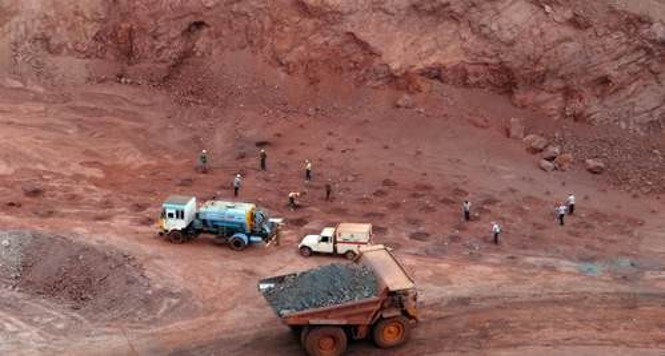
What must happen now?
The situation is urgent but not yet irreversible. Exports are resuming, but large-scale shipments have not yet commenced. There is a narrow window of opportunity to prevent the next casualty. The following actions must be taken immediately:
For P&I Clubs and the International Group
Establish minimum standards for surveyor appointment on iron ore fines shipments, particularly from Indian ports. Cost must not be the determining factor. Competence, experience, and independence must be verified before appointment.
Prohibit correspondents from appointing their own affiliated survey firms for safety-critical operations. The conflict of interest is obvious and unacceptable.
Require independent pre-loading surveys by qualified surveyors for all iron ore fines shipments from stockpiles that have been inactive for more than one year. The survey must include visual inspection of stockpiles, witnessing of sampling, and independent verification of cargo condition.
Establish standard rates across clubs for specific regions and cargo types to prevent a “race to the bottom” where surveyors compete solely on price. Professional services should be compensated at levels that allow proper execution. Work with the IIMS to maintain and publish lists of qualified surveyors for iron ore fines operations, making these lists available to all claims handlers and correspondents.
Issue clear guidance to members that masters have full authority to refuse cargo if they have reasonable concerns about safety, and that clubs will support masters who exercise proper professional judgment even if this results in commercial disputes.
For Shipowners and Masters
Do not rely solely on shipper-provided certificates. Appoint independent surveyors to witness sampling and verify cargo condition before loading commences.
Exercise the authority provided under SOLAS and the IMSBC Code to refuse cargo that presents a reasonable safety concern, even if certificates appear to be in order. Document concerns clearly and seek support from the P&I Club.
Conduct can tests on cargo from each barge or stockpile before accepting it aboard. If the can test shows free moisture or cargo instability, stop loading immediately and require additional laboratory testing.
Obtain moisture analysis when approximately 75% of cargo is loaded to verify that conditions have not changed during loading operations.
Avoid loading iron ore fines during or immediately after the monsoon season unless absolutely confident that cargo has been properly protected and tested.
Maintain detailed records of all cargo documentation, sampling procedures, test results, and any concerns raised during loading. These records are essential if a dispute or casualty occurs.
For Shippers
Accept that proper sampling and testing are non- negotiable requirements, not obstacles to trade. The cost is minimal and the alternative is unacceptable.
Engage qualified sampling companies with trained personnel and proper equipment to conduct sampling under approved procedures. Do not select samplers based solely on cost.
Protect stockpiles from weather exposure using effective covering systems. Cargo that has been exposed to multiple monsoon seasons cannot be assumed safe for loading without extensive testing.
Provide complete and accurate information about stockpile history, including age, source, previous handling, and exposure to weather.
Cooperate fully with masters and surveyors who raise legitimate concerns about cargo condition. Commercial considerations must not override safety.
Recognize that providing false or misleading cargo certificates is not merely a commercial matter—it is a criminal act that endangers lives.
The Choice Before Us
We stand at a critical juncture. India’s iron ore exports are resuming after years of decline. This presents an economic opportunity. It also presents a safety challenge. The infrastructure, expertise, and vigilance that emerged from the 2009 casualties have eroded. We are returning to the conditions that caused those tragedies.
We have a choice. We can acknowledge this reality and take immediate action to rebuild standards, enforce procedures, and prioritize safety over short-term commercial gain. Or we can proceed as if the past fifteen years of decline have not mattered, as if institutional memory and professional competence can be instantly restored, as if proper sampling and testing are optional luxuries rather than essential safeguards.
If we choose the latter path, we will face another casualty. It is not a question of if, but when. Another vessel will capsize. More crew members will die. There will be investigations, reports, and recommendations. Regulators will implement new requirements. The industry will pledge to do better. And the cycle will repeat.
We have been here before. We know what happens when sampling and testing standards erode. We know the cost in lives and vessels. We know the regulatory and commercial disruption that follows a major casualty. We have no excuse for allowing history to repeat itself.
The question is simple: Will we act now, or will we wait for the next casualty to force our hand?
The answer should be equally simple. But it requires commitment from every stakeholder—regulators, clubs, surveyors, shipowners, masters, and shippers. It requires prioritizing long-term safety over short-term profit. It requires professional integrity over commercial convenience. It requires remembering the lessons of 2009 and ensuring they are not forgotten again.
The lives of seafarers depend on our choice. We must choose wisely, and we must choose now.
by Capt. Ruchin Dayal, IIMS President