Misdeclared cargo remains a persistent threat to shipping and supply chains

Misdeclared cargo remains a persistent threat to shipping and supply chains

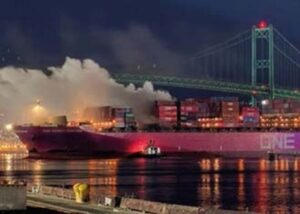
New statistics released by Allianz show a container ship fire occurs every 17 days, underscoring the persistent risk misdeclared cargo and undeclared dangerous goods pose to seafarers, shipping and global supply chains. Allianz Safety & Shipping Review 2026 says misdeclared cargo is still a major contributor to container ship fires.

“Misdeclared and undeclared dangerous goods are a known and preventable threat to seafarers, ships, cargo Continue reading “Misdeclared cargo remains a persistent threat to shipping and supply chains”

Superyacht surge: The rise of the new lifestyle‑driven boater

Superyacht surge: The rise of the new lifestyle‑driven boater

Twenty years ago, boating was a world defined by heritage, hands-on skill, and a slow climb through vessel sizes. Owners began with smaller craft and worked their way upward; they had to learn the intricacies of engines, electronics, and maintenance along the journey. Marinas were reliable, practical, functional hubs, designed for seasoned mariners who wanted a safe berth and little else. Today, that world looks almost unrecognisable.

Dean Smith has watched this transformation from one of the best vantage points in the industry. As Chief Commercial Officer at D-Marin, he oversees 26 premium marinas across nine countries, welcoming more than 50,000 customers annually. Continue reading “Superyacht surge: The rise of the new lifestyle‑driven boater”

Safety helmets: When standards fail stevedores, crews and marine surveyors

Safety helmets: When standards fail stevedores, crews and marine surveyors

On 2nd May 2019, a twistlock fitted to one of the bottom corner fittings of a container fell out of the fitting while the container was being restowed aboard the container vessel MOL Bravo, in the port of Manzanillo, Mexico. The twistlock landed on the second officer who was on deck, struck his safety helmet and caused fatal injuries.

The investigation report by the Marine Department of Hong Kong noted the following: Continue reading “Safety helmets: When standards fail stevedores, crews and marine surveyors”

Post-fire ship hull structure and material assessment

Post-fire ship hull structure and material assessment

Fire incidents on ships rank among the most frequent accidents, and in recent years, fire incidents have specially increased among container and ro-ro cargo/ passenger ships. DNV has supported many cases of post-fire structural and material assessments, and this news aims to share our insights from this work.

Need to know

Fire exposure can degrade steel strength and toughness, increasing the risk of brittle behaviour or loss of strength. Continue reading “Post-fire ship hull structure and material assessment”

Fire dampers: A critical detention risk in fire safety

Fire dampers: A critical detention risk in fire safety

Fire safety has consistently remained one of the highest detention areas during Port State Control (PSC) inspections. Within this category, fire dampers frequently appear among the most cited deficiencies.

PSC reports worldwide indicate that fire dampers often fail inspections because they do not close properly, are heavily corroded, or their operating mechanisms are inoperative. In some cases, dampers may pass an operational test but fail during visual inspection, revealing hidden deterioration such as corrosion, wastage, or damaged sealing arrangements.

Under PSC regulations, the deficiency category “Fire Safety” may be classified not only as a detainable deficiency but also as an ISM-related deficiency, indicating potential shortcomings in the vessel’s Safety Management System. Continue reading “Fire dampers: A critical detention risk in fire safety”

Rigs, Masts and Sails: What surveyors need to know

Rigs, Masts and Sails: What surveyors need to know

A group of 20 marine surveyors gathered at the Seldén Mast Gosport facility in late June on one of the hottest days in the UK. Their mission? To learn about the work and manufacturing process that Seldén Mast conducts from their facility. Under the expert guidance of Richard Thoroughgood, supported by Technical Director Andy, and their colleague Zoe, the group were treated to an in-depth tour of the works. A number of masts were available for inspection and those who attended votes the morning session a great success. IIMS would like to put on record their thanks to Richard and his colleagues at Seldén Mast for accommodating and hosting us. Continue reading “Rigs, Masts and Sails: What surveyors need to know”

The real reason why enclosed space deaths keep happening at sea

The real reason why enclosed space deaths keep happening at sea

Enclosed space safety isn’t a paperwork problem. It’s a leadership problem. MSC.581(110) finally treats it that way. Most enclosed space deaths don’t happen to the person who entered first. They happen to the person who rushed in to save them. One victim becomes two. Then three. Not because the crew didn’t care, but because nobody stopped to test the atmosphere before the rescue attempt.

And here’s what makes this pattern even harder to accept: in almost every one of these incidents, the permit was signed. The drill was logged. The SMS procedure existed on paper. The paperwork was perfect. The outcome was fatal.

This is the gap that IMO Resolution MSC.581(110) was written to close. Continue reading “The real reason why enclosed space deaths keep happening at sea”

UK publishes ETS maritime compliance guide ahead of July implementation

UK publishes ETS maritime compliance guide ahead of July implementation

The UK government has published the ETS maritime compliance guide to help shipping companies prepare for the inclusion of maritime transport in the UK Emissions Trading Scheme (UK ETS) from 1 July.

The guidance explains which vessels and operators fall within the scope of the scheme, as well as the requirements for emissions monitoring, reporting and the surrender of allowances. It applies primarily to ships of 5,000 gross tonnage and above engaged in domestic UK voyages and activities within UK ports. Continue reading “UK publishes ETS maritime compliance guide ahead of July implementation”

Ahead of the spark: Fire safety for workboats and offshore fleets

Ahead of the spark: Fire safety for workboats and offshore fleets

Fire risk during maintenance and refit is under renewed scrutiny across the maritime sector, writes Morgan Davis of Ramtech, which designs and develops industry-leading end-to-end Internet of Things and innovative wireless solutions to suit a variety of industries.

The 2020 blaze aboard the USS Bonhomme Richard caused more than $3 billion (€2.5 billion) in damage and led to the vessel being scrapped, and a December 2025 Government Accountability Office report highlighted ongoing gaps in fire safety oversight. This resonates across Europe, where workboats, harbour craft and offshore wind service vessels face similar risks during hot work, temporary power use and operations in confined spaces.

Morgan Davis stresses that operators must move beyond labour-intensive fire watch and adopt smarter approaches to maintain visibility and control before sparks turn into full-blown engine-room incidents – lessons that resonate across Europe’s workboat and offshore wind sector. Continue reading “Ahead of the spark: Fire safety for workboats and offshore fleets”

The road to trouble is paved with many good intentions

The road to trouble is paved with many good intentions

The use of lithium-ion batteries in the maritime sector is increasing. Many see battery energy storage as the most suitable decarbonisation solution for the small craft, and pleasure sector – the road to trouble is paved with many good intentions. This is debatable, however, with the supply of sustainable fuels such as HVO that can be used in diesel engines without  any  conversion  of  the engine; but battery technologies will certainly have a role to play in a low emission future.

In this race to lower emissions, the safety challenges of lithium-ion batteries are poorly understood,  or even completely ignored. Leading edge safety research and testing of lithium-ion batteries and emerging battery chemistries are revealing a huge amount of new detail about the complexity of battery failure, and about the nature of the hazards that will create new risks from marine application of these high energy batteries. Continue reading “The road to trouble is paved with many good intentions”

Boiler burner inspection and operational safety recommendations

Boiler burner inspection and operational safety recommendations

The United States Coast Guard (USCG) has issued a safety alert following an investigation into a serious engine-room fire following a boiler burner inspection aboard a cargo ship in the Port of Mobile, Alabama. On January 4, 2025, while moored in the Port of Mobile, Alabama, a foreign-flagged cargo vessel equipped with a SAACKE Monoblock Rotary Cup Burner SKVJ-M 14 Mark I burner system on a marine boiler experienced a significant engine room fire.

The incident began with a high-pressure fuel leak from the oil fittings block, which caused atomized marine diesel oil to ignite on the hot surface of a nearby auxiliary generator exhaust stack. The fire rapidly spread from the boiler flat through two upper deck levels, resulting in extensive structural and equipment damage, though no personnel were injured. Continue reading “Boiler burner inspection and operational safety recommendations”

Overall non-compliance rate improves slightly on pilot transfer arrangements

Overall non-compliance rate improves slightly on pilot transfer arrangements

The results of the International Maritime Pilots Association (IMPA) 2026 Safety Campaign on pilot transfer arrangements, highlight that the overall non-compliance rate has improved slightly to 13% compared to the previous year, with pilot ladders remaining the leading source of non-compliant observations.

Around the clock and across the globe, maritime pilots transfer to and from vessels of every size in all weather conditions and throughout every season. The work is inherently hazardous, yet it remains essential to the safe and efficient movement of ships in and out of ports. Continue reading “Overall non-compliance rate improves slightly on pilot transfer arrangements”

Instagram Posts from the IIMS @iimsmarine

Privacy Overview

This website uses cookies so that we can provide you with the best user experience possible. Cookie information is stored in your browser and performs functions such as recognising you when you return to our website and helping our team to understand which sections of the website you find most interesting and useful.

Strictly Necessary Cookies

Strictly Necessary Cookie should be enabled at all times so that we can save your preferences for cookie settings.

Show details Hide details
Performance & Marketing Cookies

This website uses Google Analytics to collect anonymous information such as the number of visitors to the site, and the most popular pages. This also helps us optimise our marketing campaigns. User data sent to Google Analytics may be used for ad personalization and measurement of our ad campaigns. Keeping this cookie enabled helps us to improve our website.

Show details Hide details