IMPA warns of risks of deregulation in maritime pilotage

The International Maritime Pilots’ Association (IMPA) has sent out a warning of the consequences of deregulation and competition in maritime pilotage.

Maritime pilotage is a public, not commercial, service that exists for safety of navigation — protecting people, the environment and trade. IMPA said some jurisdictions are tempted by the idea that deregulation and competition deliver a better service at a lower cost. This is a mistake, and the evidence agrees. Continue reading “IMPA warns of risks of deregulation in maritime pilotage”
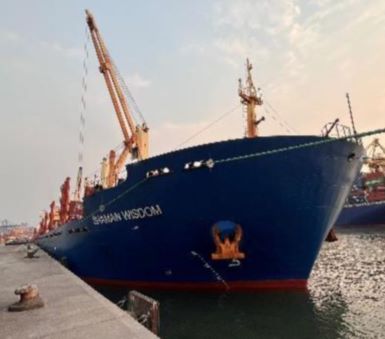
Seafarer died after being struck by steel plate says Marshall Islands

Seafarer died after being struck by steel plate says Marshall Islands

An Able Seaman died instantly after steel plates fell and struck him while on board Shaman Wisdom, said a safety investigation report by the Republic of the Marshall Islands Maritime Administrator.

What happened

On 5 June 2024, at 0800, the Bosun on board Shaman Wisdom instructed the ASD1 and ASD2 to select a suitable steel plate in the Forecastle Store to construct a step for one of the deck stairs. Both the ASD1 and ASD2 were wearing the standard PPE to work on deck, including a safety helmet, coveralls, and safety shoes. Continue reading “Seafarer died after being struck by steel plate says Marshall Islands”

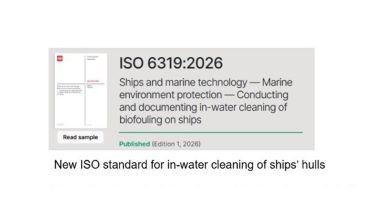
New ISO standard for in-water hull cleaning published

New ISO standard for in-water hull cleaning published

A new standard on in-water cleaning of vessel hulls has been launched.

Preventing and removing biofouling on hulls of ships limits the introduction and spread of invasive aquatic species (IAS). This in turn threatens coastal environments by disrupting ecological systems, which can also negatively affect fisheries, aquaculture and tourism. Biofouling is also estimated to increase a ship’s fuel consumption by on average 9 % – this added fuel consumption costs the shipping industry billions of USD. Therefore, improving biofouling management across the global shipping fleet will have considerable benefits, both from an environmental and economic standpoint. Continue reading “New ISO standard for in-water hull cleaning published”

IMO Ship Systems and Equipment (SSE) 12 summary report

IMO Ship Systems and Equipment (SSE) 12 summary report

The Nautical Institute has shared a summary on the 12th session of the International Maritime Organization (IMO) Ship Systems and Equipment Sub-Committee.

The sub-committee deals with a wide range of technical and operational matters related to systems and equipment on all types of ships, vessels, craft and mobile units covered by IMO instruments.

The Institute said the meeting opened with a statement by the Secretary General regarding the IMO’s launch of a new website to counter disinformation regarding shipping in the Middle East region – this welcome development is reported separately on our website. Continue reading “IMO Ship Systems and Equipment (SSE) 12 summary report”

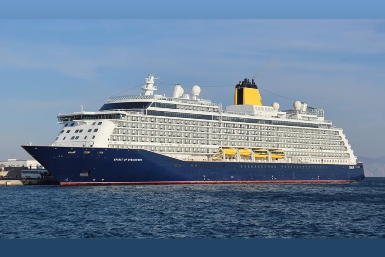
Passenger died following fall on cruise ship Spirit of Destiny received ‘suboptimal treatment’

Passenger died after cruise ship Spirit of Destiny gave ‘suboptimal treatment’

A passenger died following a fall while 100 others were injured after cruise ship Spirit of Destiny hit heavy weather in its voyage, according to an accident investigation report by UK Marine Accident Investigation Branch (MAIB).

What happened

Shortly after 1230 on 4 November 2023, the passenger vessel Spirit of Discovery lost propulsion in heavy weather while crossing the Bay of Biscay. This led to the vessel moving violently while the crew restarted the vessel’s propulsion. The propulsion issues, storm force conditions and vessel motion continued until the vessel was able to resume its passage the following morning. Over 100 passengers were injured during this period. Eight of the seriously injured passengers were taken directly to hospital on arrival at Portsmouth, England. One of these passengers, Trevor Gilks, later died from his injuries. Continue reading “Passenger died following fall on cruise ship Spirit of Destiny received ‘suboptimal treatment’”

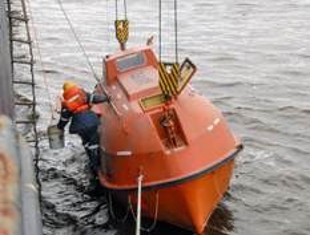
Lifeboat Incidents: Key Observations & Lessons Learned

Lifeboat Incidents: Key Observations & Lessons Learned

Since  lifesaving  appliances  became  mandator y  onboard  vessels,  significant changes have been observed in the design of lifeboats and their launching systems. These changes have largely been driven by the need for larger lifeboat capacity, enhanced protection, easier operation, and improved overall safety.

Traditional open wooden boats have been replaced by fully enclosed lifeboats and free-fall boats, while modern rescue boat designs now support a wide range of maritime rescue operations. Despite these advancements, accidents during lifeboat operations – launching, running, or recovery – continue to occur, resulting in fatalities and injuries. Many of these incidents are linked to increased reliance on technology, despite improvements in design, equipment, and maintenance standards. Continue reading “Lifeboat Incidents: Key Observations & Lessons Learned”

VIMMS Sea Trial Results and System Benefits

VIMMS Sea Trial Results and System Benefits

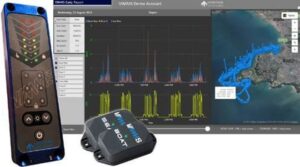
1 Introduction

The Vessel Impact and Motion Monitoring System (VIMMS) was used to assess potential for acute and chronic injuries during maritime operations on small vessels (under 24 metres), and demonstrate the capability for data to assist in injury risk management and operational decision-making. The system combines real-time acceleration monitoring with whole- body vibration (WBV) exposure tracking, enabling operators and management to identify and mitigate both acute and chronic injury risks. Continue reading “VIMMS Sea Trial Results and System Benefits”

Key tips for transferring of plastic pellet in containers

Key tips for transferring plastic pellet in containers

Steamship Mutual P&I Club has provided guidance on the risks associated with transferring of plastic pellet in containers and provides practical measures to prevent spillage and protect the marine environment.

Understanding the risks of plastic pellets

According to the Club, in recent years, several high- profile incidents have occurred, such as the Trans Carrier in 2020 and the XPress Pearl in 2021, where containers have fallen overboard and resulted in the release of plastic pellets into seas and oceans with subsequent harm to the marine environment.

While the carriage of plastic pellets in shipping containers is a secure means of shipment, the environmental concern arises when these containers are lost overboard. Once plastic pellets are released, their physical properties of being small and light allow them to travel extensive distances from the initial release location. Continue reading “Key tips for transferring of plastic pellet in containers”

Dangerous goods quick reference guides

Dangerous goods quick reference guides

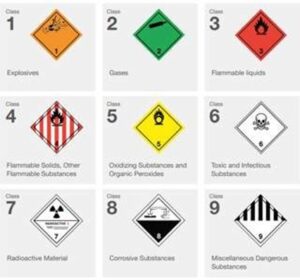
IIMS is indebted to TT Club and their team for producing an information and easy to read series of handy dangerous goods quick reference guides, which we are delighted to publish and share.

Dangerous goods quick reference guide – Class 1: Explosive substances and articles

Class 1 dangerous goods include explosive substances and articles that pose risks such as property damage, cargo damage, injury, environmental harm, insurance invalidation, and potential criminal prosecution. Continue reading “Dangerous goods quick reference guides”

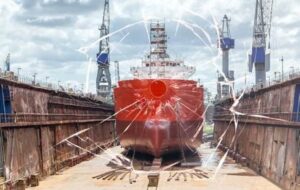
The dry dock danger zone: Why a shipyard safety plan must be bulletproof

The dry dock danger zone: Why a shipyard safety plan must be bulletproof

Shipyards are singular industrial environments, combining the hazards of heavy construction, manufacturing, and complex marine operations into one sprawling, high- stakes location. For any vessel owner, operator, or contractor, the yard represents a necessary but incredibly risky location. The complex nature of repair, maintenance, and construction, often conducted under tight deadlines, elevates the potential for catastrophic accidents.

A shipyard is a constantly evolving workspace. One moment, a section of the hull is being pre-fabricated in a clean workshop; the next, it is being hoisted by cranes over active work zones to be welded into place many meters above the dry dock floor. This dynamic, multi-hazard environment necessitates a safety culture that is not merely compliant, but proactively rigorous. Continue reading “The dry dock danger zone: Why a shipyard safety plan must be bulletproof”

Container ship fires and ports of refuge for the big ship era

Container ship fires and ports of refuge for the big ship era

In this article, Tom explores the growing challenge of securing a port of refuge for container ships affected by onboard fires, highlighting the legal, operational and environmental complexities that arise in managing these incidents.

The increasing frequency and severity of fires aboard container ships is a pressing concern for the maritime industry. Recent incidents have highlighted the dangers these fires pose, not only to vessels and their crews, but also to cargo and the surrounding environment. In many cases, the consequences have been catastrophic, with some ships lost entirely and others facing substantial legal and financial repercussions. Continue reading “Container ship fires and ports of refuge for the big ship era”

The Dangerous Erosion of iron Ore Sampling Standards in India: A call for Urgent Action

The Dangerous Erosion of iron Ore Sampling Standards in India: A call for Urgent Action

We Have Been Here Before

Fifteen years ago, India exported over 100 million tonnes of iron ore annually, with Goa alone contributing half of that volume. During that period, two vessels—MV Black Rose at Paradip and MV Asian Forest at Mangalore— capsized and sank after loading iron ore fines. Crew members lost their lives. Other vessels were held in litigation, stopped from sailing, their crews unknowingly saved from potential disaster. The cause in each case was cargo liquefaction: wet iron ore fines loaded during monsoon rains turned into slurry, shifted catastrophically, and destroyed the vessel’s stability within minutes. Continue reading “The Dangerous Erosion of iron Ore Sampling Standards in India: A call for Urgent Action”

Instagram Posts from the IIMS @iimsmarine

Privacy Overview

This website uses cookies so that we can provide you with the best user experience possible. Cookie information is stored in your browser and performs functions such as recognising you when you return to our website and helping our team to understand which sections of the website you find most interesting and useful.

Strictly Necessary Cookies

Strictly Necessary Cookie should be enabled at all times so that we can save your preferences for cookie settings.

Performance & Marketing Cookies

This website uses Google Analytics to collect anonymous information such as the number of visitors to the site, and the most popular pages. This also helps us optimise our marketing campaigns. User data sent to Google Analytics may be used for ad personalization and measurement of our ad campaigns. Keeping this cookie enabled helps us to improve our website.